Rustic log cabin kitchens are one of the most loved...

Interior Design Ideas
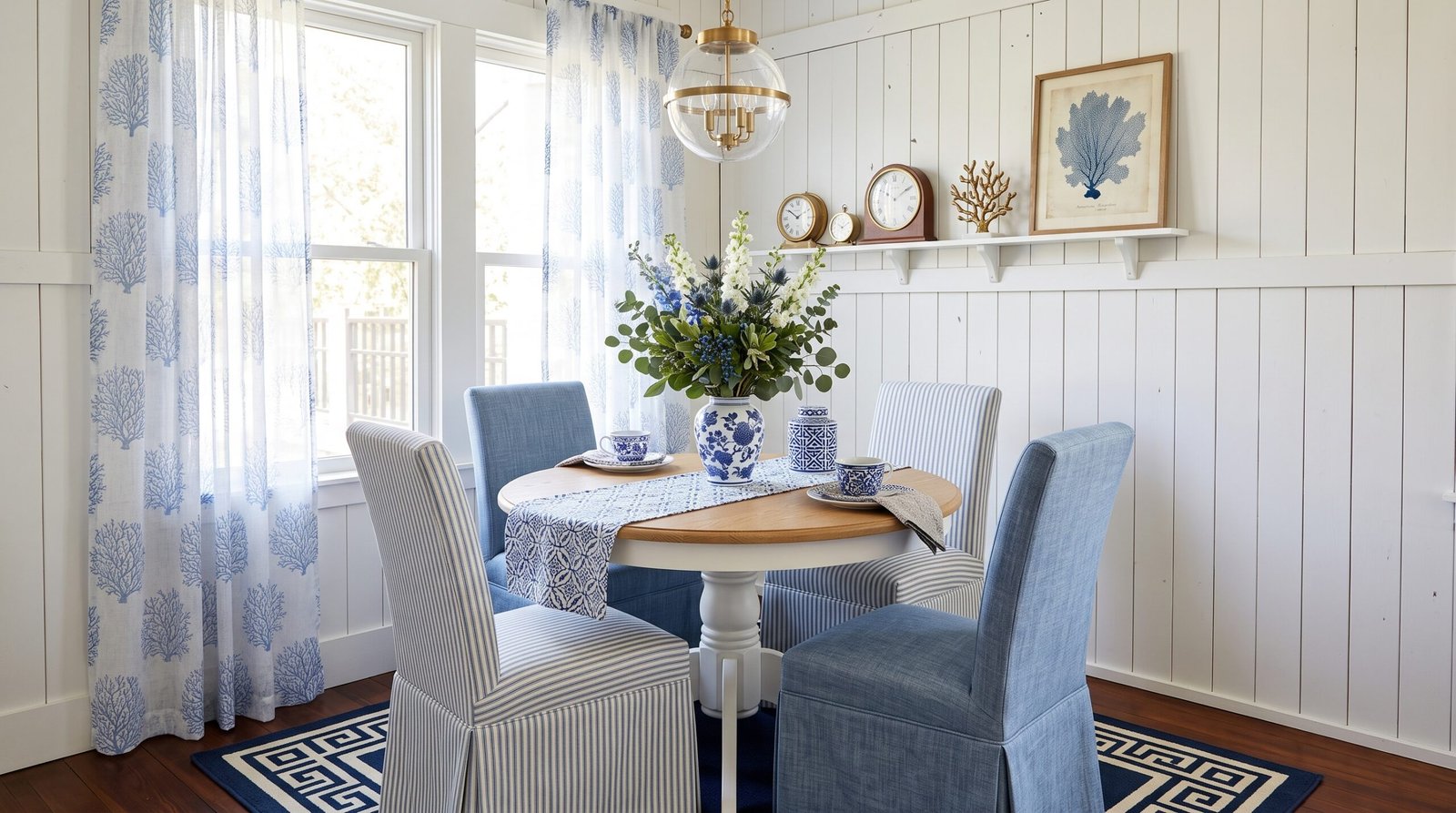
A small cozy breakfast nook for small spaces can make an ordinary kitchen or dining corner feel warm, welcoming, and personal. This style is popular because it creates a comfortable place to enjoy coffee, meals, and quiet mornings without needing a large room. The inspiration shown here combines soft neutral colors, natural wood, round tables, woven textures, upholstered seating, and charming chairs. Large windows and simple décor help the space feel bright and relaxed. In this article, you will learn practical ways to choose furniture, use color, improve lighting, save space, and create a beautiful breakfast nook that feels comfortable.
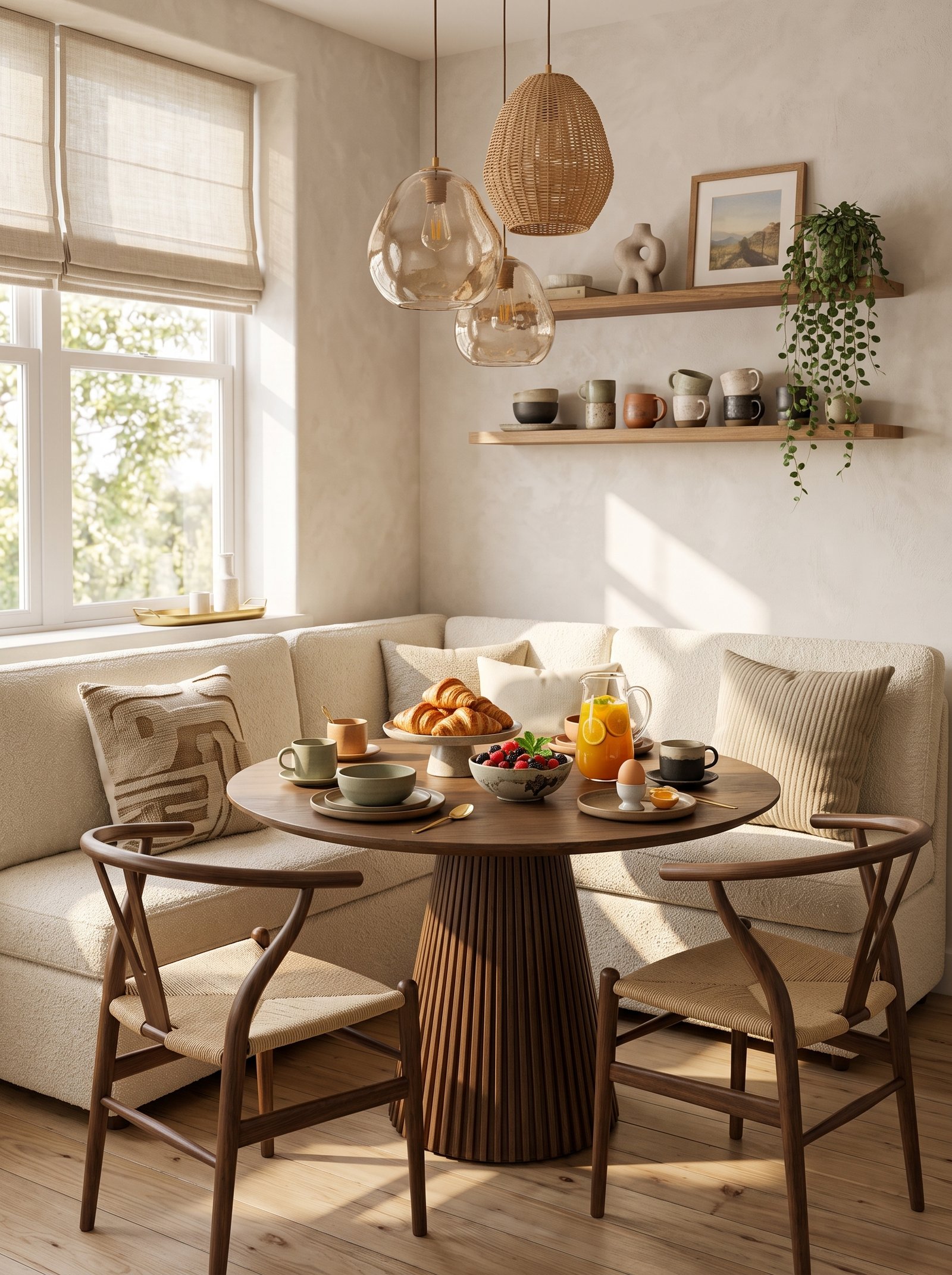
A practical layout is what makes this interior successful. The L-shaped built-in bench follows the walls and creates generous seating without requiring several bulky dining chairs. This approach is particularly useful when designing a small cozy breakfast nook for small spaces because the furniture becomes part of the architecture rather than competing for floor area.
If you have an unused corner near a kitchen or window, consider a bench that measures around 18 inches deep for comfortable everyday seating. A custom or simple DIY bench can also include hidden storage underneath. Keep enough clearance between the table and surrounding furniture so people can sit down and move comfortably.
The most important lesson is to work with the room’s existing shape instead of forcing a traditional dining set into a limited area.
The table is styled with simple breakfast items, including pastries, fruit, drinks, and ceramic tableware. This creates a lived-in feeling without making the space appear messy. For everyday use, keep the center of the table relatively open and use a tray for small items when possible. Fresh fruit or flowers can provide a simple focal point that changes naturally throughout the year. Avoid oversized centerpieces that block conversation or take away valuable eating space. A small cozy breakfast nook for small spaces works best when its styling supports real daily routines. Practical beauty is often more effective than excessive decoration.
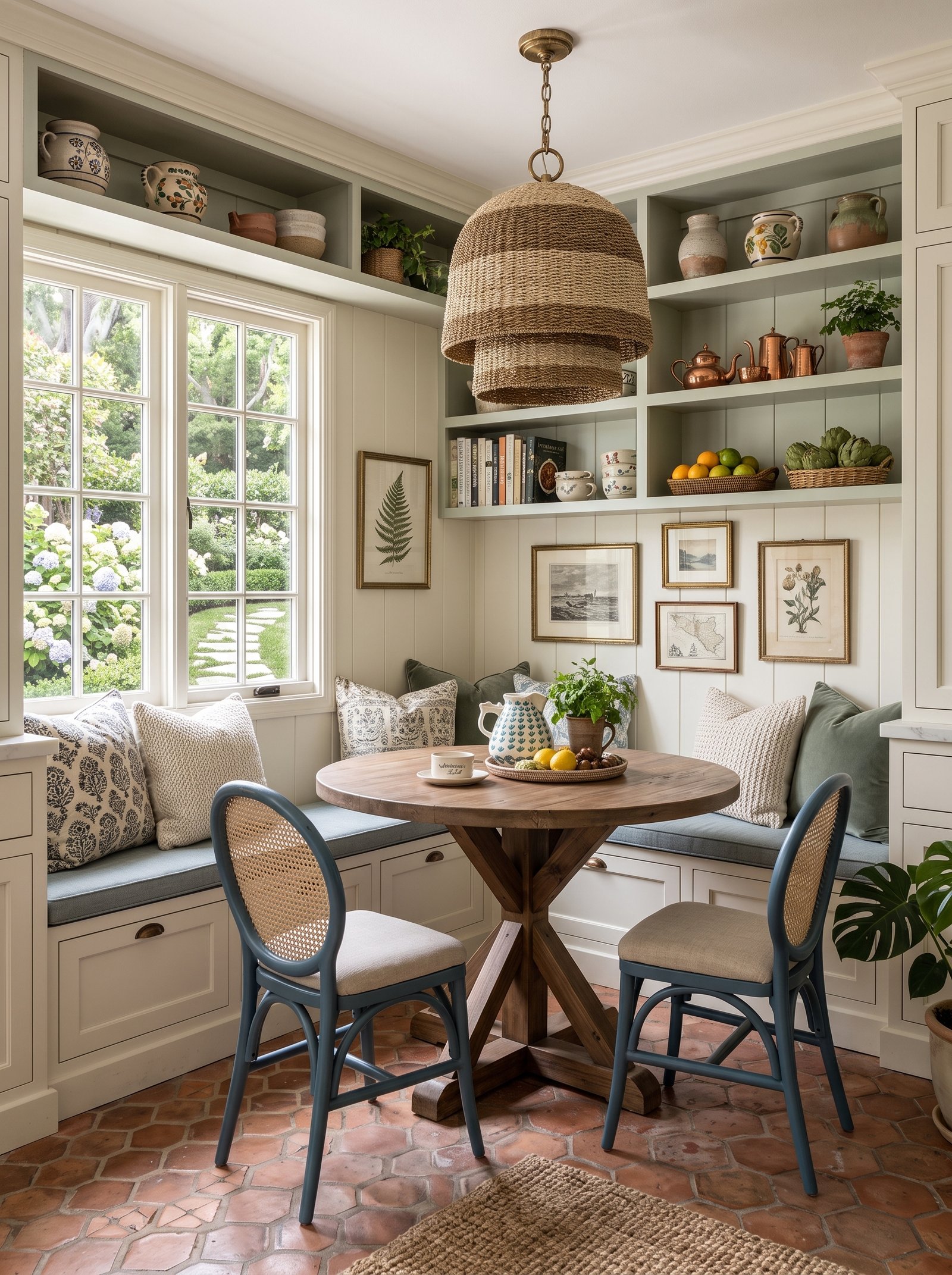
The combination of cream, muted gray-green cabinetry, natural wood, terracotta flooring, and leafy plants creates a harmonious palette that feels calm rather than overly decorative. A neutral foundation is practical because smaller accessories can be changed without repainting the entire room. Consider warm white or soft beige walls, then introduce muted green, clay, brown, or charcoal through cushions and decorative objects. Always test paint samples under your room’s natural and artificial light before committing. Green plants are another affordable way to add color. This restrained palette allows the materials and craftsmanship to remain the main focus.
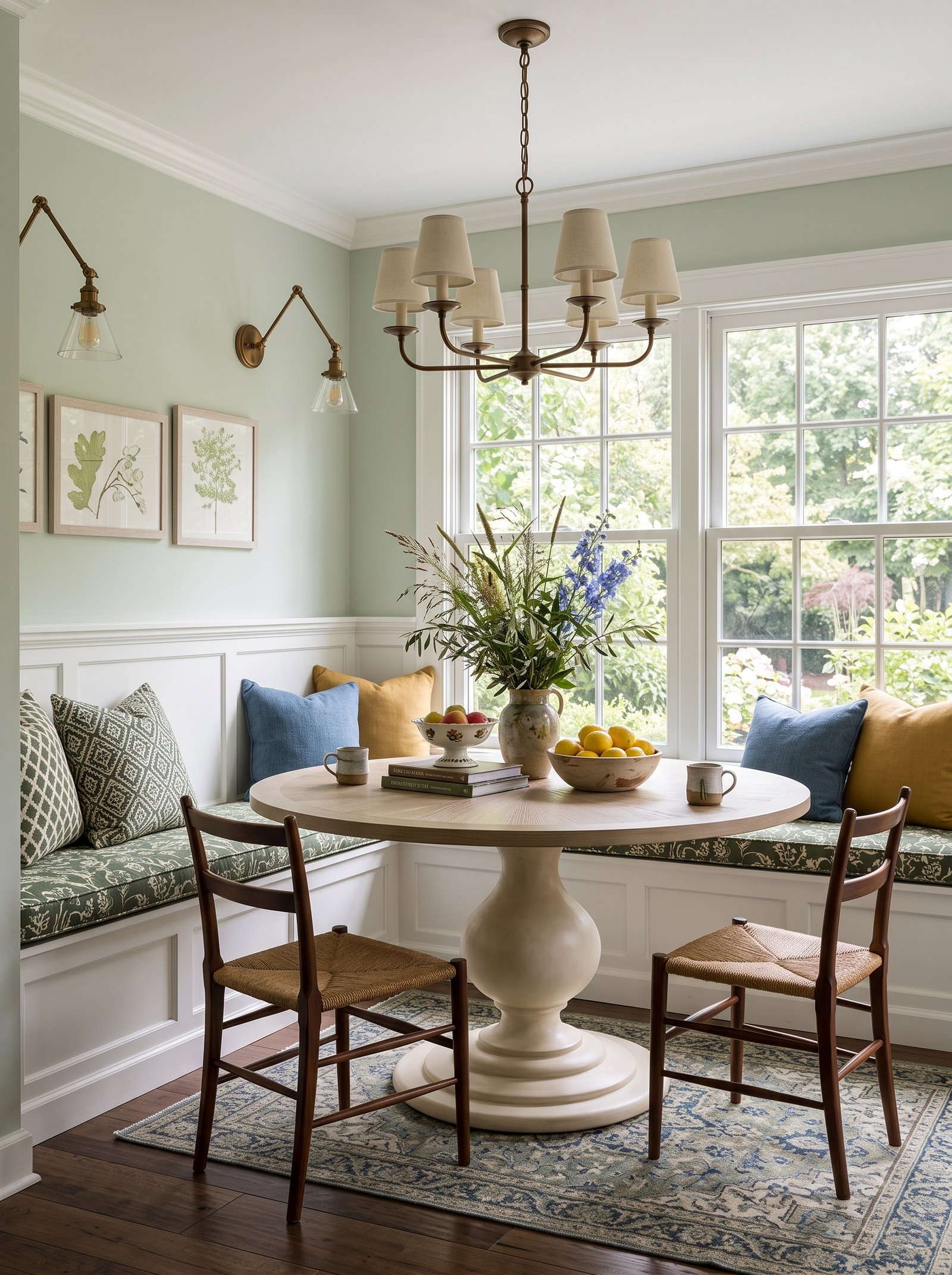
The muted green wall color gives this breakfast nook design a serene personality without becoming too bold. White crown molding and lower wall paneling provide contrast and keep the room looking crisp. For homeowners who like this palette, shades such as soft sage, pale olive, misty green, or gray-green can offer a similar effect. Always test paint samples at different times of day because natural light can change the appearance of color dramatically. Pairing gentle green with white trim, cream furniture, and natural wood creates a harmonious foundation. The result is sophisticated enough for daily living while still feeling comfortable and approachable.
The large window is one of the most valuable features of this breakfast nook. It brings daylight into the dining area and provides a beautiful view of flowers and greenery outside. The room avoids heavy window treatments, allowing the garden to become part of the visual experience.
Keep window coverings simple if privacy allows. Light curtains or adjustable blinds can soften direct sunlight without blocking the view. Positioning a dining nook near a window is also a useful strategy for small homes because natural light can make a limited space feel more open and airy throughout the day.
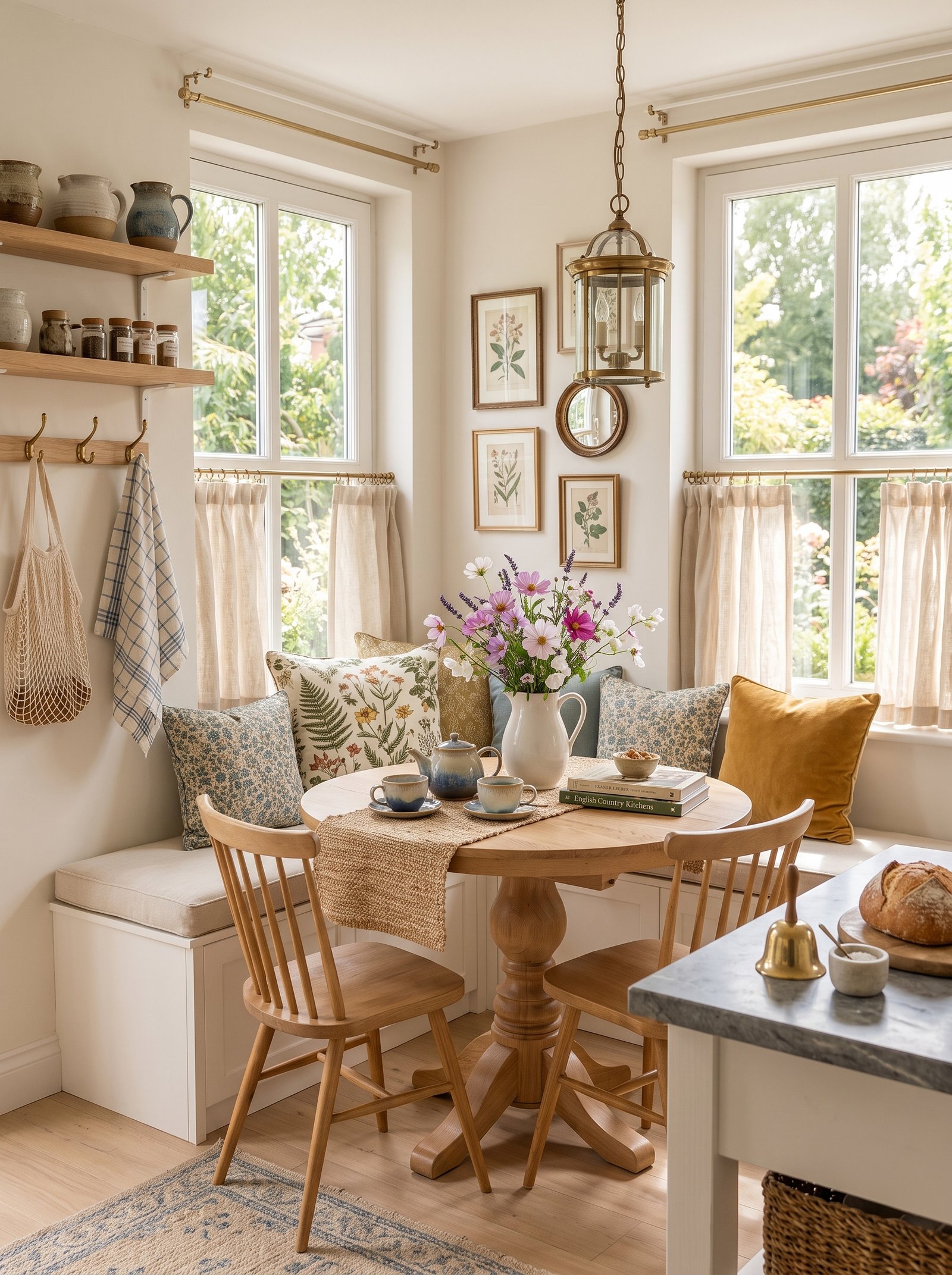
One of the strongest features of this room is the combination of pale wood, soft white built-ins, and neutral walls. The wooden chairs and table bring natural character to the space, while the cream seating and white cabinetry keep the overall look light.
This material combination is easy to adapt to different budgets. Solid wood furniture can be mixed with painted secondhand pieces for a similar effect. Avoid using too many unrelated wood finishes in a small room, however. Limiting the palette to two or three coordinated tones will create a more harmonious and polished appearance.
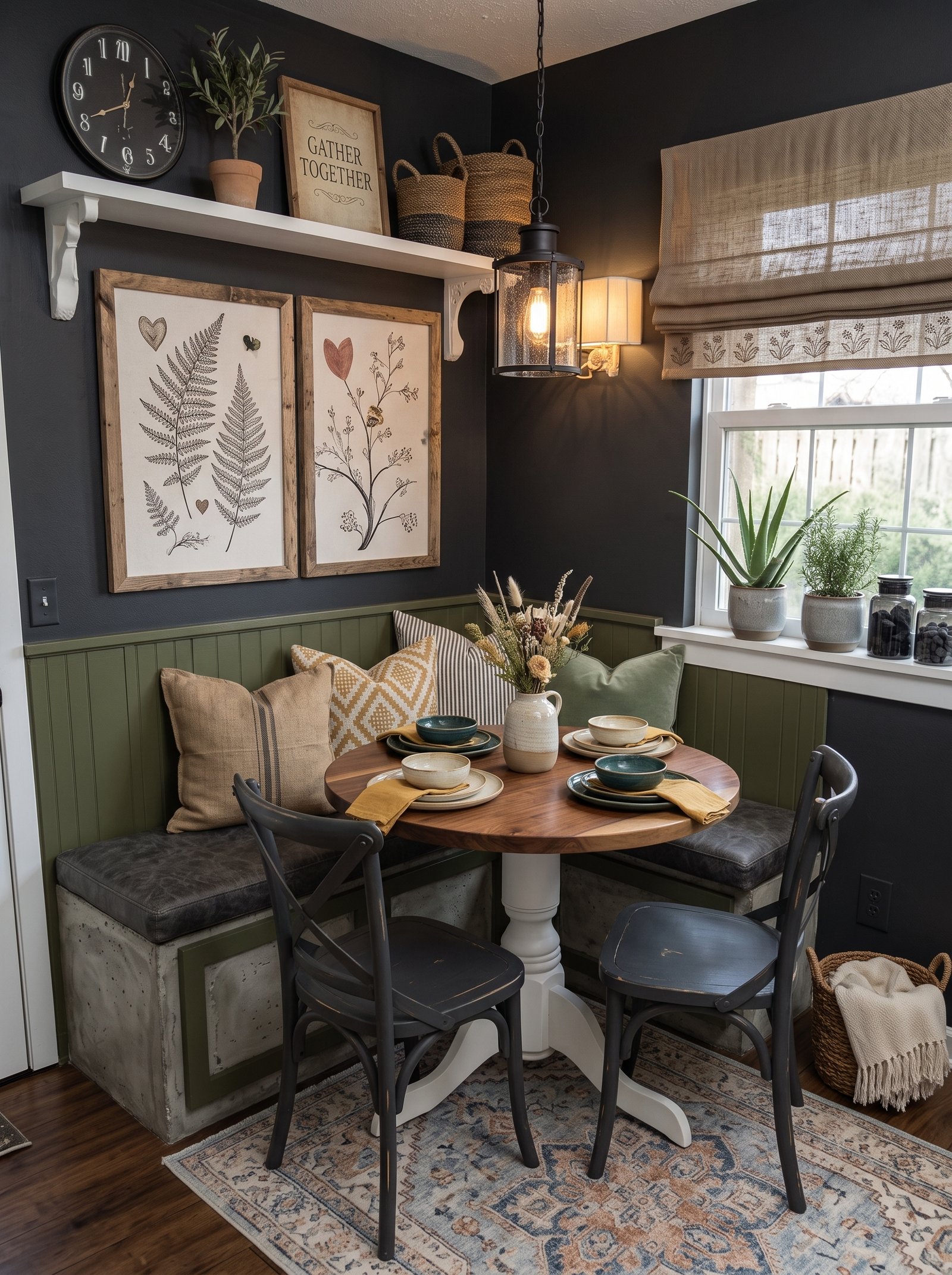
Natural wood chairs and the warm-toned dining table create a pleasing contrast with the charcoal walls and black seating. This combination prevents the darker palette from feeling too formal or cold.
Try using two or three related wood tones rather than matching every piece exactly. A mixture of oak, walnut, or medium wood finishes can feel natural when balanced by repeated colors elsewhere in the room. Secondhand wooden chairs can also be painted or refinished for an affordable update. The goal is to create contrast while maintaining a harmonious overall palette.
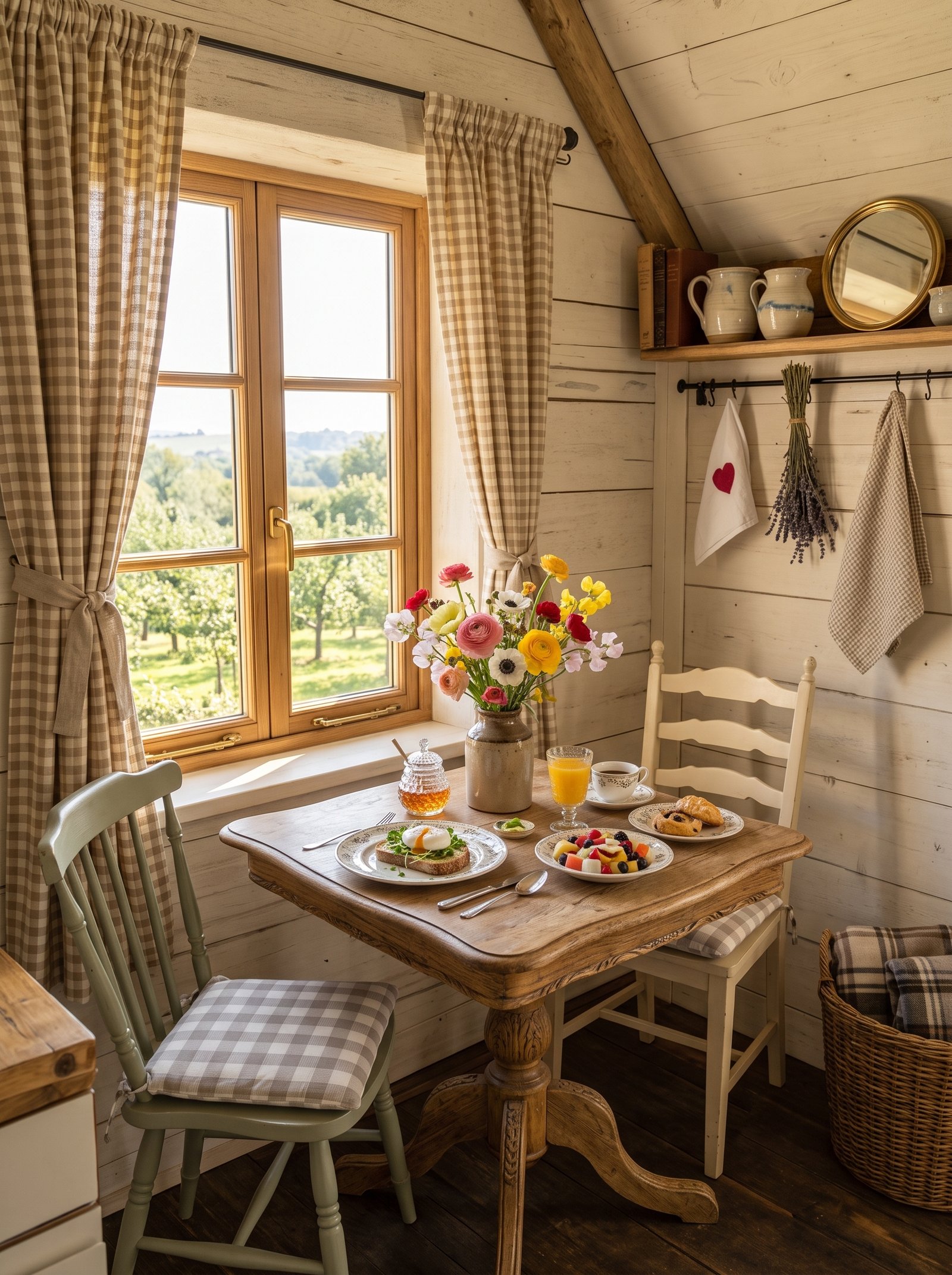
The colorful bouquet provides a lively contrast against the natural wood and neutral textiles. Pink, yellow, red, and white flowers instantly bring energy to the breakfast table without requiring permanent changes to the room.
Seasonal flowers are an easy way to update rustic breakfast nook ideas throughout the year. Spring flowers can feel fresh and cheerful, while autumn branches and dried foliage offer a more earthy appearance.
Use a ceramic jug, stoneware vase, or simple glass container to maintain the relaxed country style. Fresh flowers do not need to be expensive; even a few stems from a local market or garden can create a beautiful centerpiece.
Fresh flowers, lemons, books, and simple tableware make the space feel personal rather than overly staged. These accessories are practical enough to fit naturally into daily life.
A fruit basket is an affordable centerpiece that adds color and can be used throughout the week. Seasonal flowers can change the mood of the room without requiring permanent decorating changes.
Avoid covering the entire table with accessories. Leave enough open space for meals, coffee, or work. A well-styled farmhouse breakfast nook should remain useful while still feeling thoughtfully arranged.
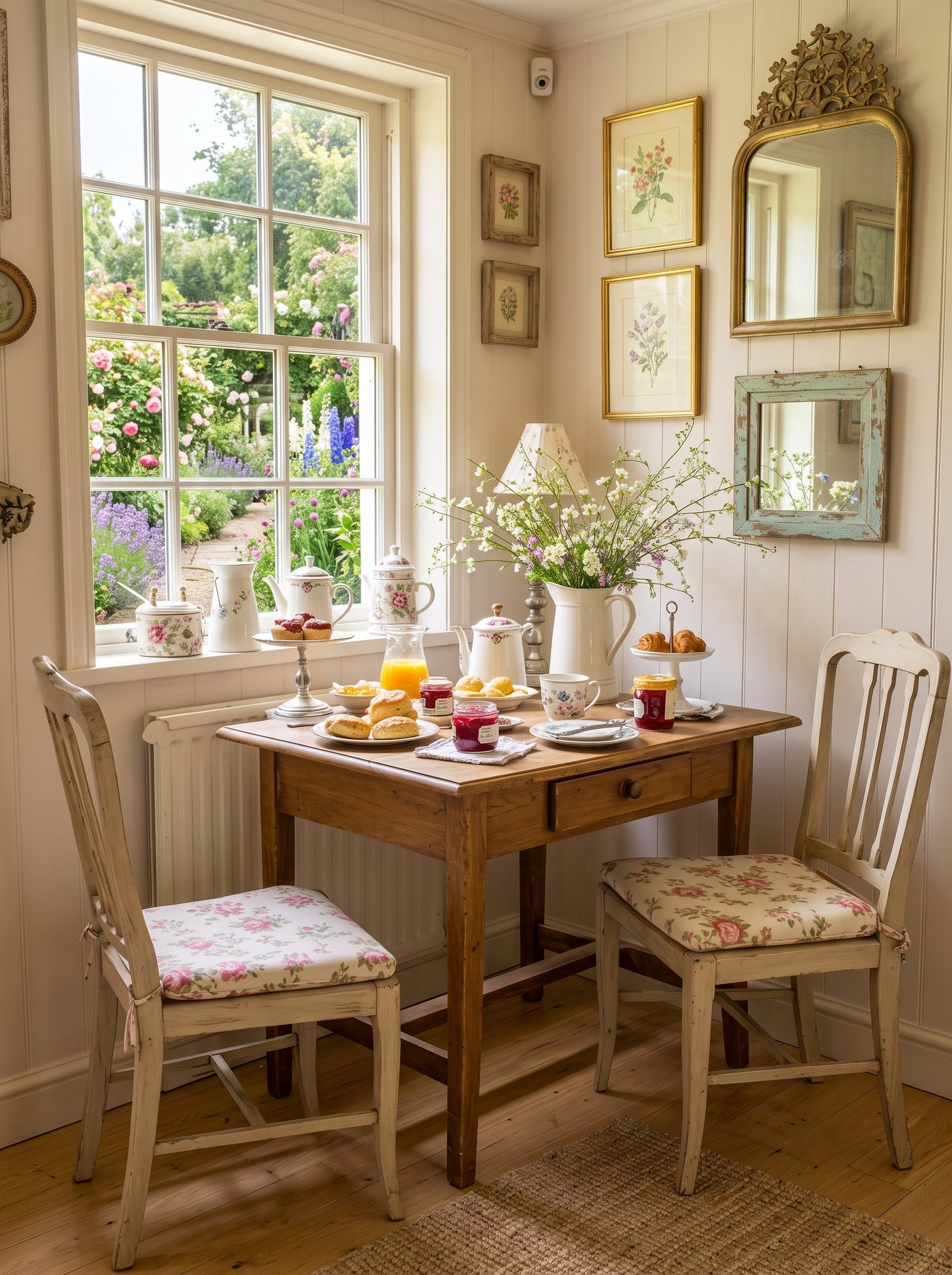
The floral seat cushions soften the rustic furniture and introduce a gentle country-inspired pattern. Their delicate pink and green tones connect naturally with the flowers and botanical artwork.
These vintage farmhouse breakfast nook ideas show that patterns do not need to cover every surface. Using floral fabric on chair cushions is enough to add personality while keeping the overall room balanced.
Choose removable cushion covers when possible. They are easier to wash and can be replaced when you want a seasonal update. Pairing patterned textiles with simple painted furniture prevents the space from becoming visually overwhelming.23 Small Kitchen Nook
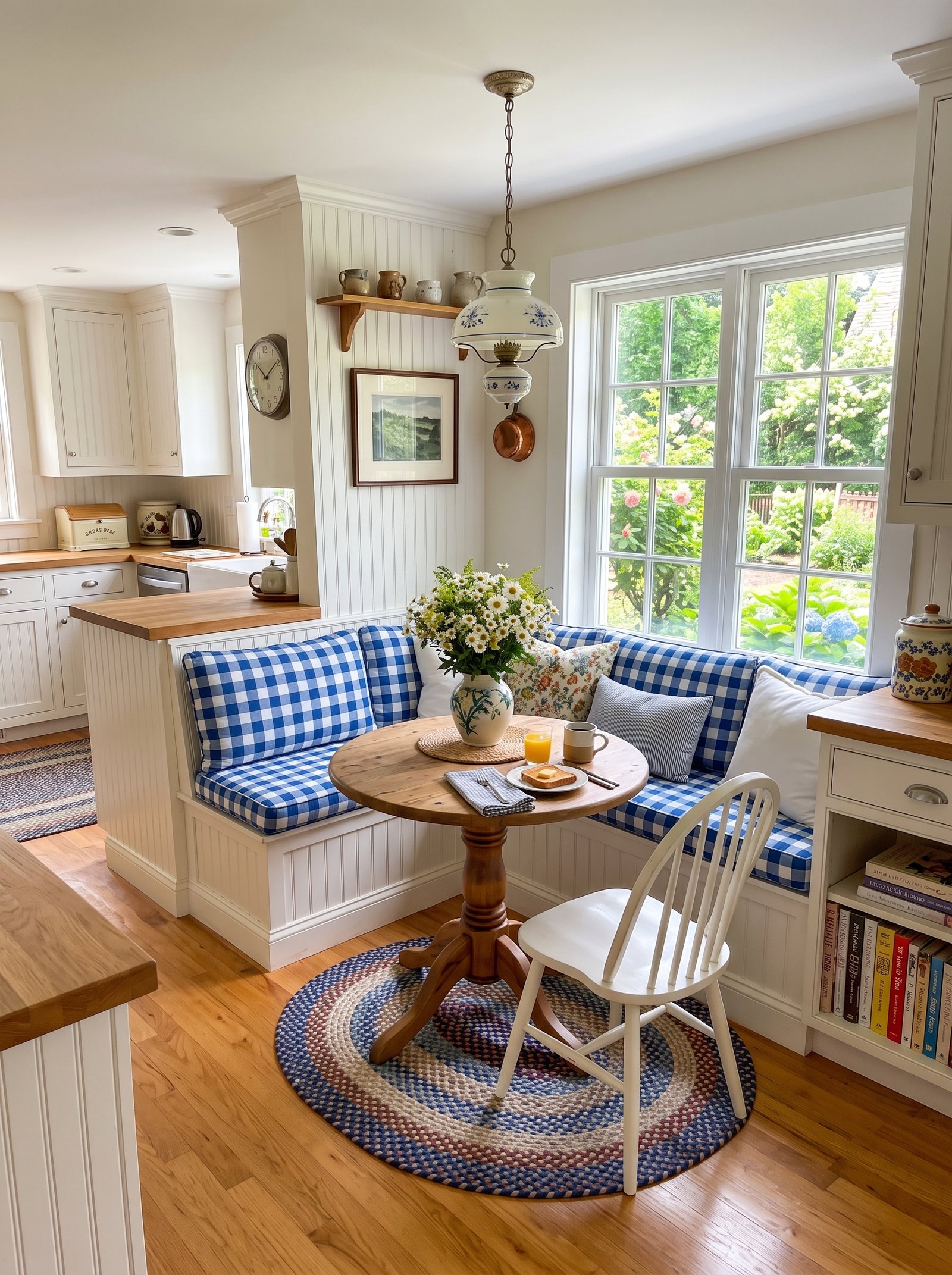
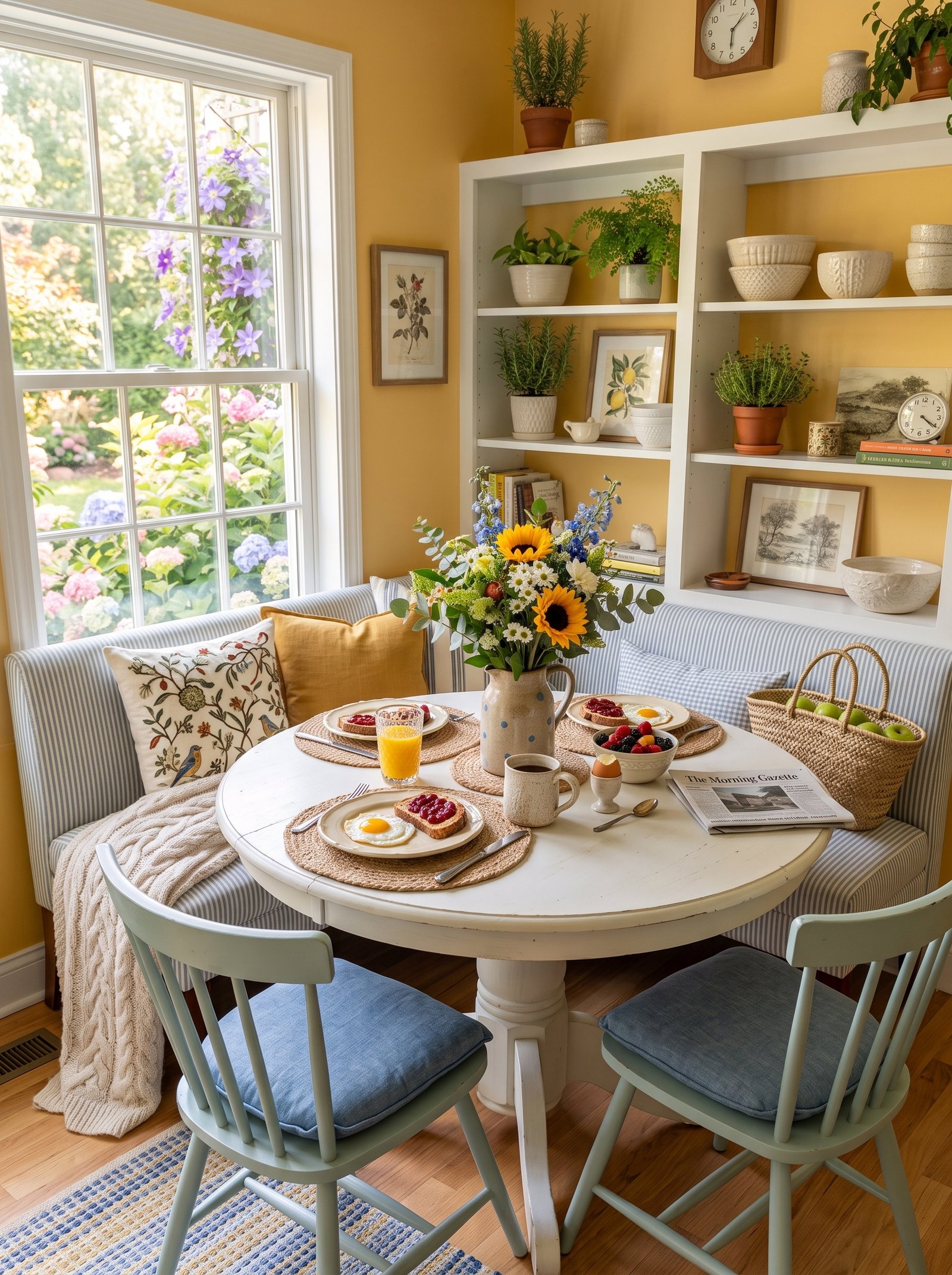
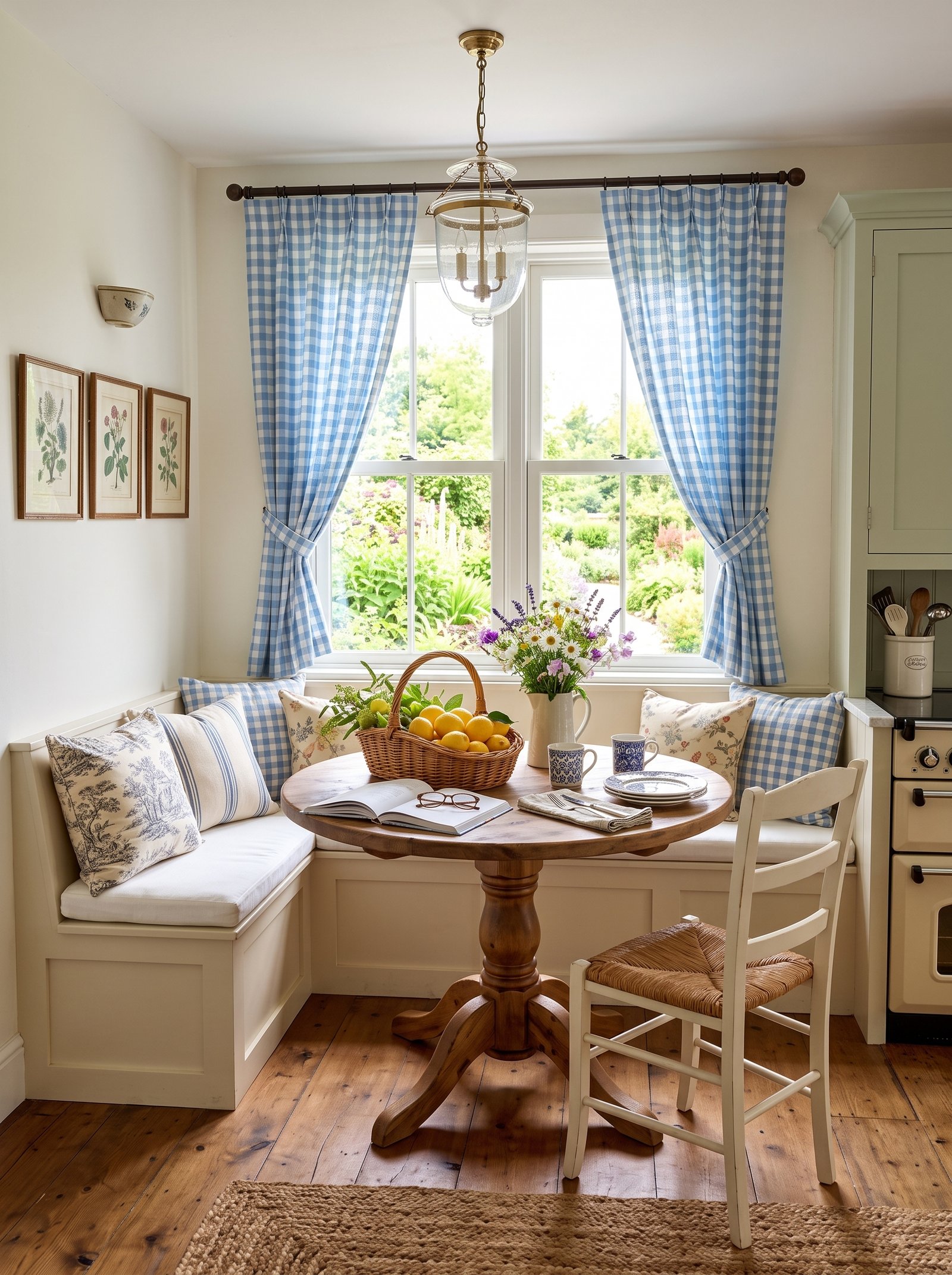
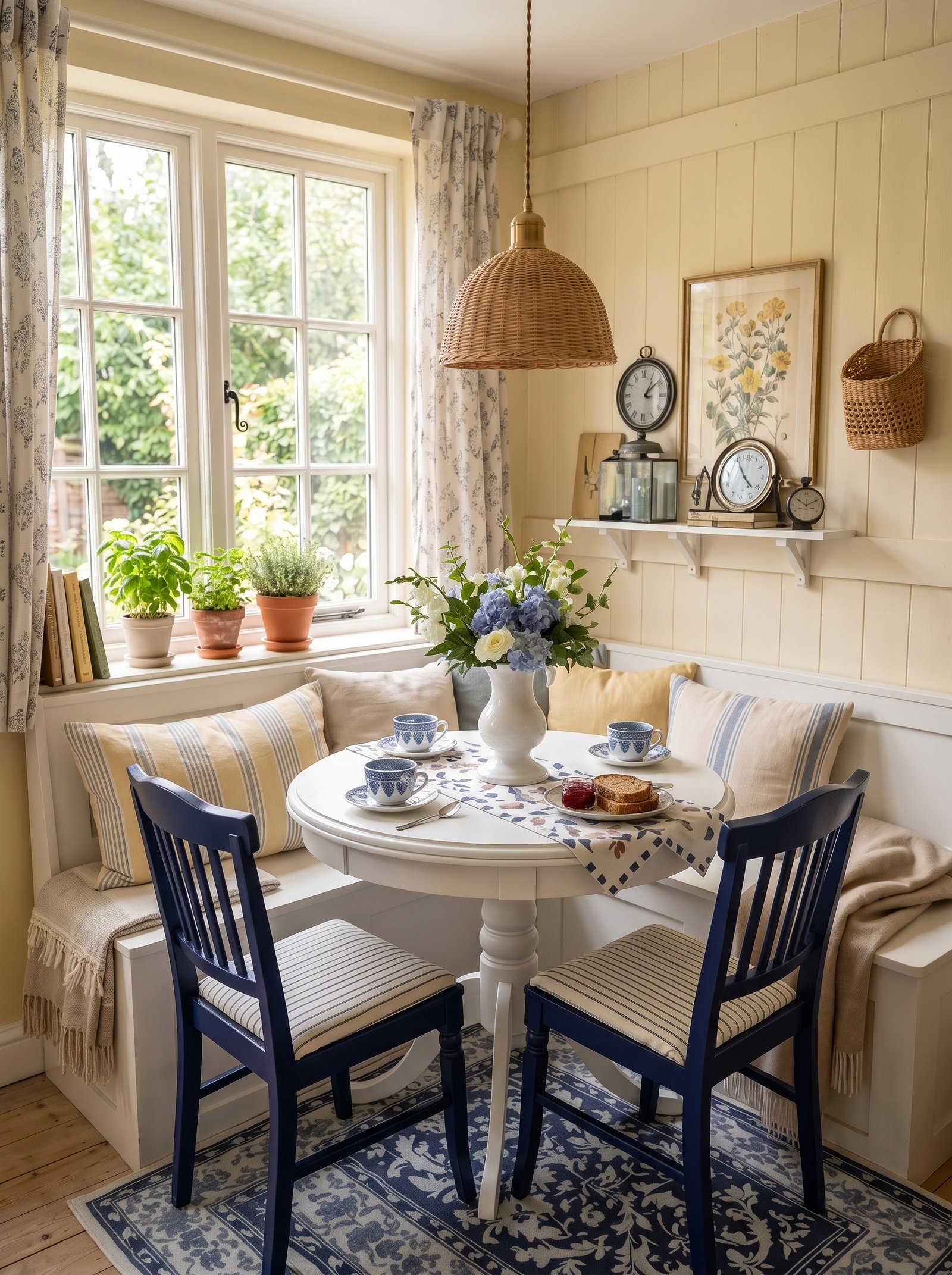
The blue-and-white palette creates a calm and harmonious contrast against the creamy walls and natural wood flooring. Gingham curtains and striped cushions add pattern without overwhelming the room.
Try combining one dominant neutral color with two or three accent tones. Blue, sage green, dusty yellow, or soft floral shades work beautifully with a cottage-inspired interior.
A small dining area can quickly feel cluttered when too many large pieces or decorative accessories are added. Avoid oversized chairs that block movement and tables that leave little room around the seating.
Try to keep the largest furniture pieces simple and practical. Add personality through cushions, curtains, artwork, and smaller accessories instead. This approach allows the room to remain functional while still feeling thoughtfully styled.
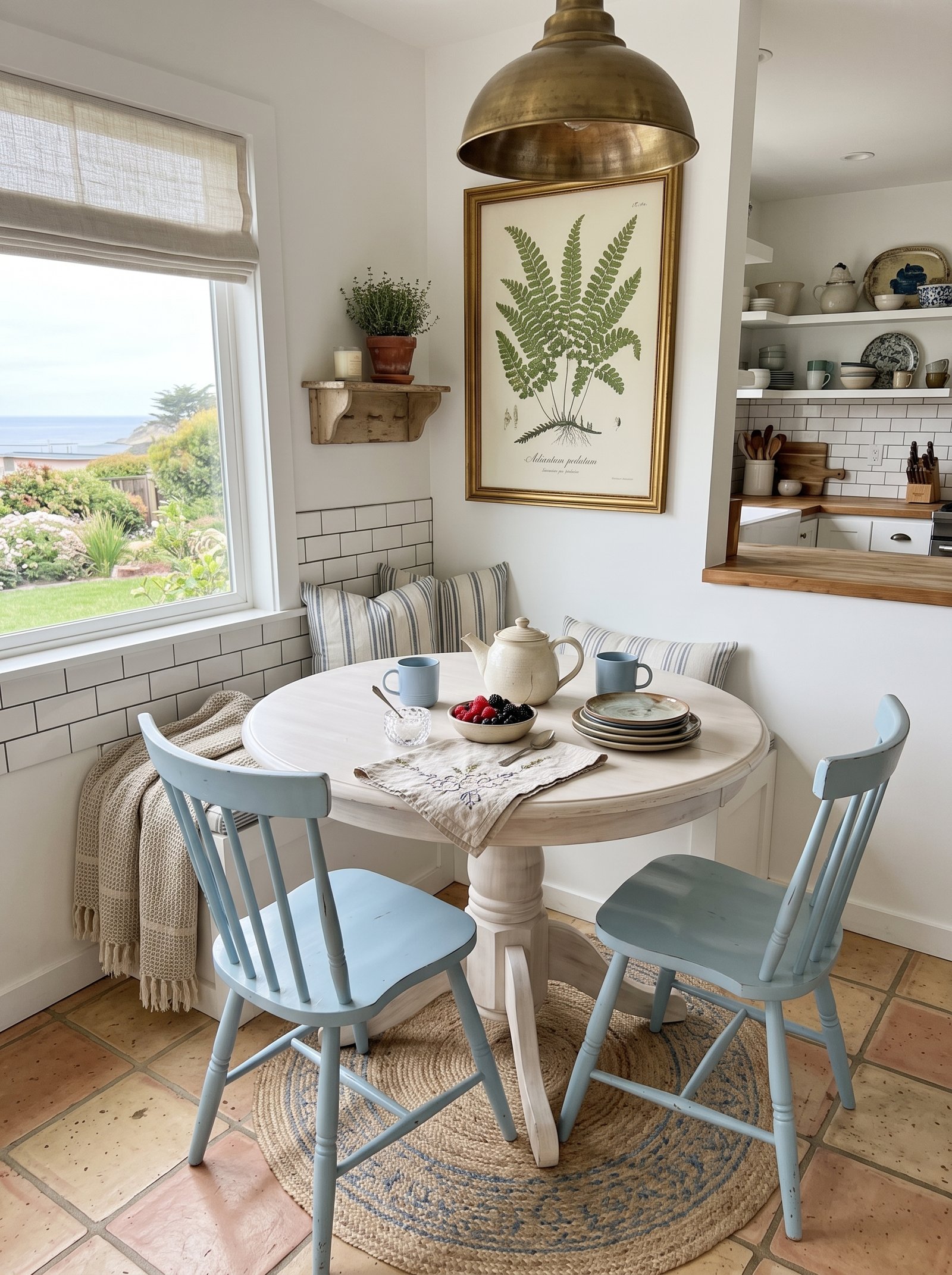
Small cottage breakfast nook ideas can transform an unused kitchen corner into a practical and beautiful dining space. Here, a round pedestal table fits neatly beside a built-in bench, creating an efficient layout for everyday meals. Soft blue chairs bring a gentle touch of color, while striped cushions and a woven rug add comfort beneath the natural wood and tile finishes. A brass pendant, botanical artwork, and simple ceramics give the room personality without making it feel crowded. Homeowners can borrow these ideas by mixing functional seating, natural textures, and carefully chosen vintage-inspired accents for a relaxed and welcoming atmosphere.
The pale blue chairs introduce subtle color while keeping the room light and balanced. Their traditional spindle design complements the cottage character without adding too much visual weight.
For a similar effect, choose one soft accent color and repeat it in small details throughout the space. Muted blue, sage green, dusty gray, or creamy yellow can work beautifully in a cottage-style dining corner.50 Corner Dining Nook Ideas
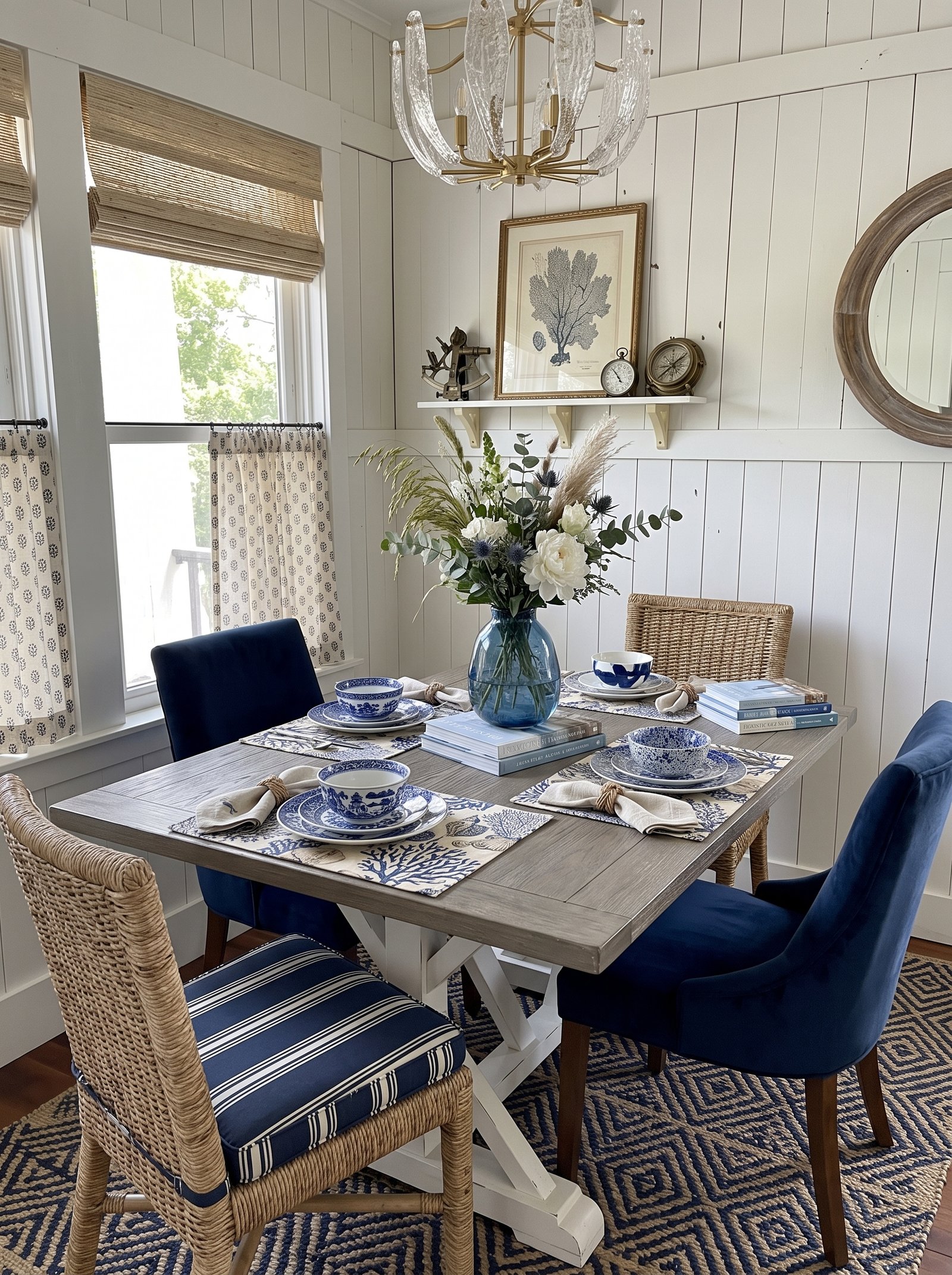
A thoughtful mix of natural textures, deep blue accents, and classic furnishings gives this coastal farmhouse dining room a calm, collected personality. The weathered wood table creates a strong foundation, while woven chairs, patterned textiles, and blue upholstered seating add visual depth. White shiplap walls keep the room bright and open, allowing decorative details to stand out without overwhelming the space. Homeowners can borrow this look by combining practical furniture with a limited blue-and-neutral palette. Fresh flowers and simple wall decor add personality. The result is a dining area that feels comfortable enough for daily meals yet polished enough for guests.
Flowers and greenery instantly give the dining area a more lived-in and welcoming atmosphere. Spring branches, summer greenery, autumn foliage, or winter evergreens can update the room without changing the furniture. Rotating table linens and small accessories is another budget-friendly way to refresh the space. These simple changes allow a classic interior to evolve naturally throughout the year.
A small cozy breakfast nook for small spaces proves that a limited room can still feel beautiful, useful, and inviting. By choosing compact furniture, soft colors, comfortable seating, natural materials, and thoughtful lighting, you can create a corner for everyday meals and relaxing moments. Built-in benches, round tables, and multifunctional pieces can make the most of every inch while adding personality. Use the ideas in this article as inspiration, then adapt them to your layout and lifestyle. With a few smart design choices, even a small unused corner can become one of the warmest and enjoyable spaces in your home.
A small round or oval table is often the best choice for a compact breakfast nook. These shapes improve movement around the room because they do not have sharp corners. A pedestal table can be especially useful because its single central base provides more legroom and flexibility for seating. Measure your available space before buying a table and leave enough room to comfortably pull chairs in and out. For very small homes, consider a drop-leaf or expandable table that can be adjusted when extra dining space is needed.
Start with comfortable seating and soft materials. Cushions, upholstered chairs, curtains, rugs, and warm lighting can immediately make the space feel more inviting. Natural materials such as wood and woven fibers also add warmth. Choose a soft color palette and add personal details, such as framed artwork, flowers, or a favorite table centerpiece. The key is to avoid overcrowding the room. A few carefully selected pieces can create a cozy atmosphere while keeping the nook open and practical.
The required space depends on the table and seating arrangement. A compact nook for two people can fit into a relatively small corner, especially when one side uses a built-in bench. You should allow enough space for people to sit comfortably and move around the table. Round tables can work particularly well in tight areas because they create easier circulation. Always measure your room before choosing furniture and consider doors, cabinets, windows, and walking paths when planning the layout.