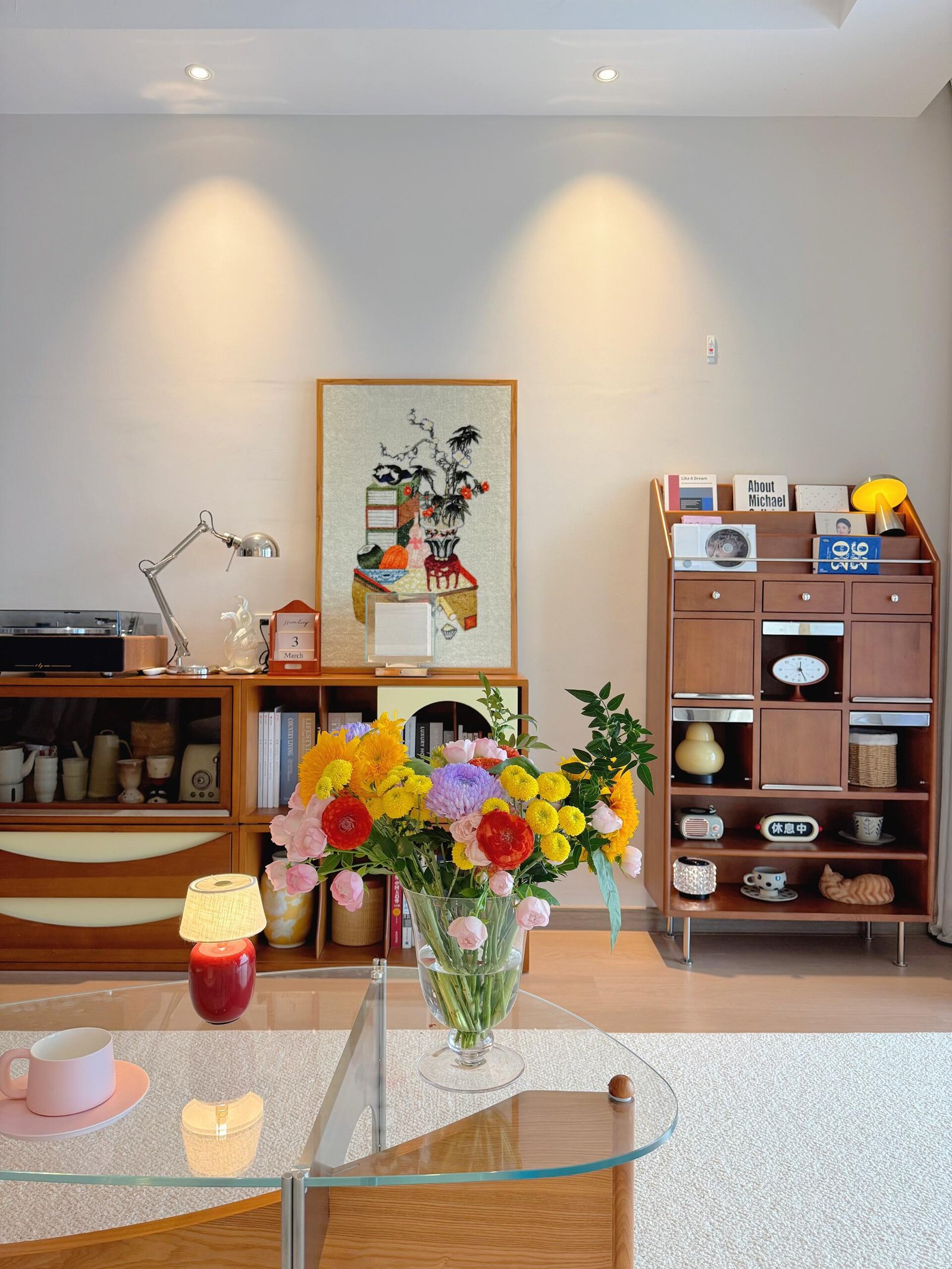
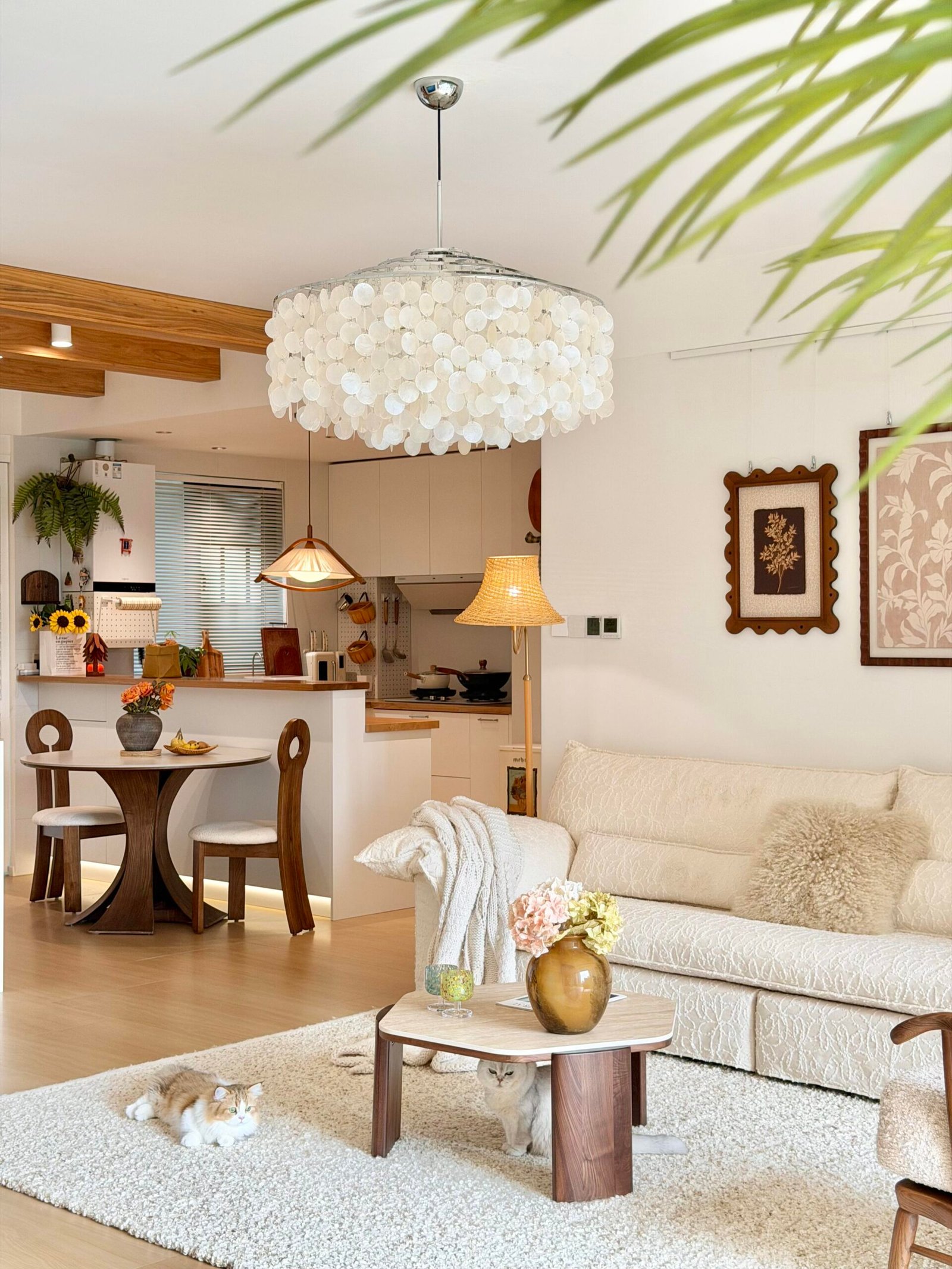
Cozy apartment decor ideas don’t depend on square footage or a big budget. They depend on a few smart decisions: soft lighting at different heights, layered textures, a calm color palette, and furniture sized to fit the room. In this guide, you’ll walk through 25 real apartment spaces, from sunlit living rooms and compact dining nooks to restful bedrooms and a flower-filled balcony. Each one includes practical measurements, paint colors and affordable swaps, plus renter-friendly options that won’t cost you your deposit. Pick one idea to try this weekend, then build from there.
Big Rug, Small Budget: Anchoring a Pale Room
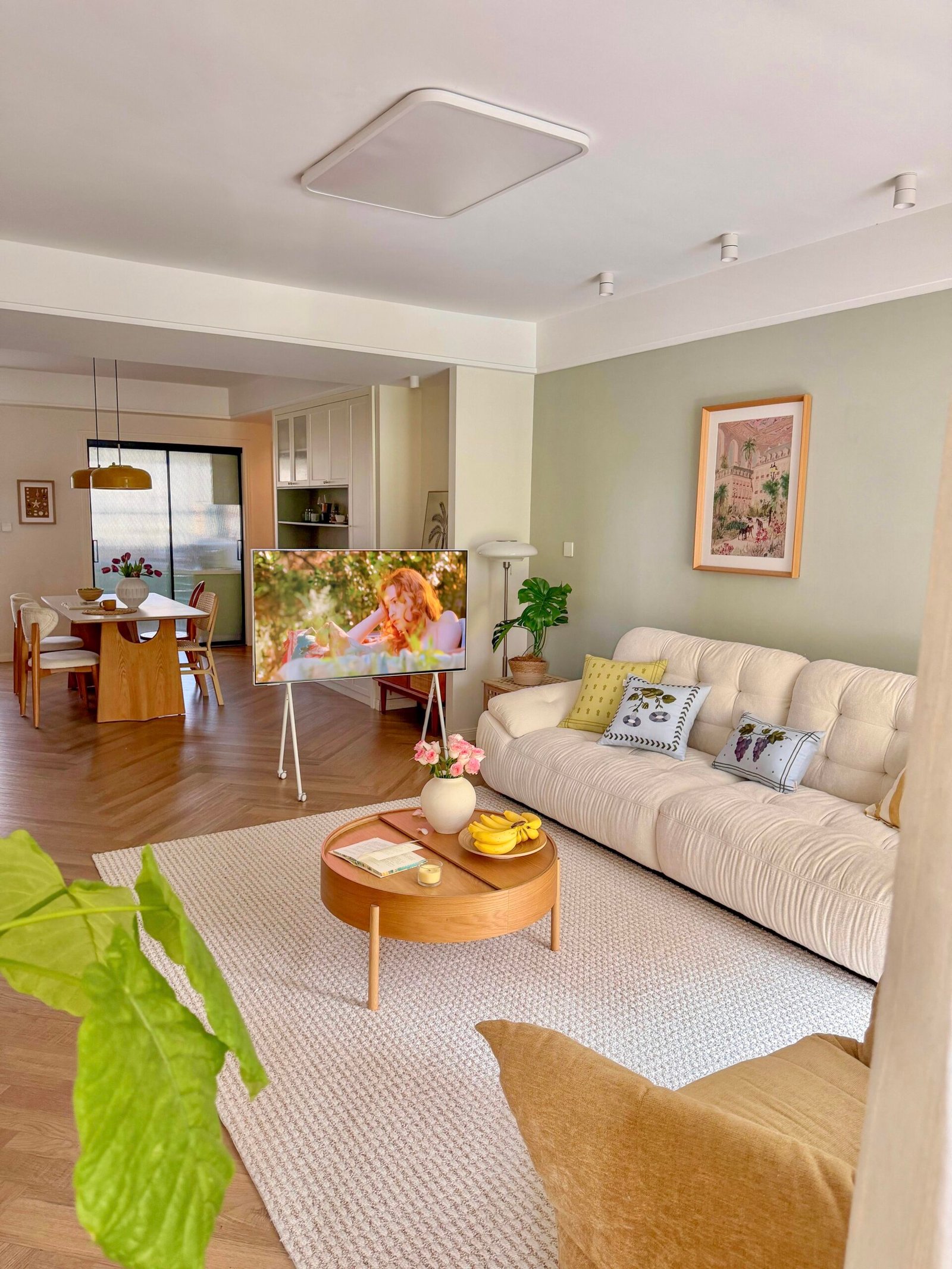
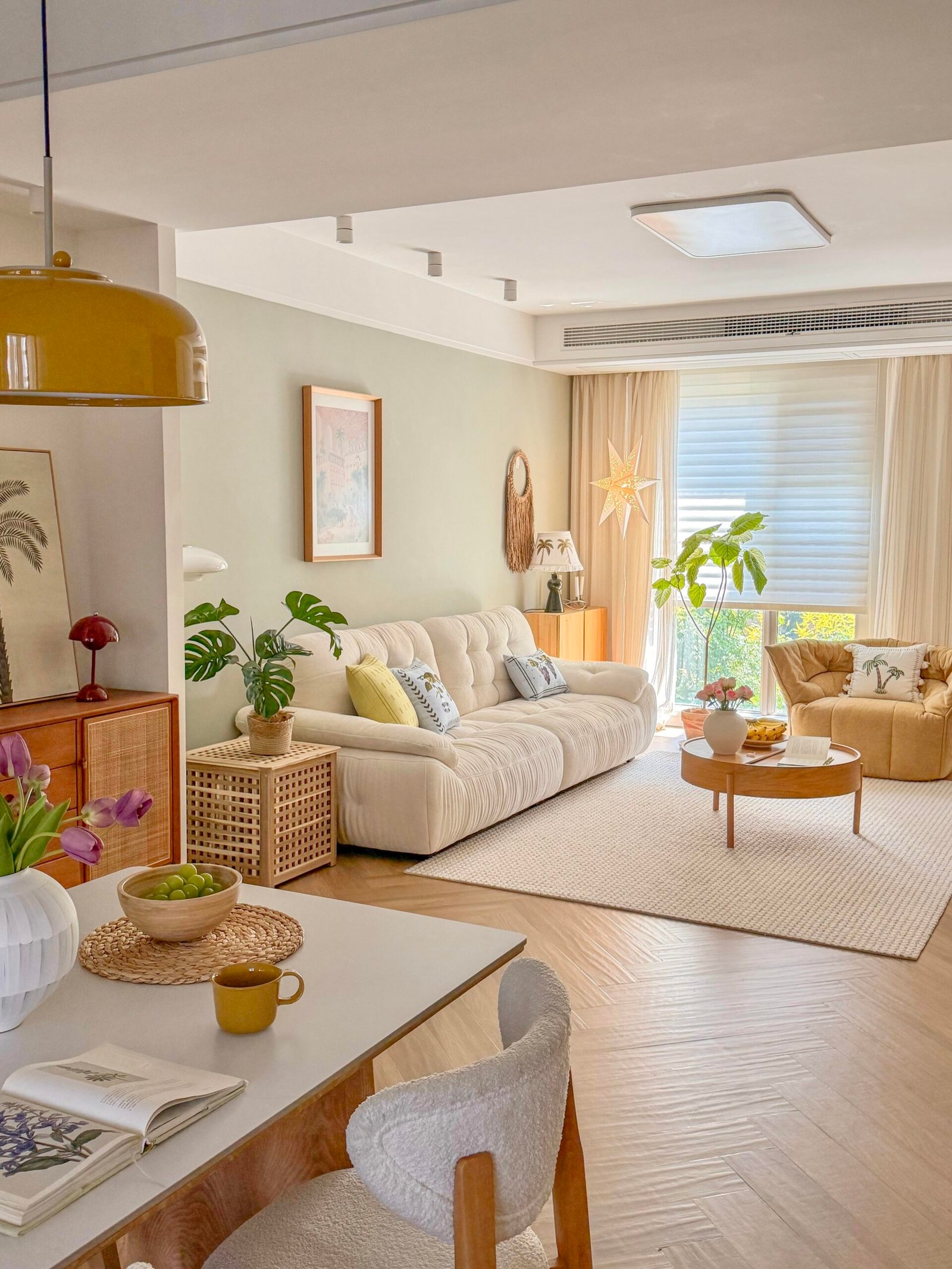
Floors set the mood faster than most people expect, and this airy apartment shows how. A single oversized cream rug sits under the white sofa and extends past both armrests, pulling the whole seating group together. Look for an 8×10 foot size, since anything smaller makes furniture look scattered. Flatweave or low-pile styles from IKEA or Target cost far less than wool and clean easily. Use a non-slip pad underneath. Spend on the rug size first, then worry about the pattern.
Window Dressing That Leaves Your Walls Alone
Renters often hold back on windows, yet a sheer curtain living room like this one can be done without a single drill hole. Tension rods or adhesive hooks hold lightweight white panels that filter the garden view. Hang them as close to the ceiling as the rod allows and let them reach the floor. Machine-washable polyester voile costs under $30 a panel. Skip heavy rings that scrape. Light fabric keeps both the view and your deposit intact.
Hiding Clutter Behind Low White Cabinets
Low cabinets running the full width of the wall are the quiet hero in these apartment TV wall ideas. Closed doors hide controllers, cables and board games, so the room stays calm even on busy days. Aim for a cabinet height around 16 to 20 inches so the screen sits near eye level when you’re seated. Flat-pack systems like IKEA Besta can be customized in an afternoon. Leave one open shelf for books. Closed storage does the heavy lifting, so let one shelf show off.
Caring for Patterned Wood Floors in a Busy Nook
A herringbone floor adds quiet pattern, but a dining area takes more wear than a living room. The honey-toned boards here pair well with bentwood chairs, though chair legs can scratch over time. Add felt pads under every leg and replace them every few months. Wipe spills quickly, and use a barely damp microfiber mop instead of soaking the wood. If you rent, a flat runner can protect the high-traffic area. Protect the floor where chairs move, and the pattern will stay sharp.
Using One Bold Table to Energize a Soft Palette
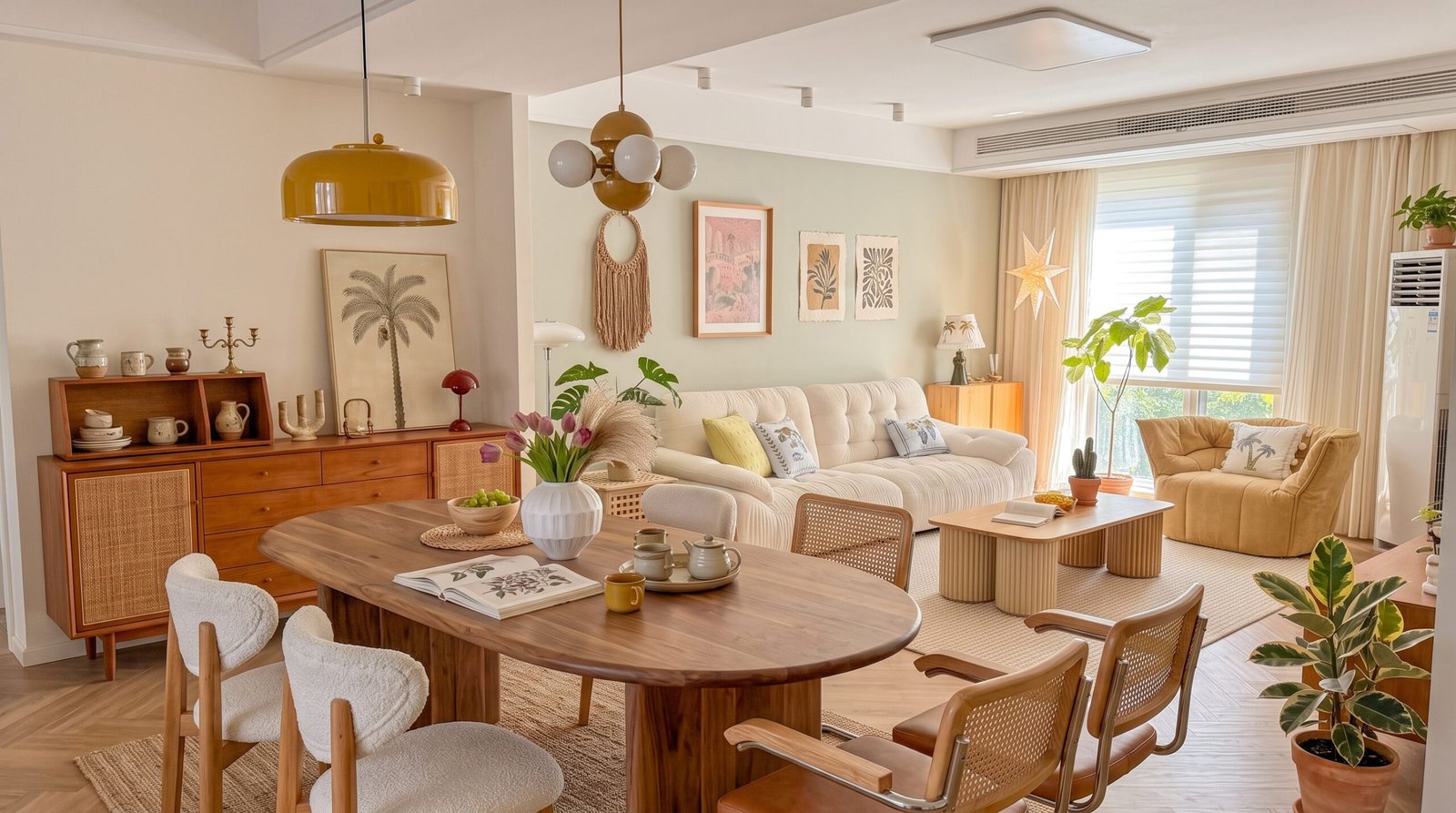
Neutral rooms sometimes need a single note of contrast, and the round orange coffee table does exactly that in this sage green living room. Against the cream sofa and muted walls, the warm color reads as a deliberate accent instead of a random pop. Pick a table about two-thirds the length of your sofa and 16 to 18 inches high. A can of furniture paint can transform a thrift-store find. Limit the bold color to one large piece and let everything else rest.
Giving a Narrow Wall a Job With a Slim Wooden Unit
Awkward wall space beside a window or doorway often goes unused, yet the compact wood cabinet here turns it into a handy landing spot. It holds books, a plant and a small lamp without poking into the walkway. Look for units 12 to 15 inches deep and under 36 inches tall so they don’t block light. Add felt feet to protect floors. If you rent, secure tall pieces with an anti-tip strap. A narrow piece can make an overlooked corner the most useful spot in the room.
Pushing every piece against the walls is a habit that shrinks rooms, so look at how the sectional here sits slightly forward with space behind it. That gap makes the living area feel purposeful and gives the TV side its own breathing room. Leave around 3 to 6 inches behind the sofa, or up to 18 inches if you want a console. Anchor the arrangement with a rug that reaches under the front legs. Pull furniture off the walls and the room will immediately feel larger.
Keeping a Ceiling Fan From Looking Like an Afterthought
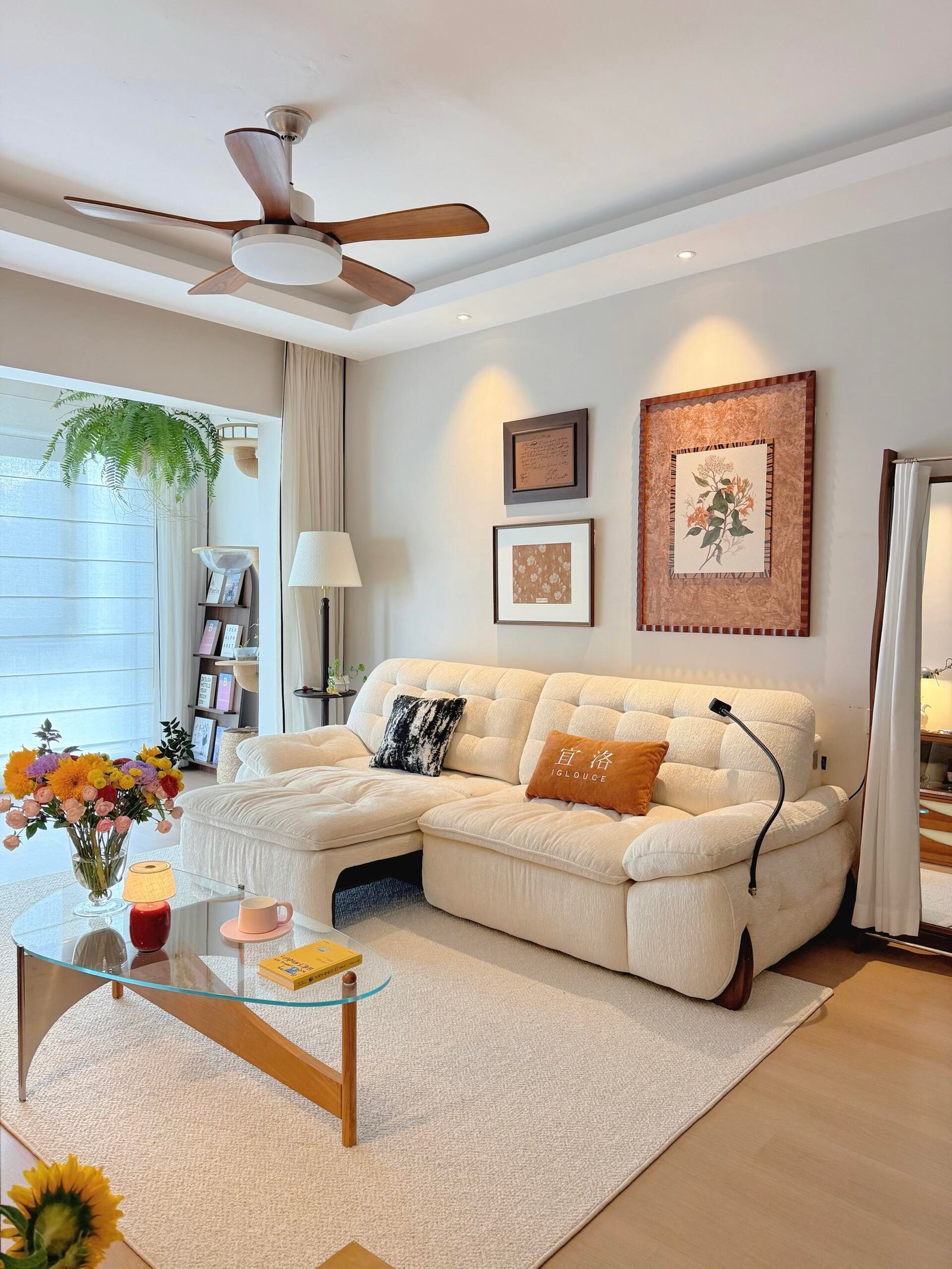
Ceiling fans can be a bit utilitarian, yet the one here blends in thanks to its light wood blades and compact size. For a room around 12 by 14 feet, a 42 to 52 inch fan is usually enough. Mount it at least 7 feet above the floor, and match the blade finish to your furniture. Wipe blades every month with a pillowcase to trap dust instead of scattering it. Pick a fan that suits the room’s tones, and it will stop looking like an add-on.
Giving a Bookshelf Color and Breathing Room
Packed shelves feel heavy, which is why the open wooden bookcase here works so well. Books sit alongside a few colorful objects and framed pieces, with plenty of gaps in between. Group books both upright and stacked, and leave roughly one-third of each shelf empty. Pull colors from your flowers so everything feels related. Secondhand shops often sell solid wood shelving for under $100. Sand lightly and wax it for a fresh finish. Empty space is a design choice, so give each shelf some air.
Matching Metals and Finishes Across Connected Rooms
When rooms flow together, finishes either echo or clash, and open plan apartment living leaves nowhere to hide. This space links the sofa area, dining table and kitchen through repeated pale wood, soft white and a few brass accents. Limit yourself to two metals and one dominant wood tone. Repeat each at least three times across the space, like a lamp base, a frame and a cabinet handle. Spray paint can unify mismatched hardware cheaply. Decide on your finishes first, then shop for the pieces.
Keeping Counters Clear in a Small Kitchen
Clutter shrinks small kitchens fast, so notice how little sits out in this one. The coffee setup stays tucked to one side, with a wooden tray gathering everyday items. Install a slim rail with hooks under the cabinets for mugs and utensils, using adhesive strips if you rent. Store small appliances in a deep drawer or a rolling cart. Wipe surfaces daily with a damp cloth. Give each countertop item a designated home, and the room will stay open and tidy.
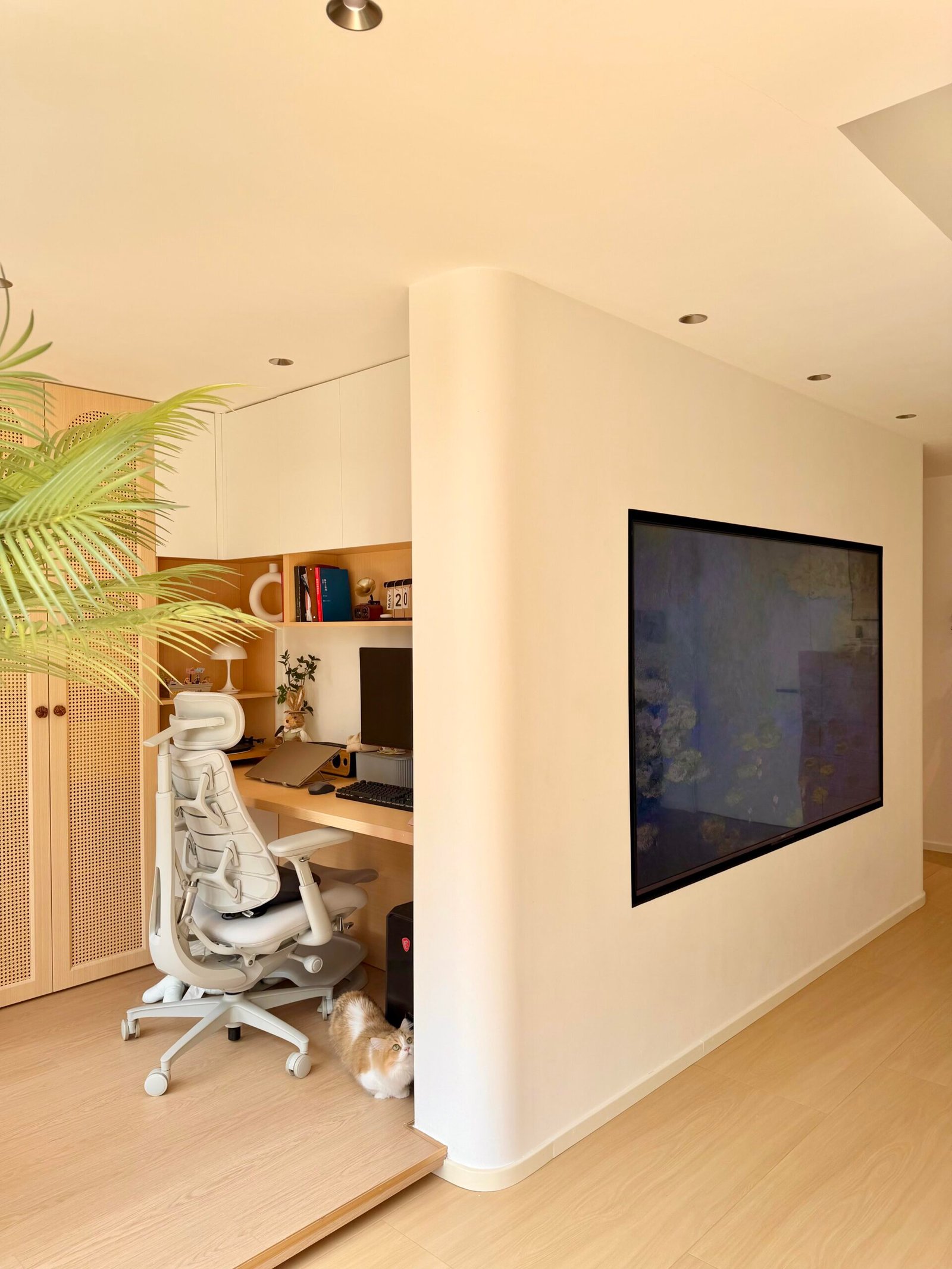
Carving a Work Corner Out of a Room Divider
Not every apartment has a spare room, which is why this apartment home office nook is so smart. A freestanding white partition wall shields the desk from the living area, and the ergonomic mesh chair keeps long workdays comfortable. If you can’t build a wall, a tall bookcase or a folding screen can do the same job. Aim for a desk at least 47 inches wide and 24 inches deep, with 36 inches of clearance behind the chair. A visual break matters as much as the desk itself.
Adding Flexible Seating With Round Poufs
Extra seating shouldn’t mean extra bulk, which is where the round woven pouf near the coffee table comes in. It slides under a console when not needed, works as a footrest, and offers a spare seat for guests. Look for a diameter of 16 to 20 inches and a firm filling that holds its shape. Leather and rattan styles wipe clean easily. Check for a sturdy handle so it can move around. A pouf is a seat that disappears when the party ends.
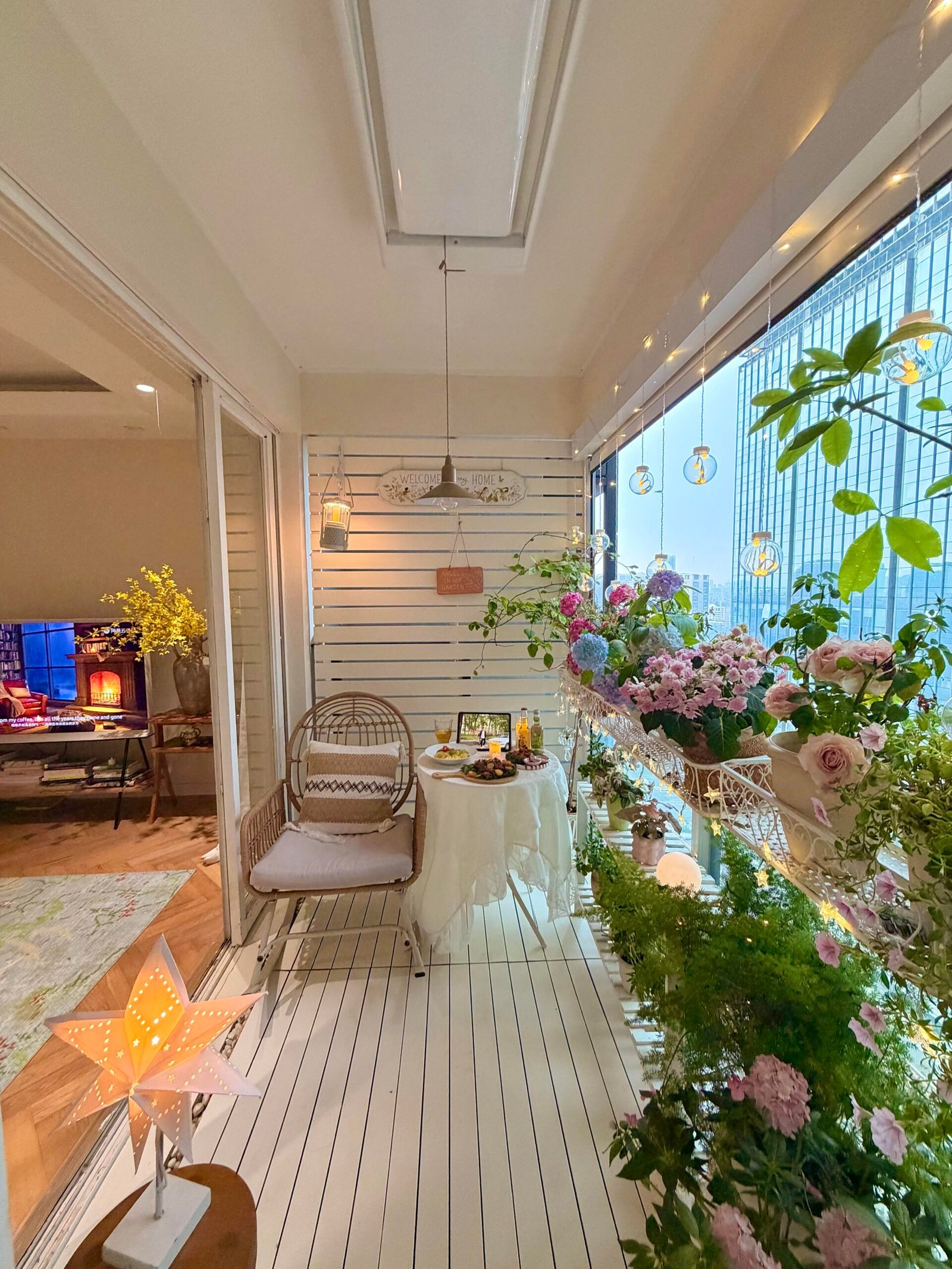
Greening a Narrow Balcony With Layers and Tiers
Small outdoor spaces reward vertical thinking, and this apartment balcony garden shows how much bloom fits into a slim strip. Tiered shelves, railing planters and hanging pots fill the glass-sided area with hydrangeas, trailing greenery and potted flowers while leaving a clear walking path of about 24 inches. Pick plants that match your light: shade lovers like ferns on the low shelves, sun lovers like geraniums at the rail. Use lightweight resin pots to protect the structure. Grow upward first, then outward.
Sizing a Table So Chairs Still Pull Out
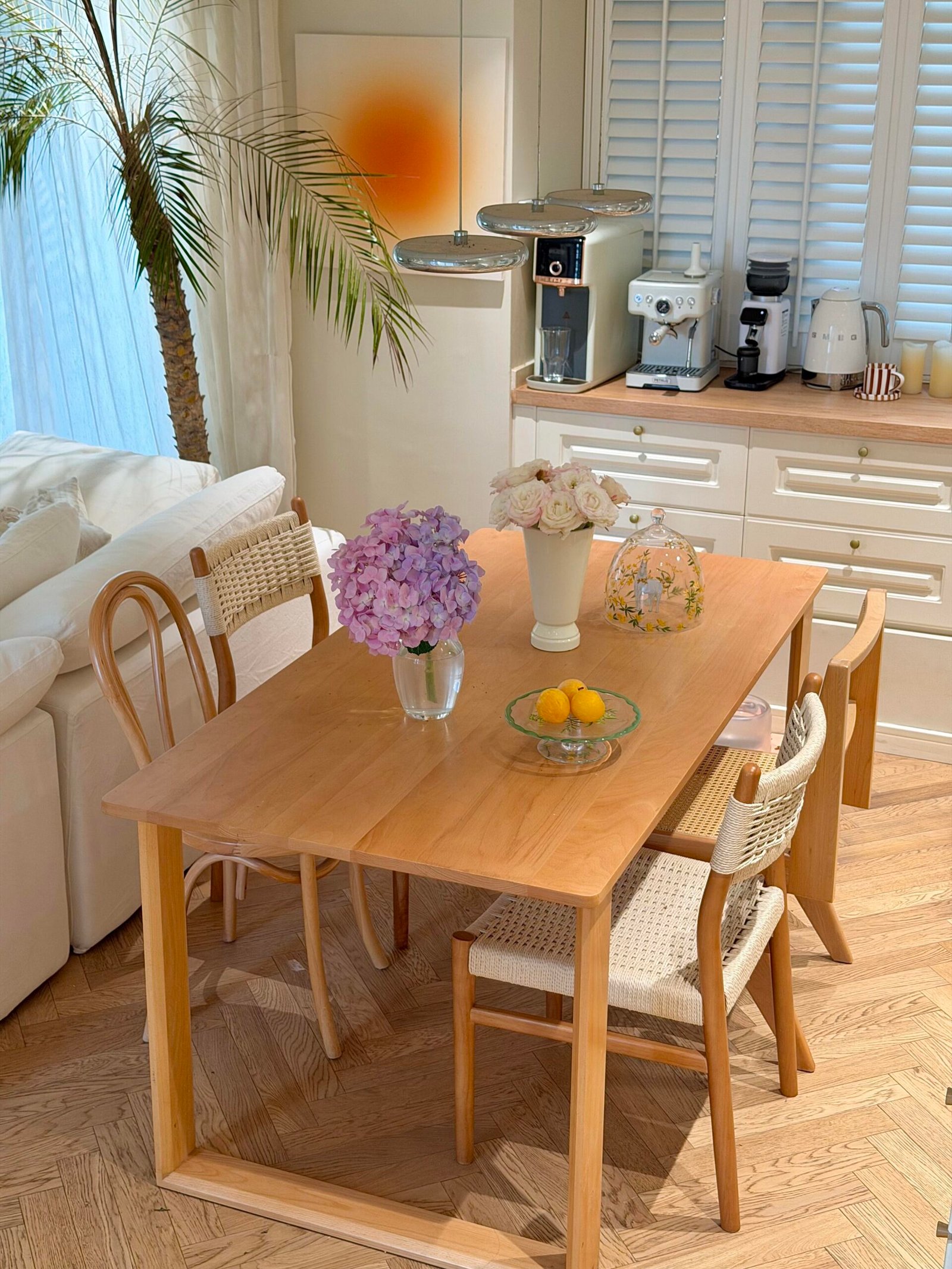
Few mistakes frustrate renters more than a table that blocks the walkway, so measure before you fall for a pretty top. The light oak rectangle in this small apartment dining table setup seats four to six without crowding the kitchen run behind it. Allow 36 inches between the table edge and any wall or counter, and plan about 24 inches of width per diner. An extendable model gives you a compact daily size and a bigger one for guests. Tape the footprint on the floor for a day before you buy.
Softening a Rectangular Room With Rounded Shapes
Rooms full of straight lines can feel stiff, which is where a curvy coffee table earns its keep. The wavy-edged wooden piece in this corner nudges the eye around the space and contrasts nicely with the boxy media console behind it. Keep the height within 2 inches of your sofa seat, and leave about 16 inches between table and sofa for knees. Organic shapes also suit tight walkways because there are no corners to bump. One soft curve can balance a whole room of right angles.
Hanging Art Above the Bed at a Comfortable Height
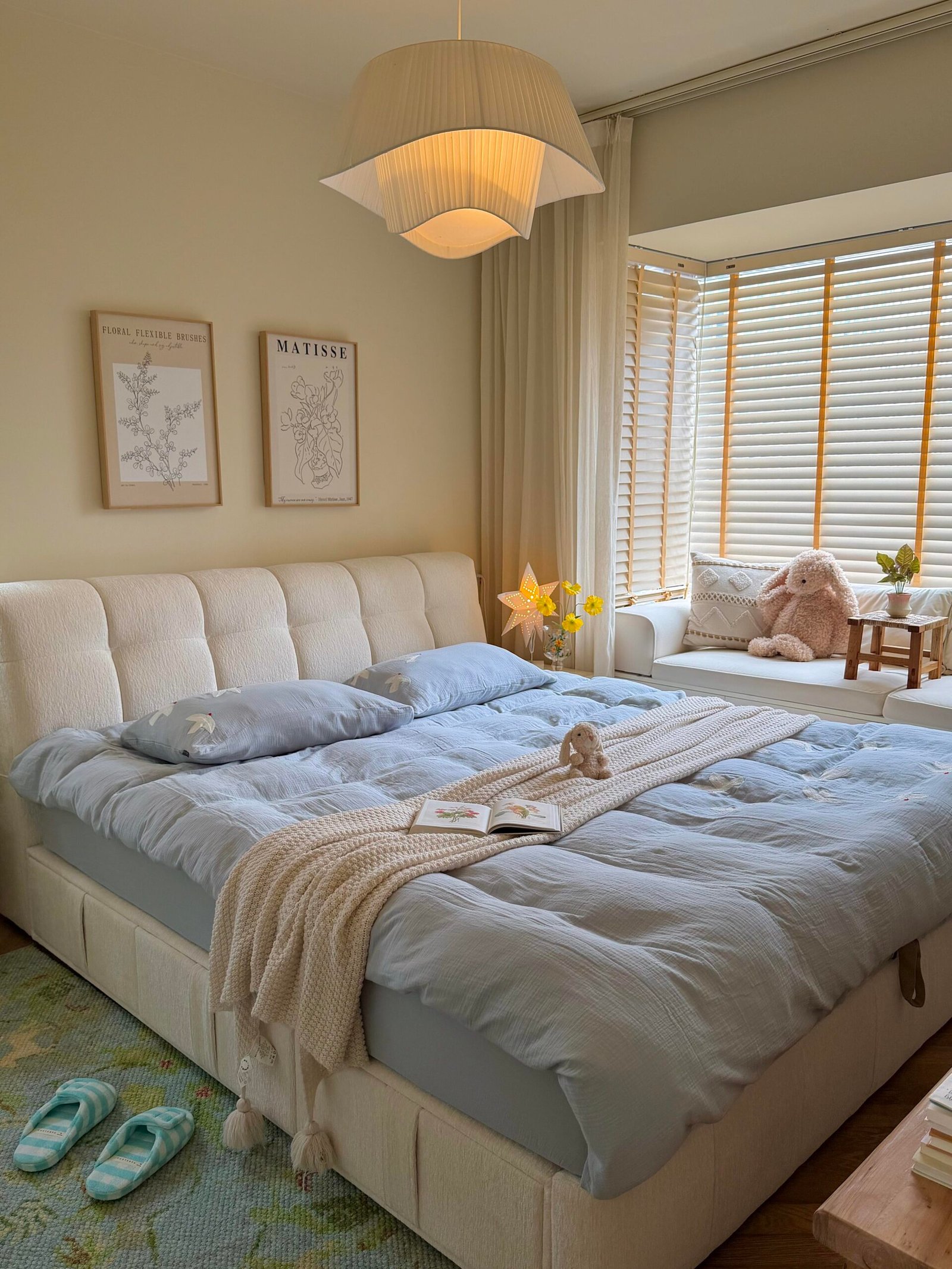
Wall art above a headboard often ends up too high or too small, so look at how the two framed prints here sit close together over the bed. Center the pair on the bed, with the bottom edge about 6 to 8 inches above the headboard. Together, they should span roughly two-thirds of the bed’s width. Renters can use picture-hanging strips rated for the frame weight. Pick botanical or line-drawn prints in muted tones. Hang the art lower than you think, so it connects to the bed.
Choosing a Pendant That Suits a Low Ceiling
Hanging lights in a bedroom needs care, especially near the bed, which is why the soft fabric pendant here works so well. Its ribbed shade glows gently and hangs high enough to clear heads. Keep the bottom at least 7 feet from the floor, or choose a flush mount if your ceiling is under 8 feet. A bulb around 2700K and a dimmer give a calm, low light for winding down. Renters can use a plug-in swag hook. A fabric shade spreads the glow evenly, so nothing feels harsh.
Butcher-block counters add warmth to a small kitchen, but they need some care. The honey-toned surface here pairs nicely with the cream cabinets and the striped runner on the floor. Oil it with food-safe mineral oil monthly at first, then every few months. Wipe up water quickly, and use a board for chopping to prevent knife marks. Sand out small stains with fine-grit paper. Never leave hot pans directly on the wood. A few minutes of upkeep keeps a wood counter handsome for years.