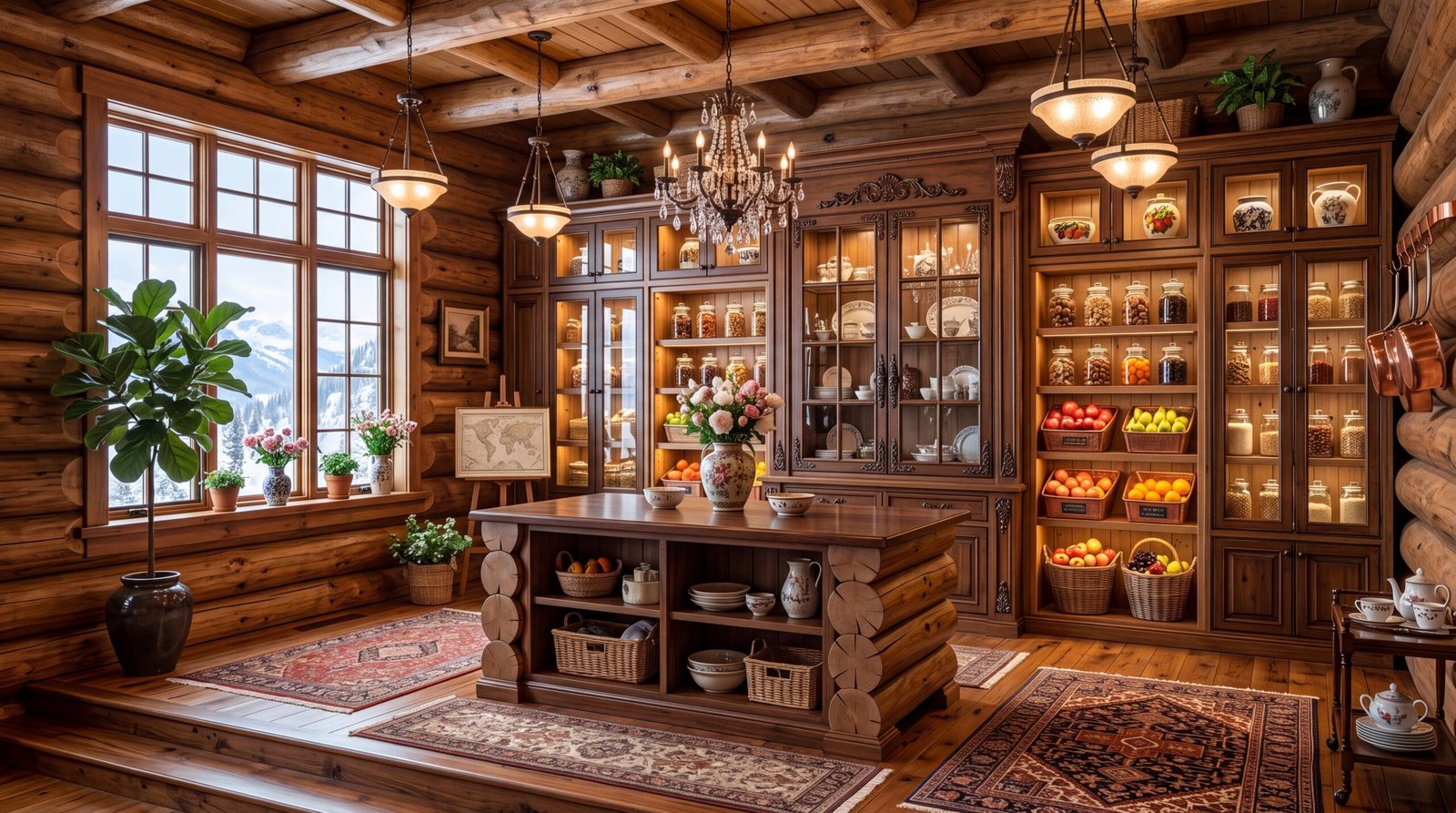
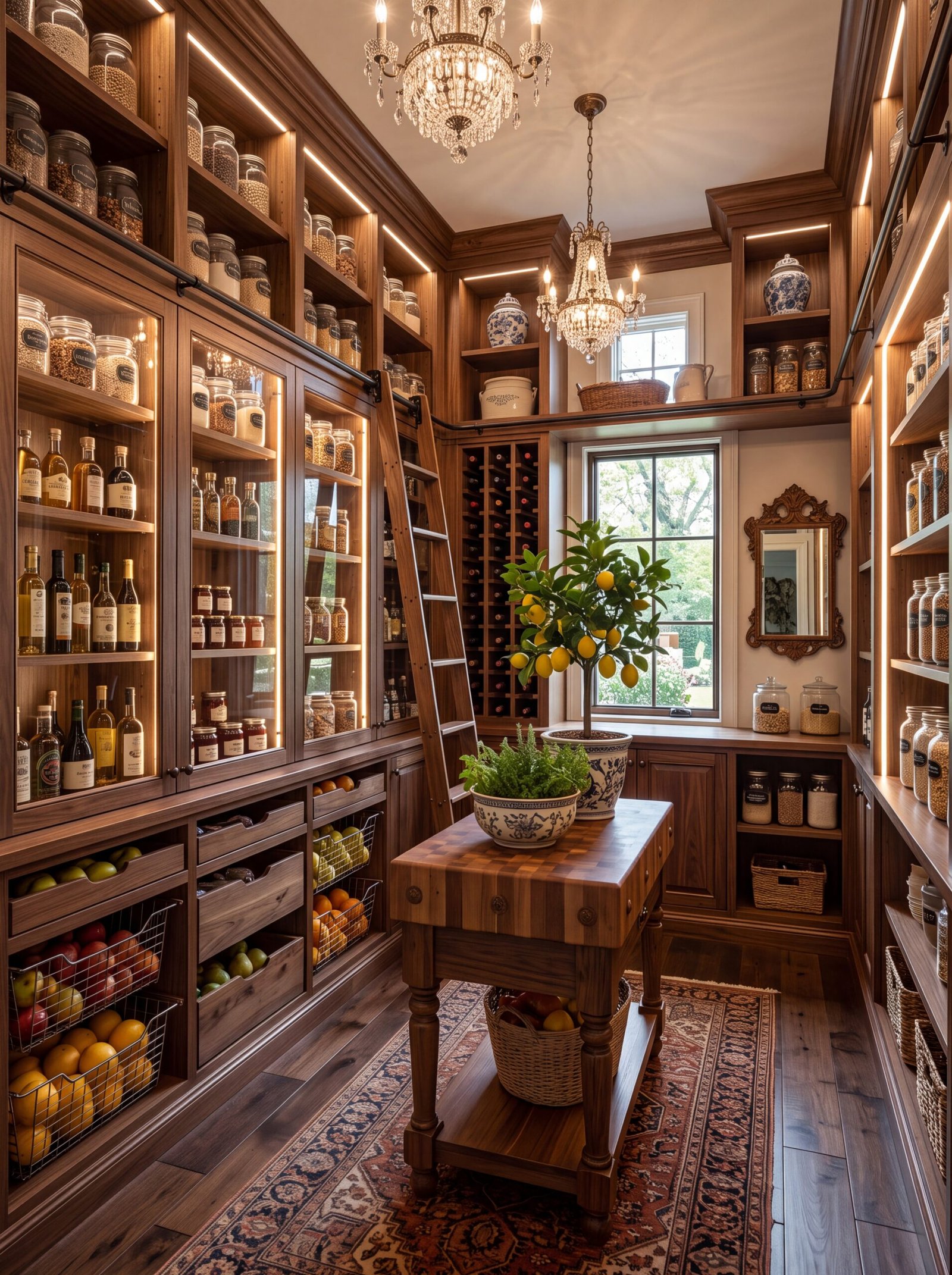
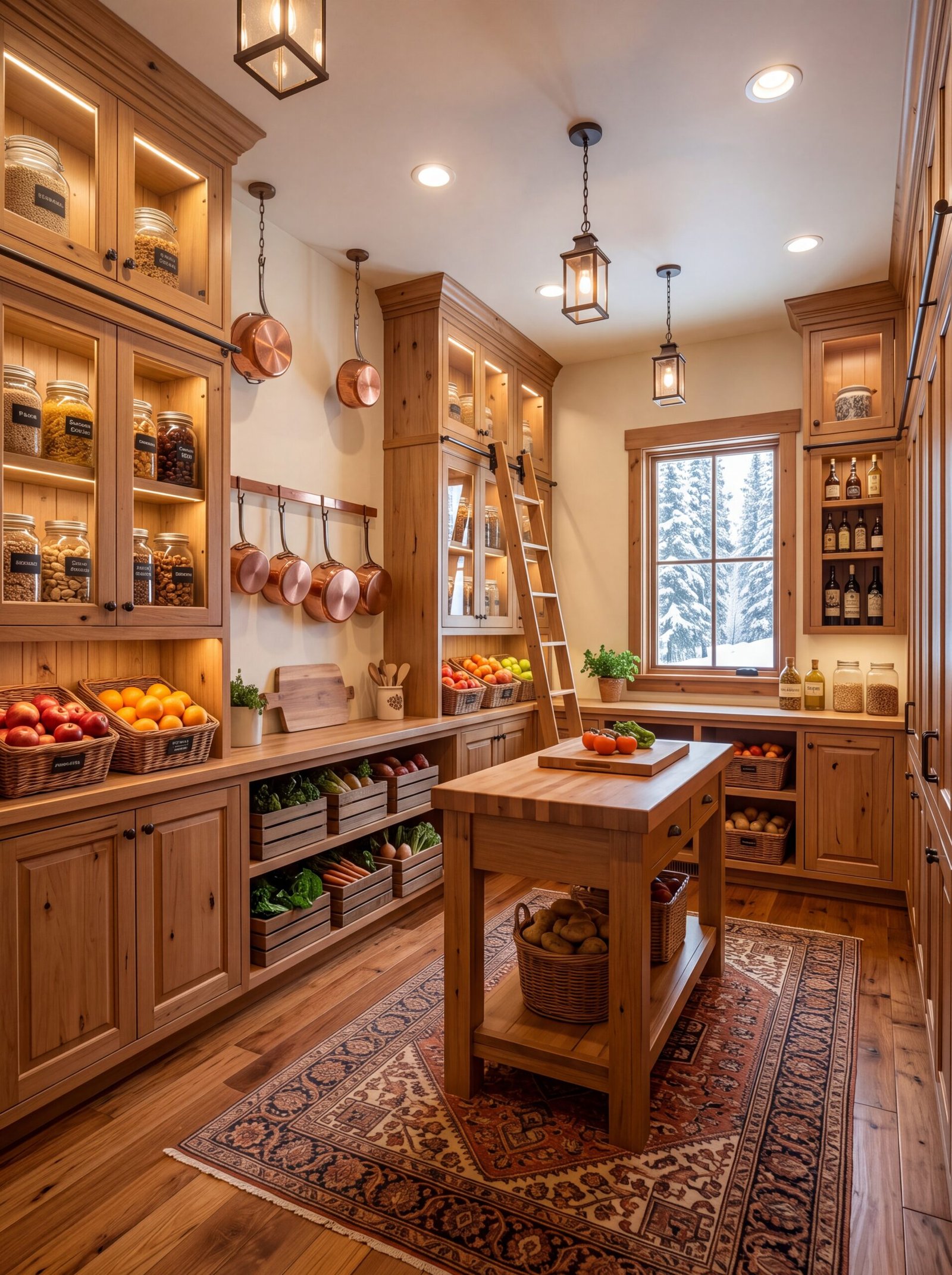
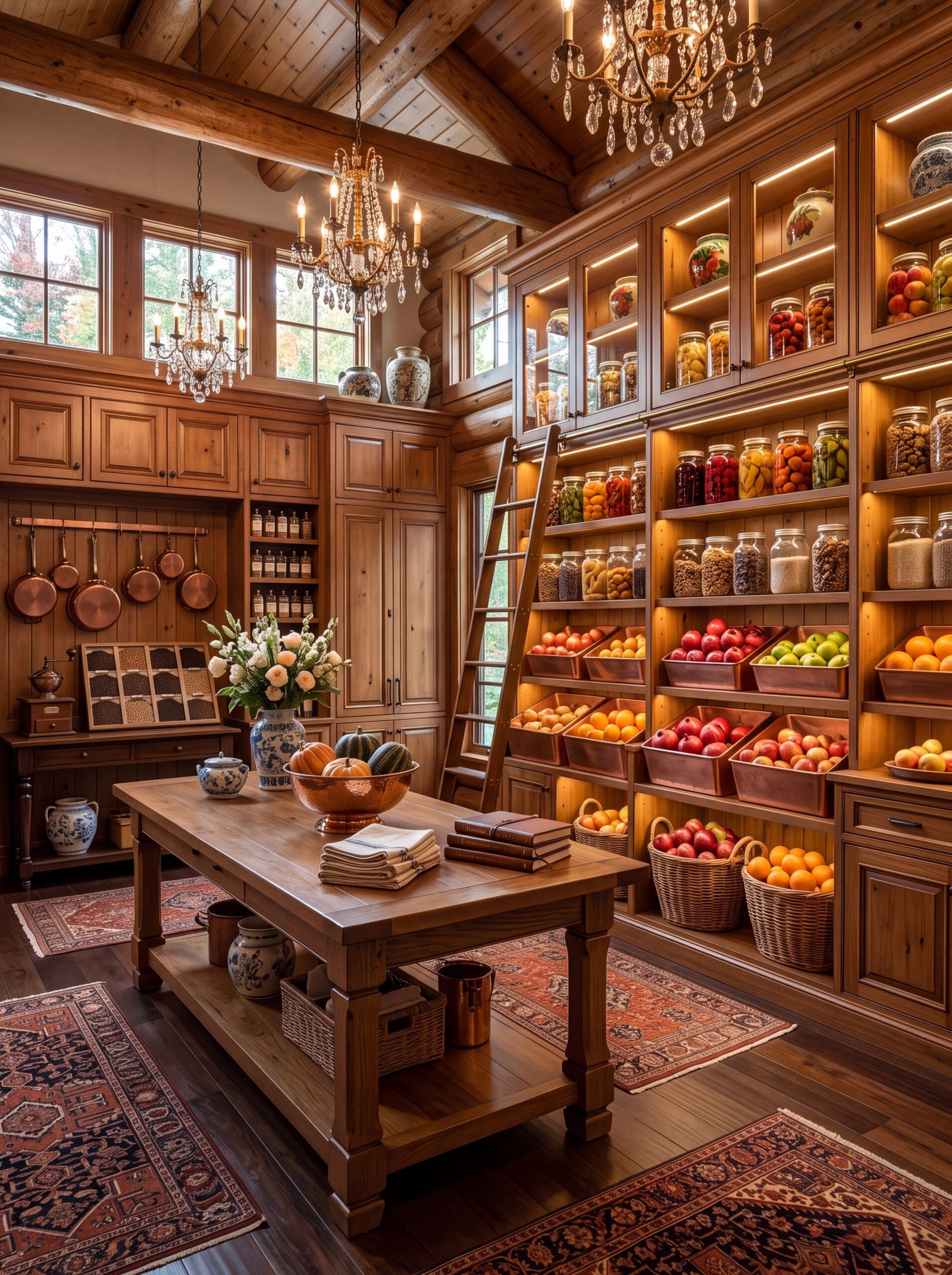
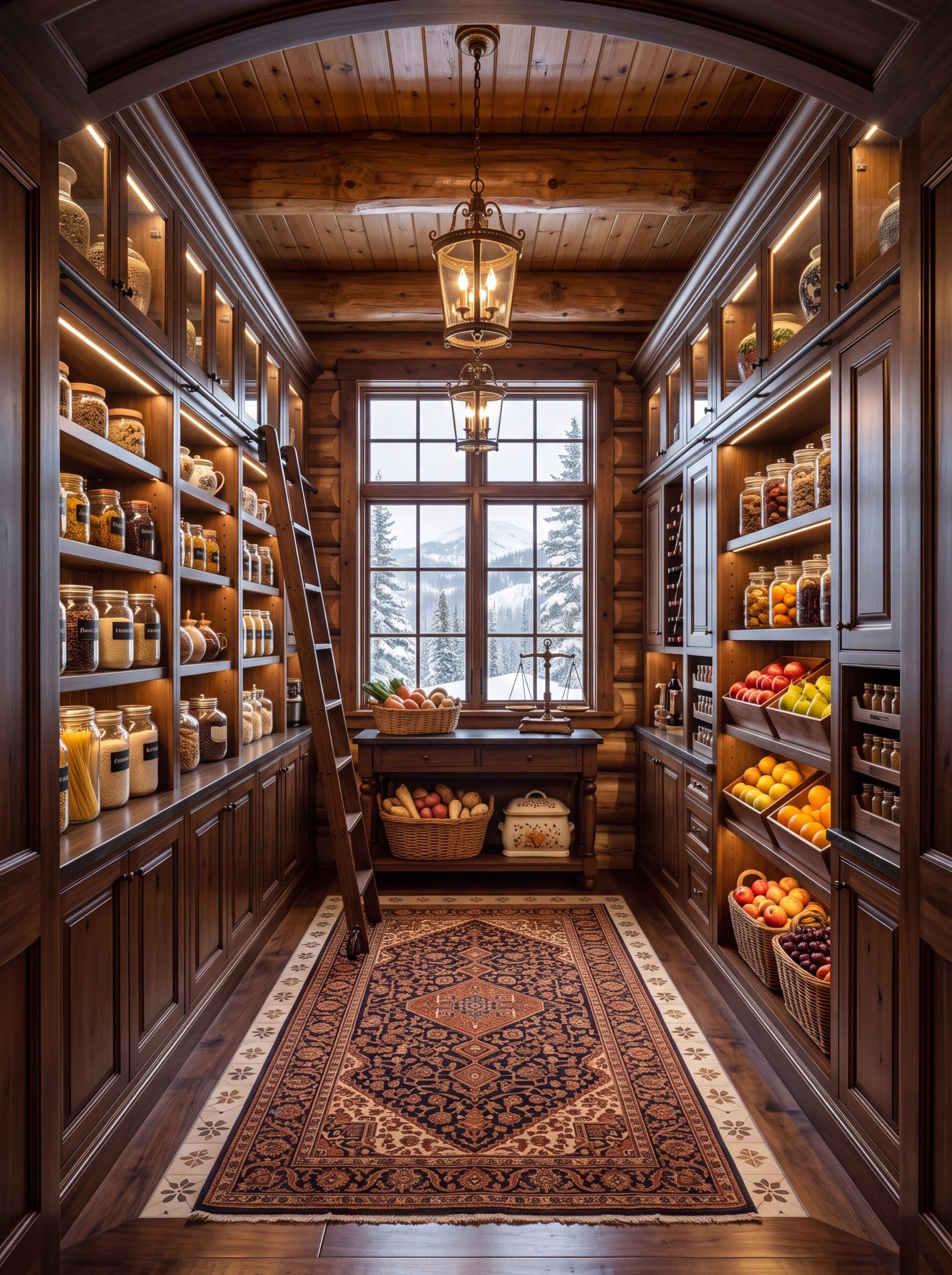
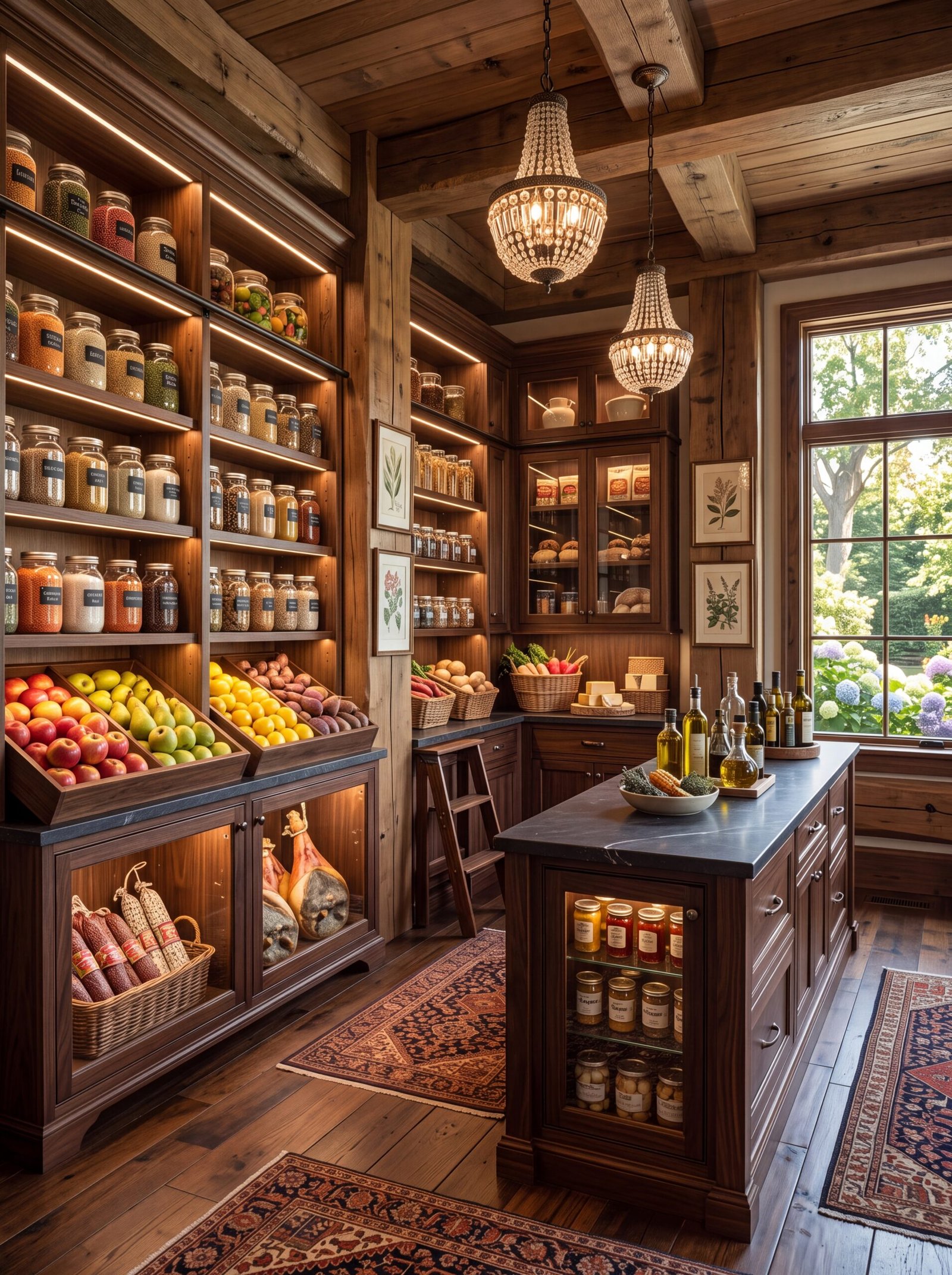
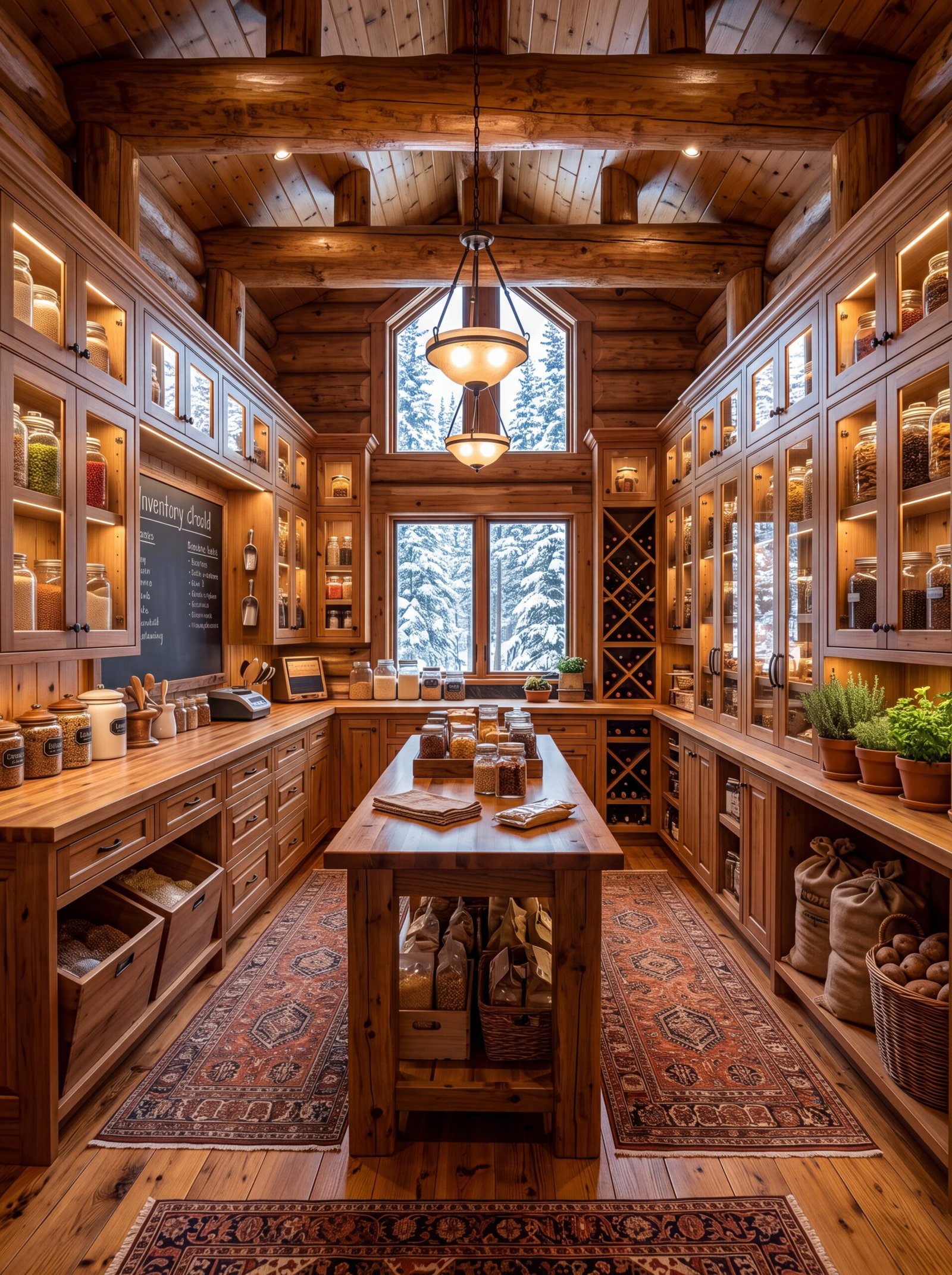
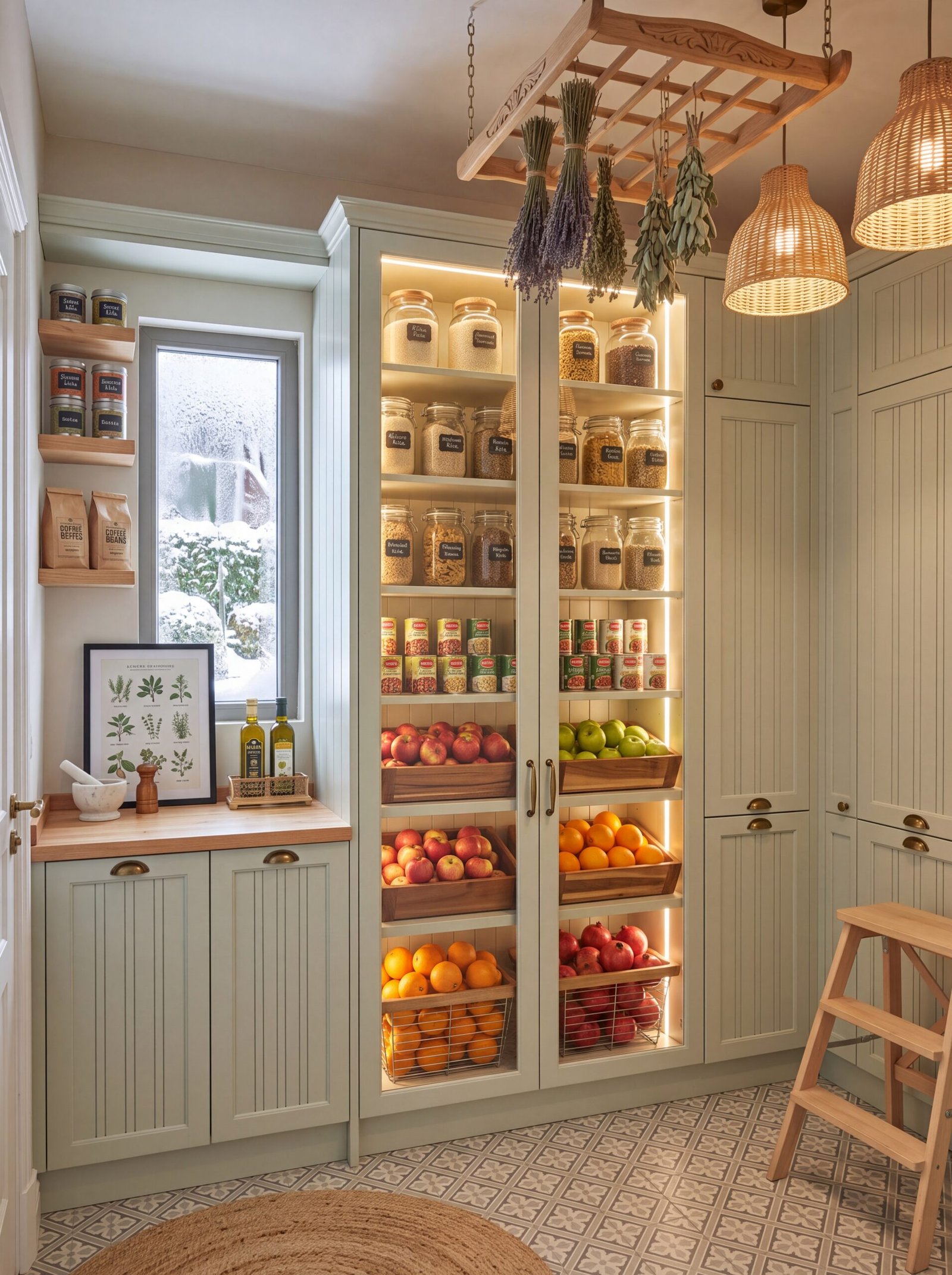
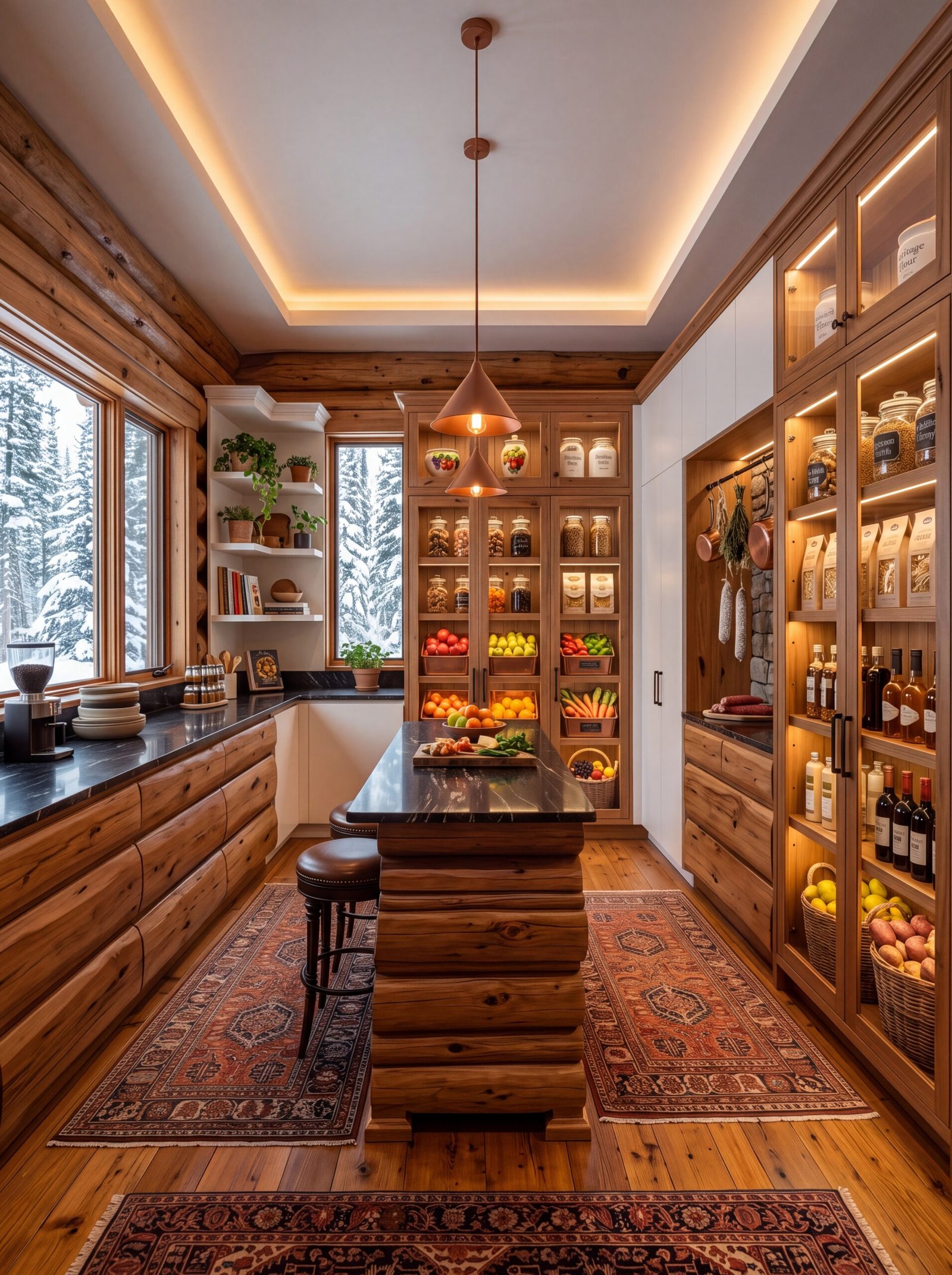
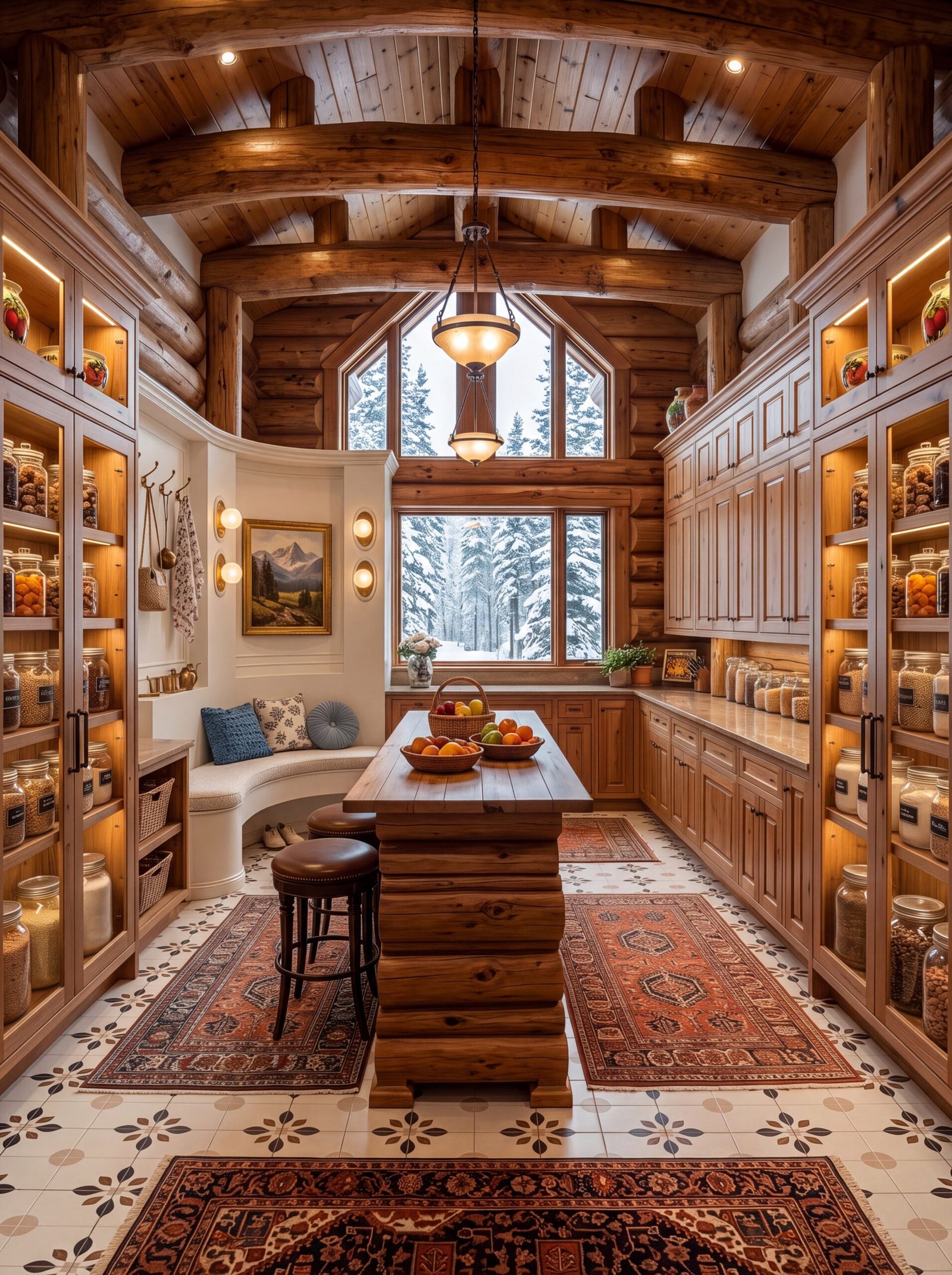
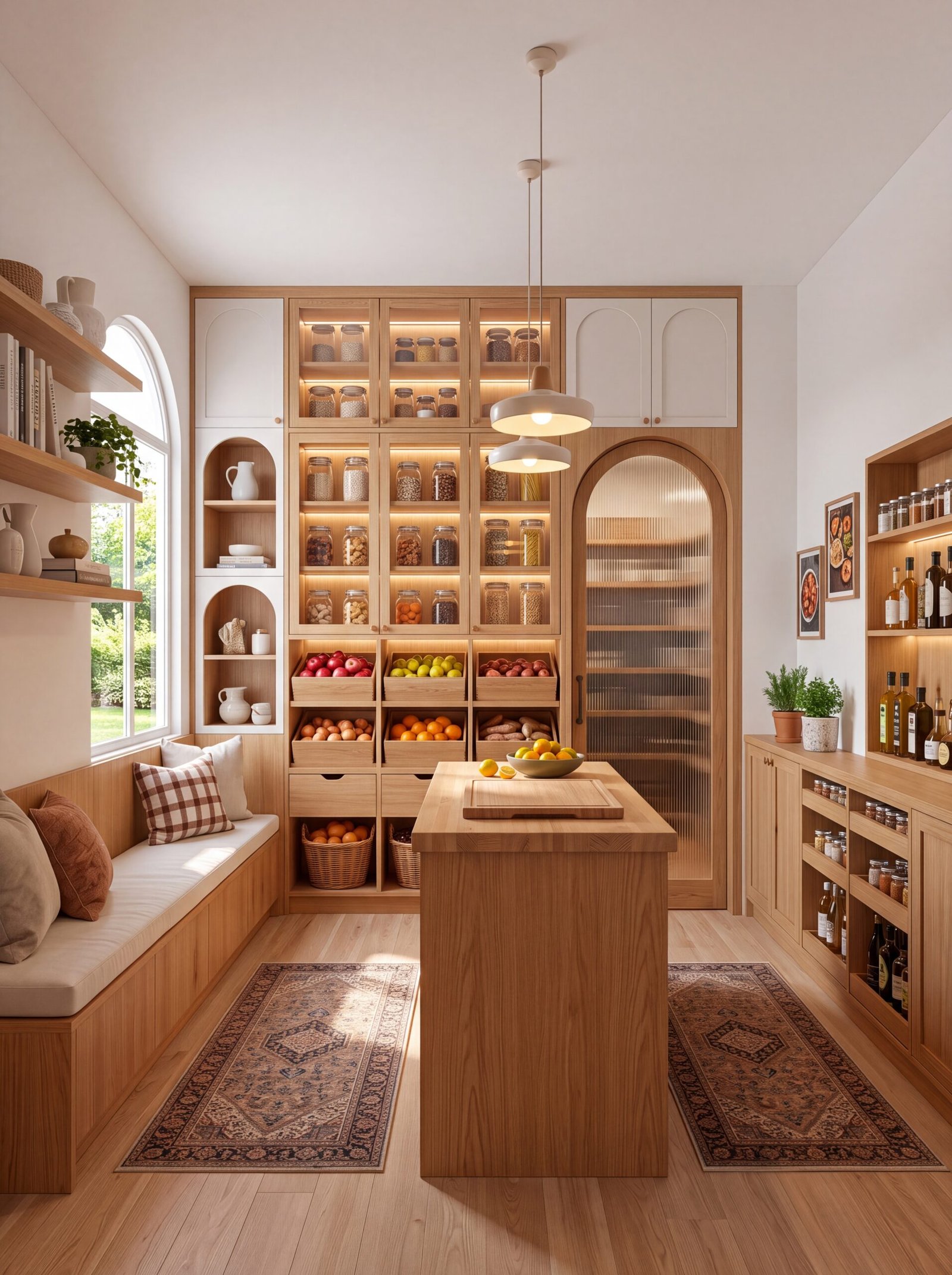
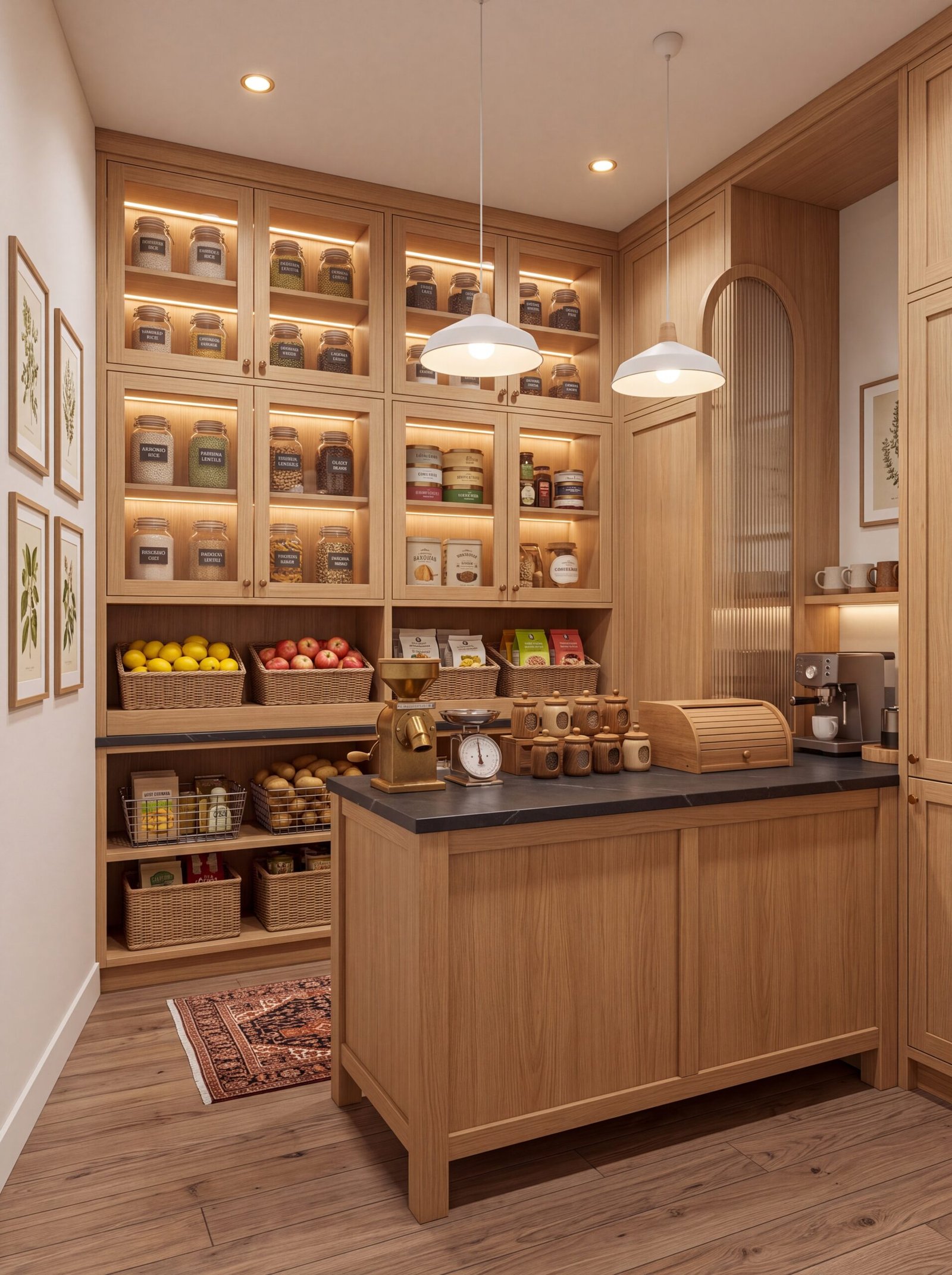
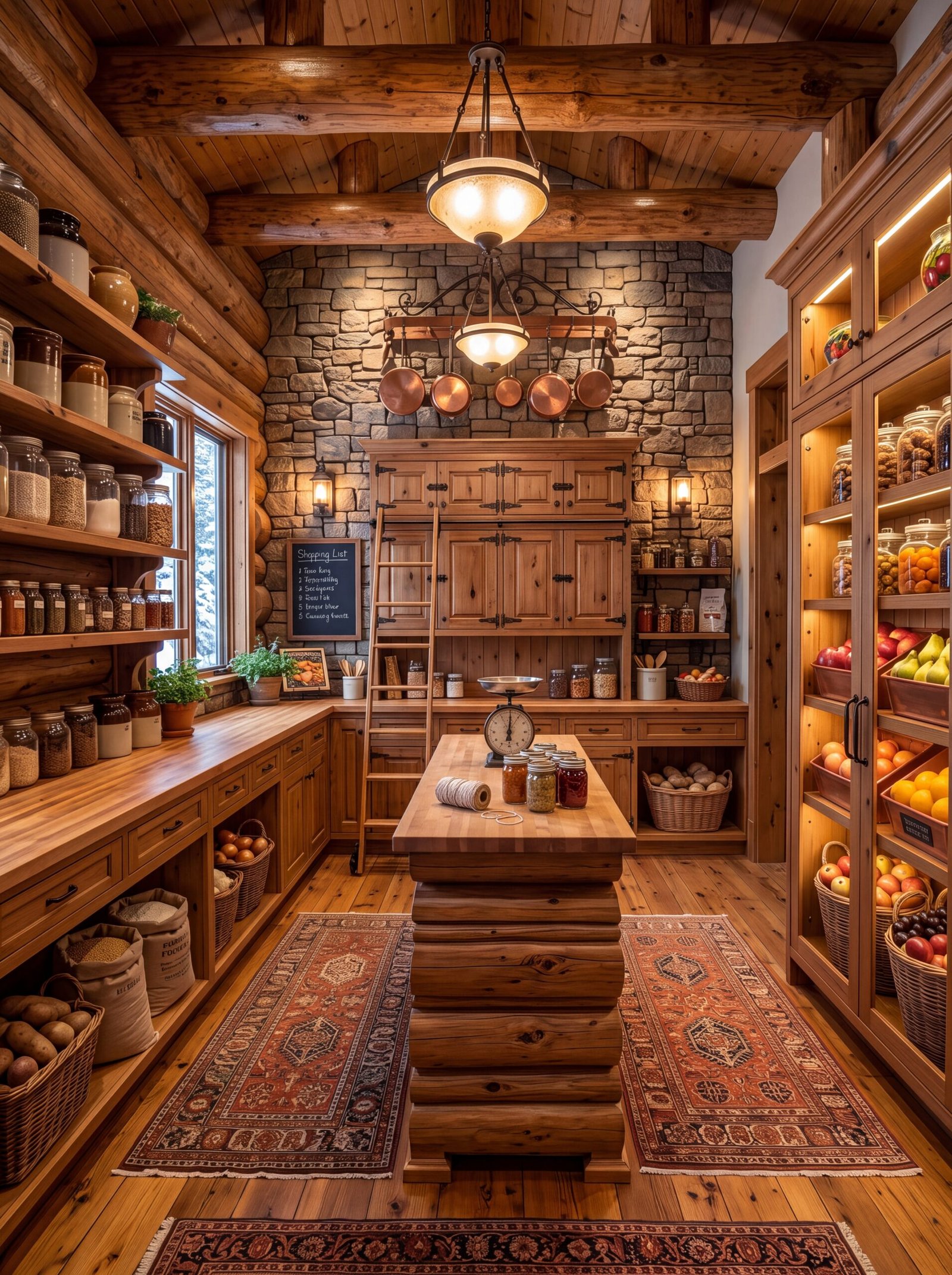
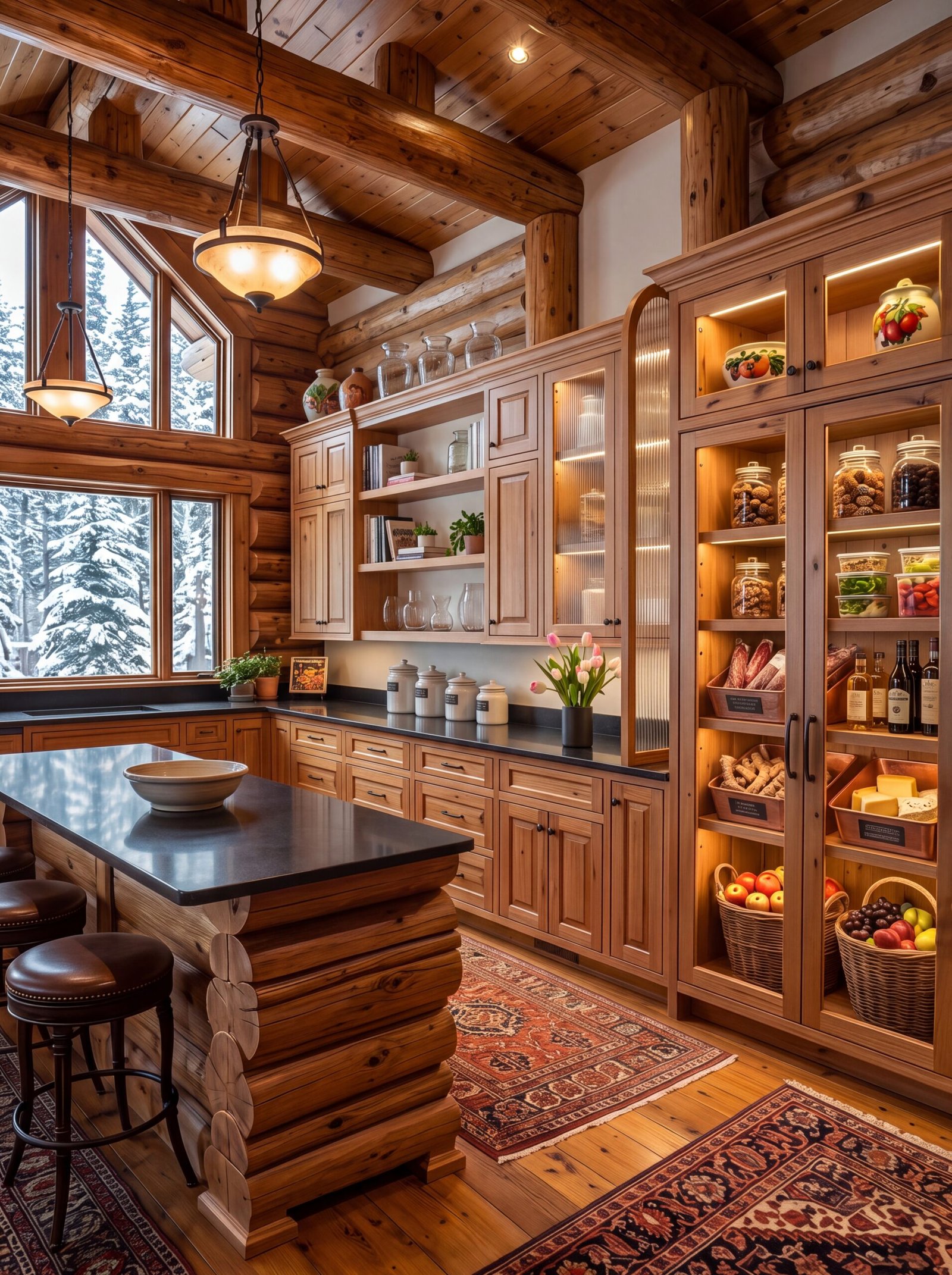
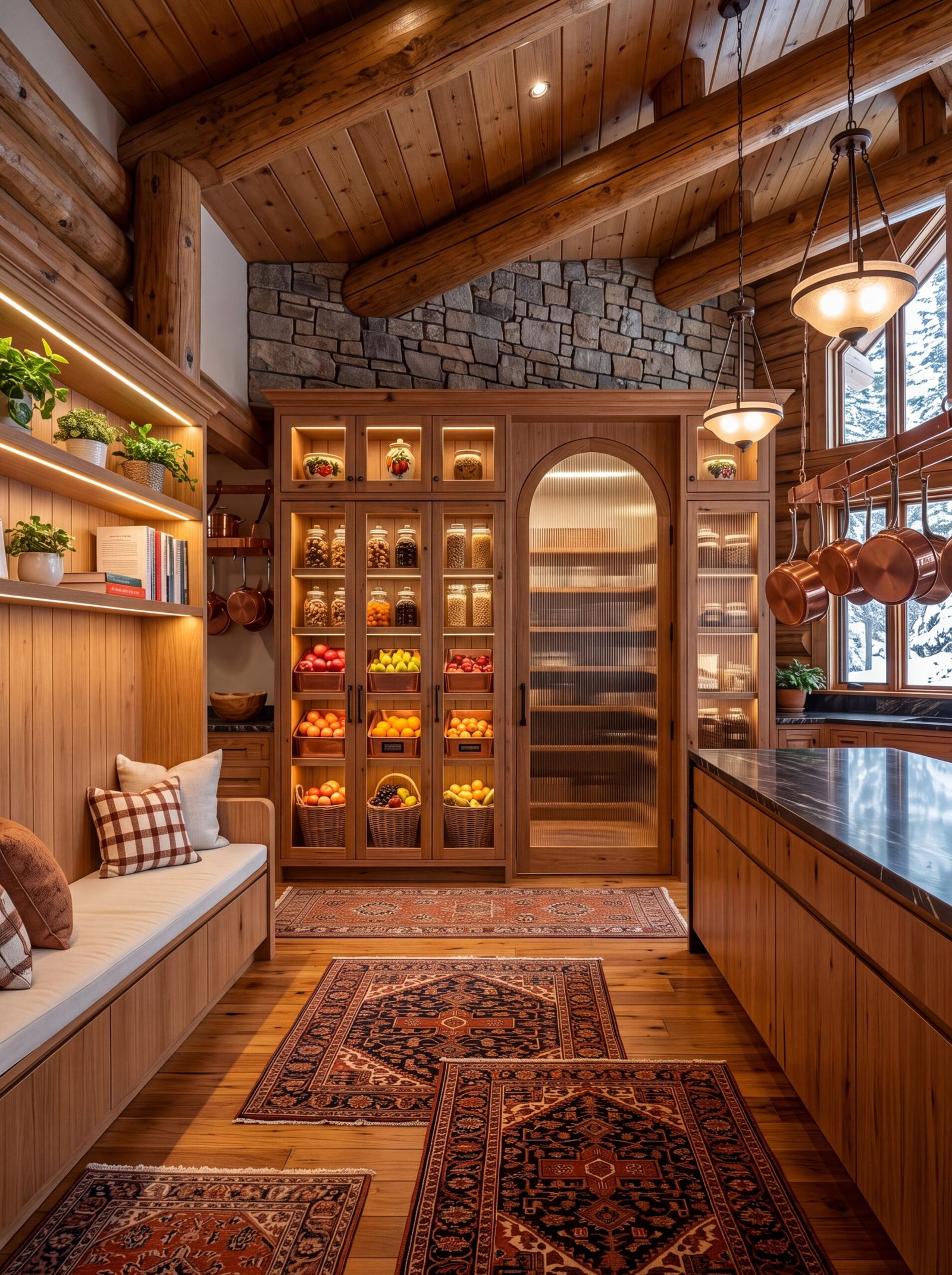
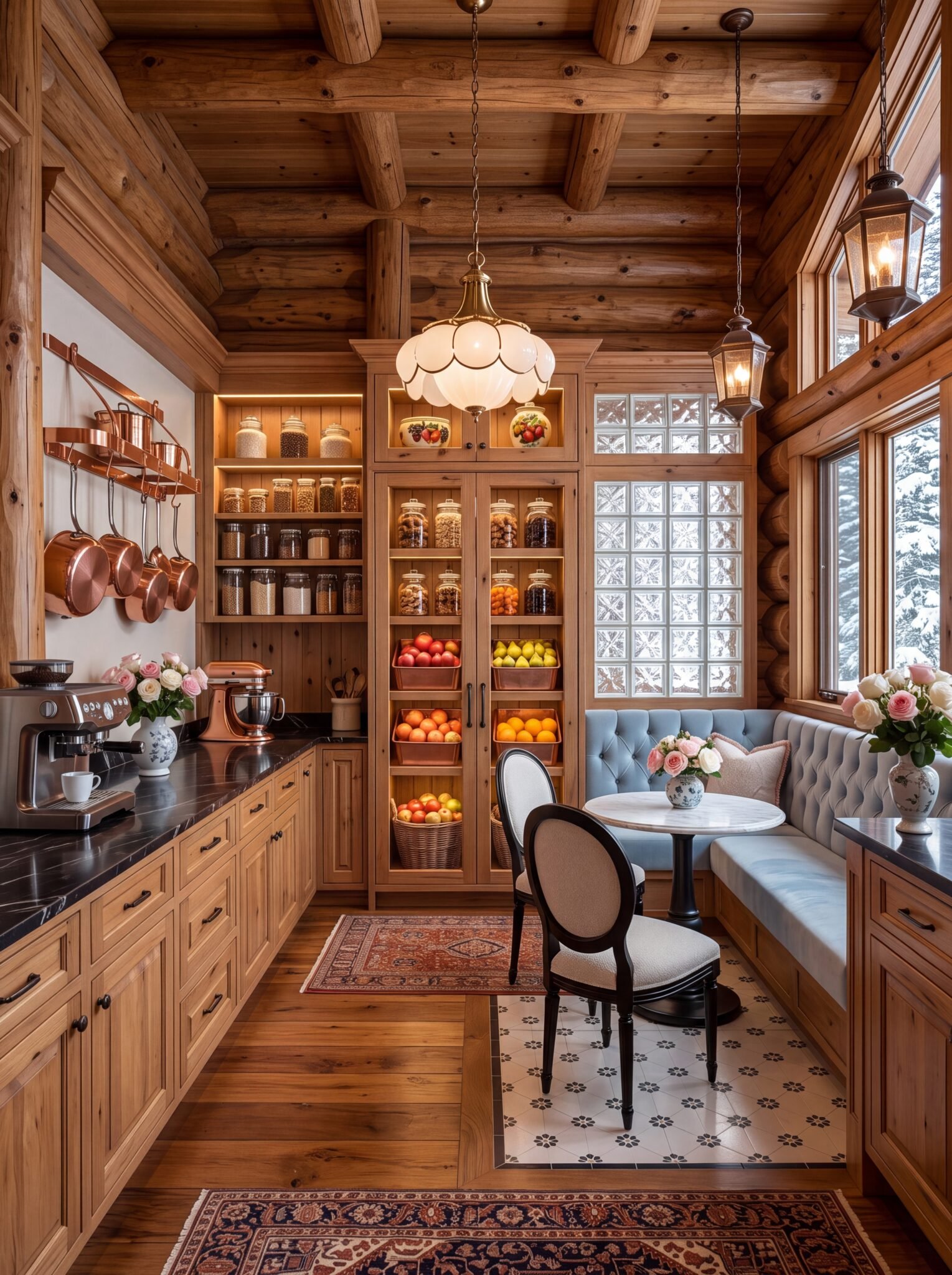
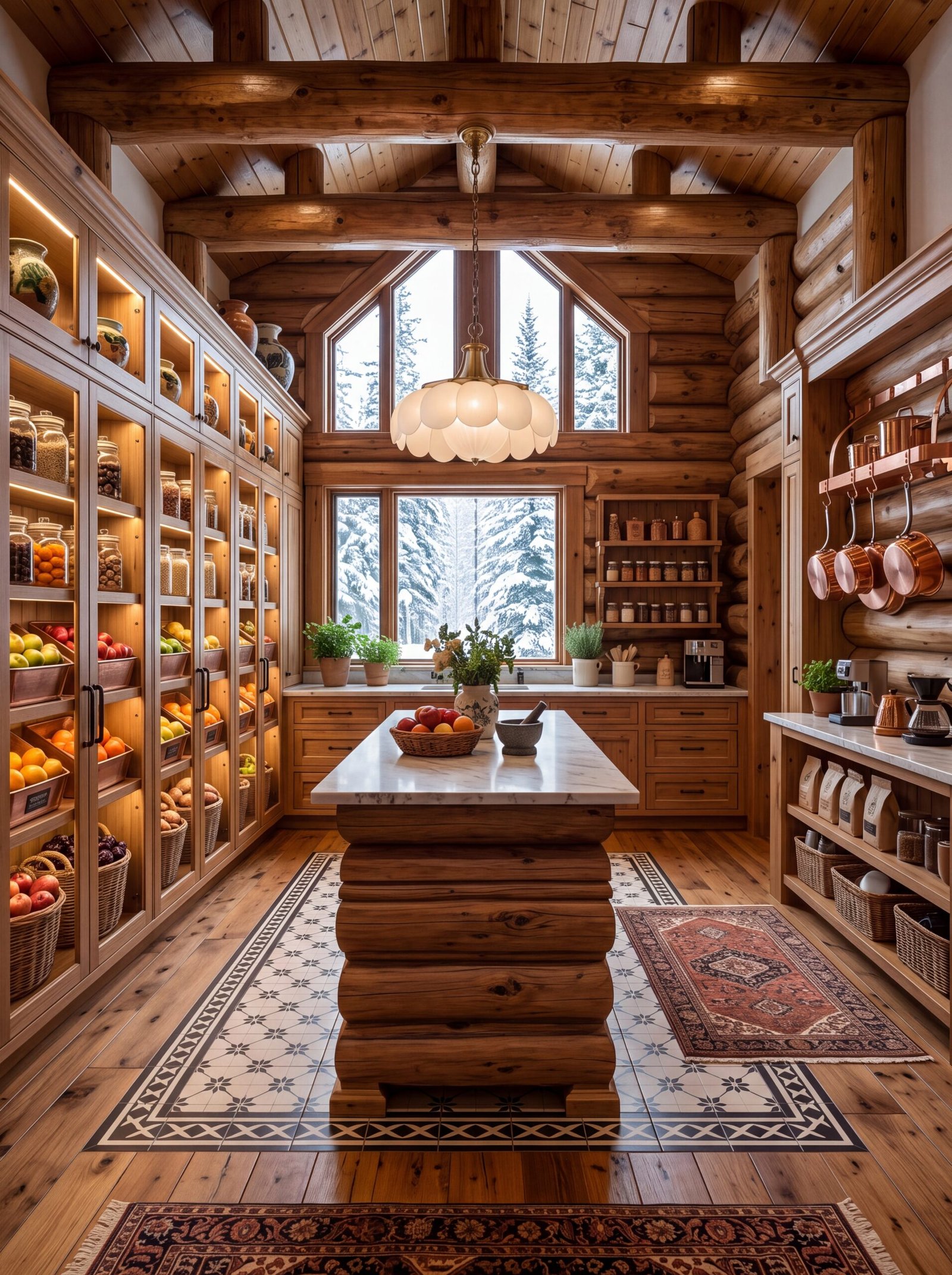
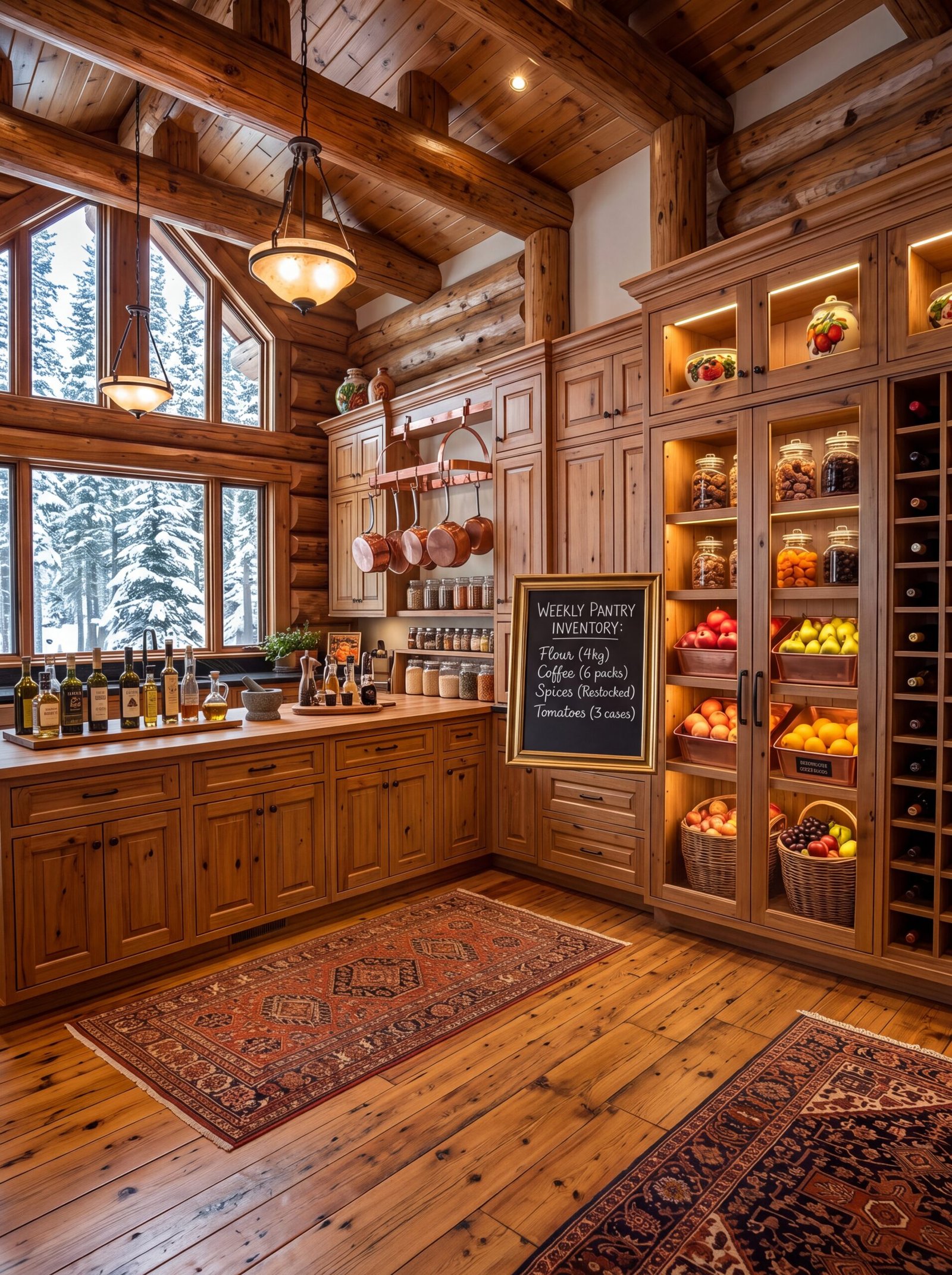
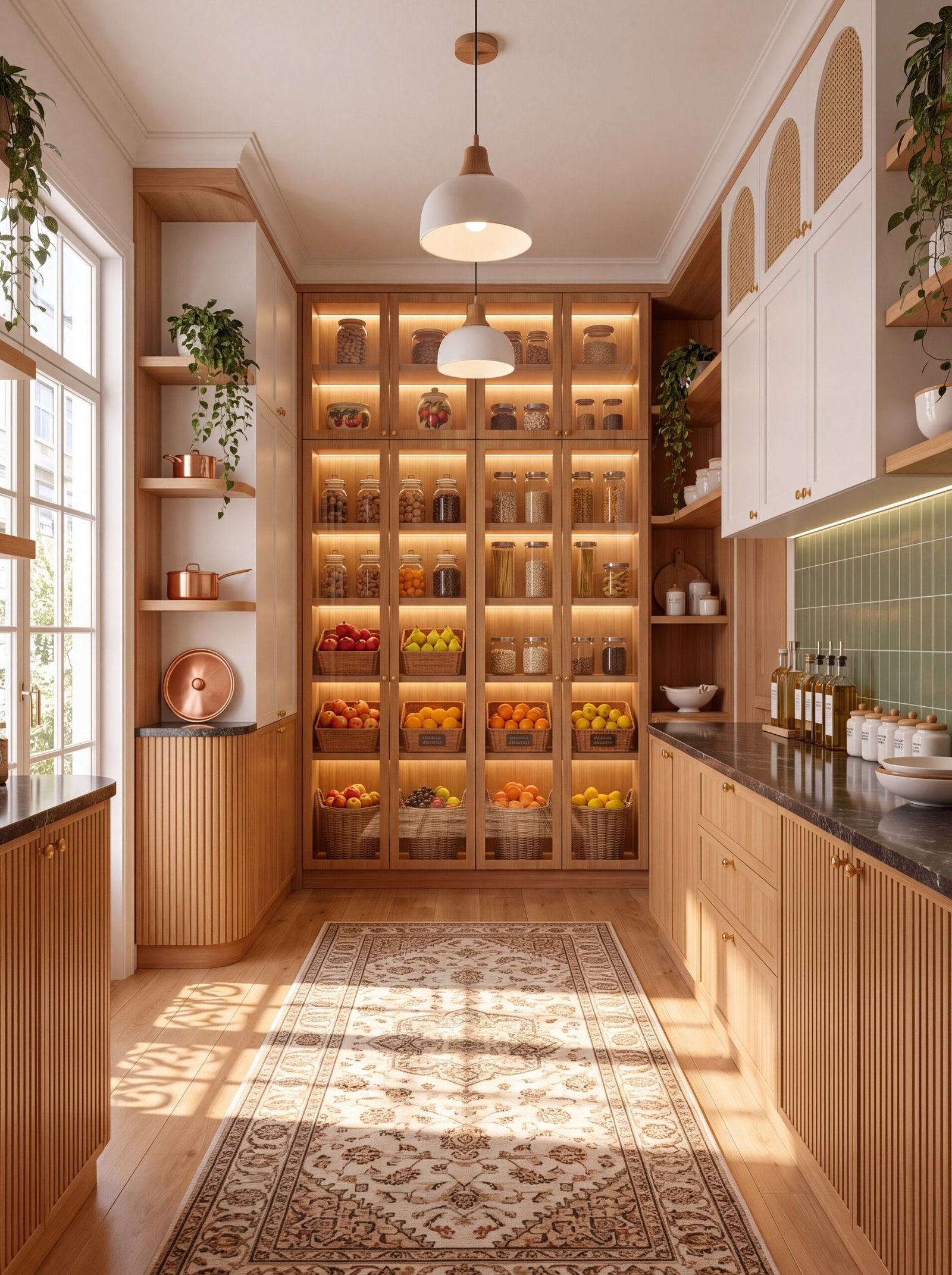
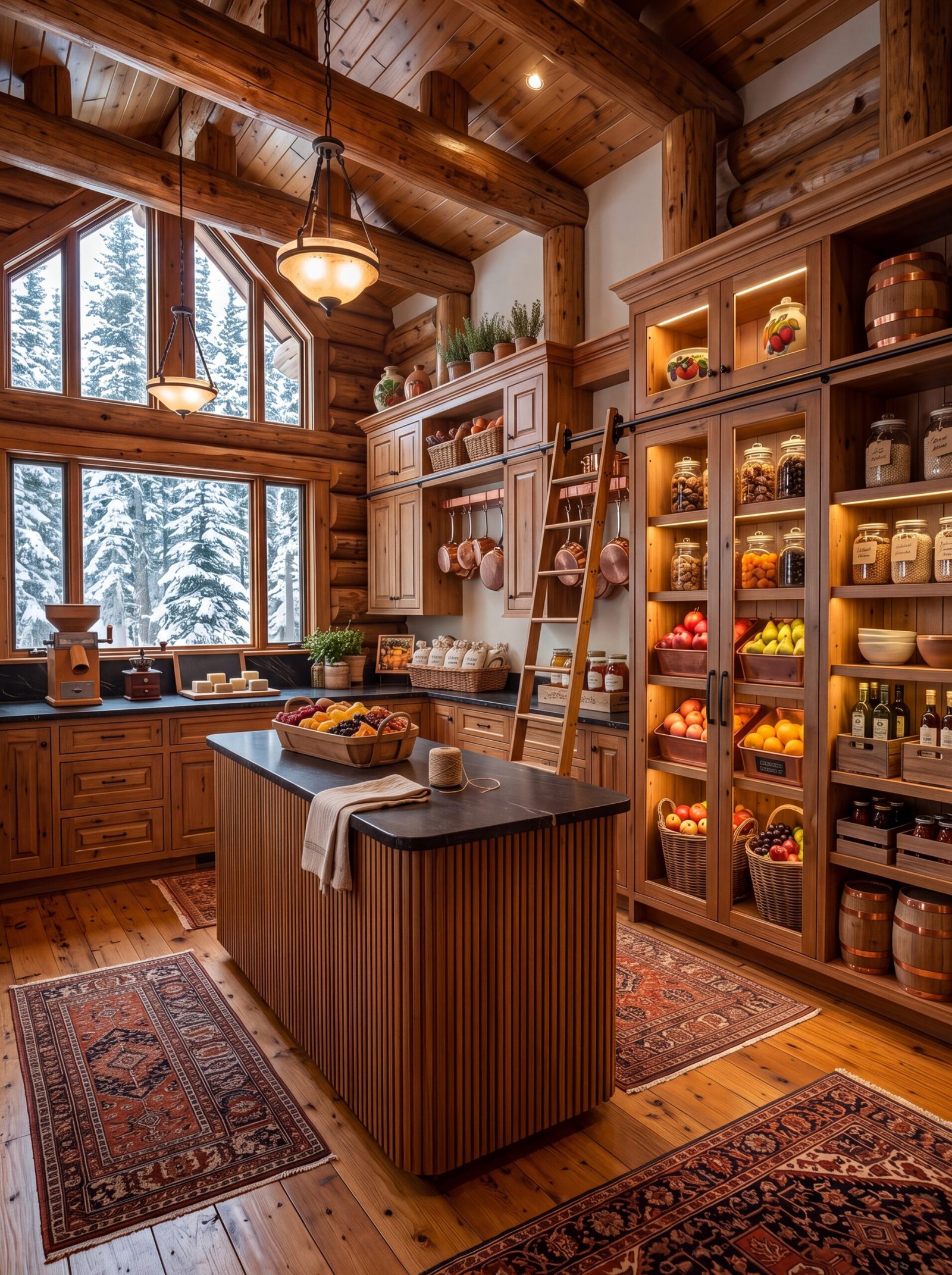
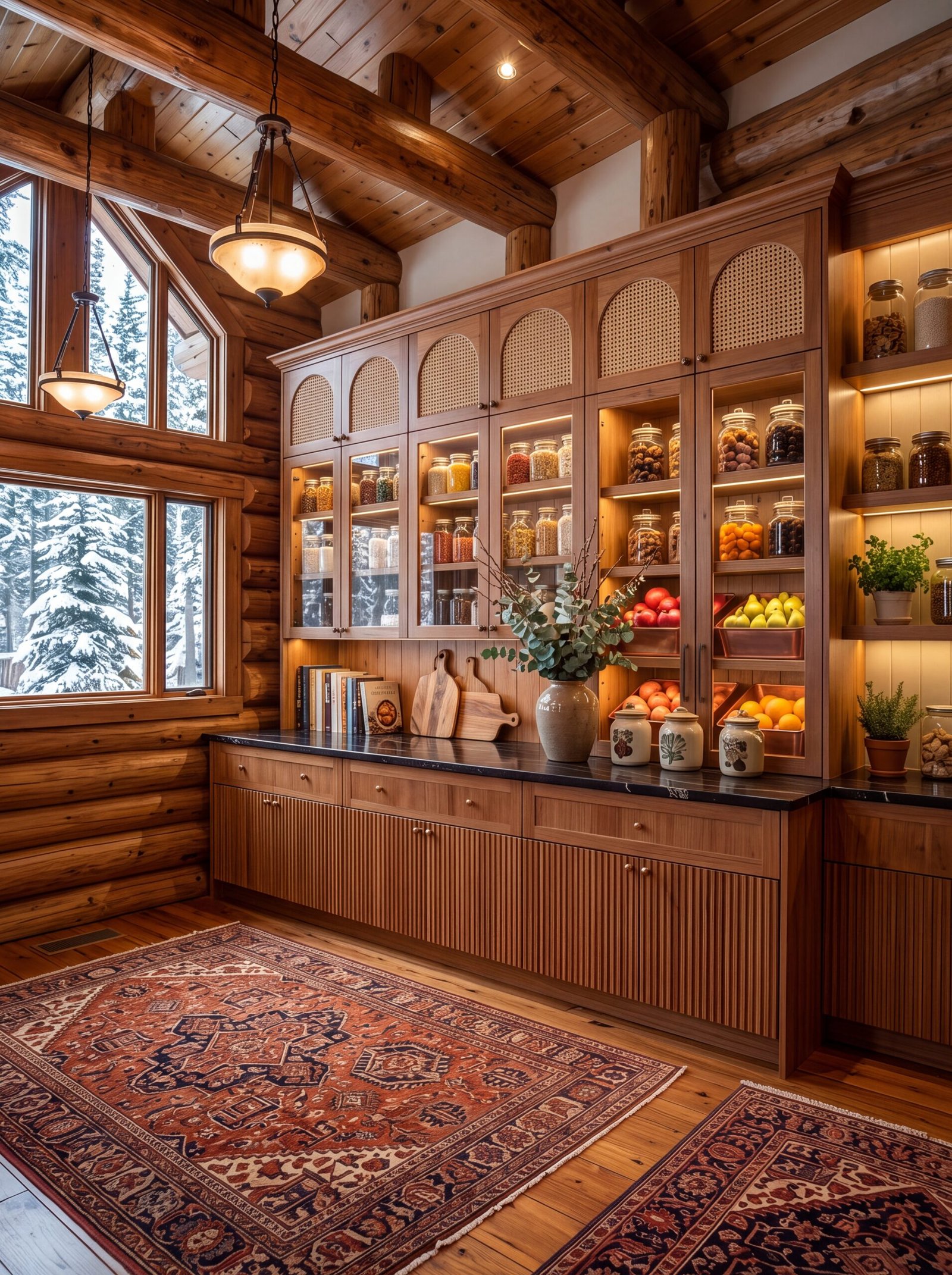
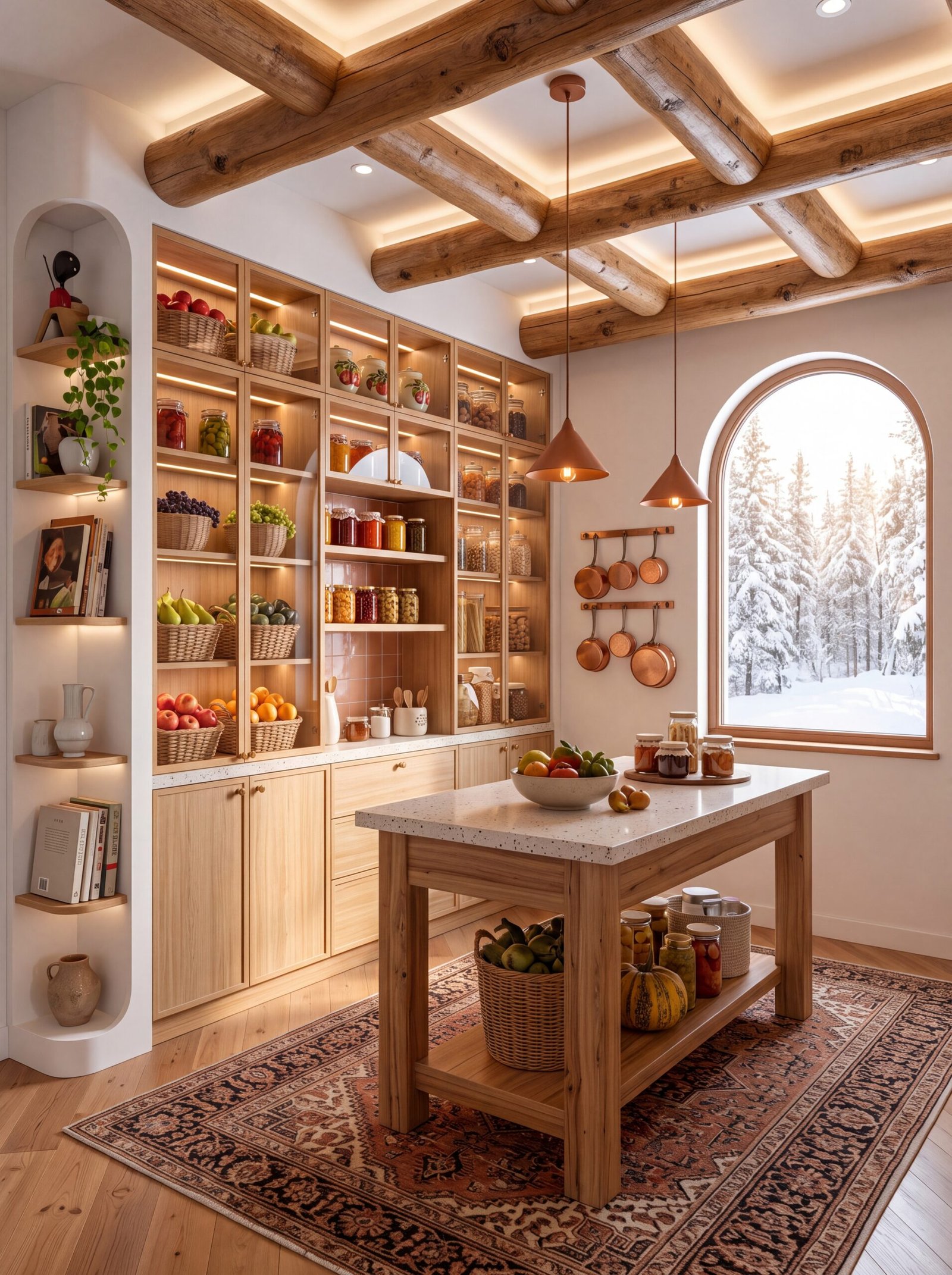
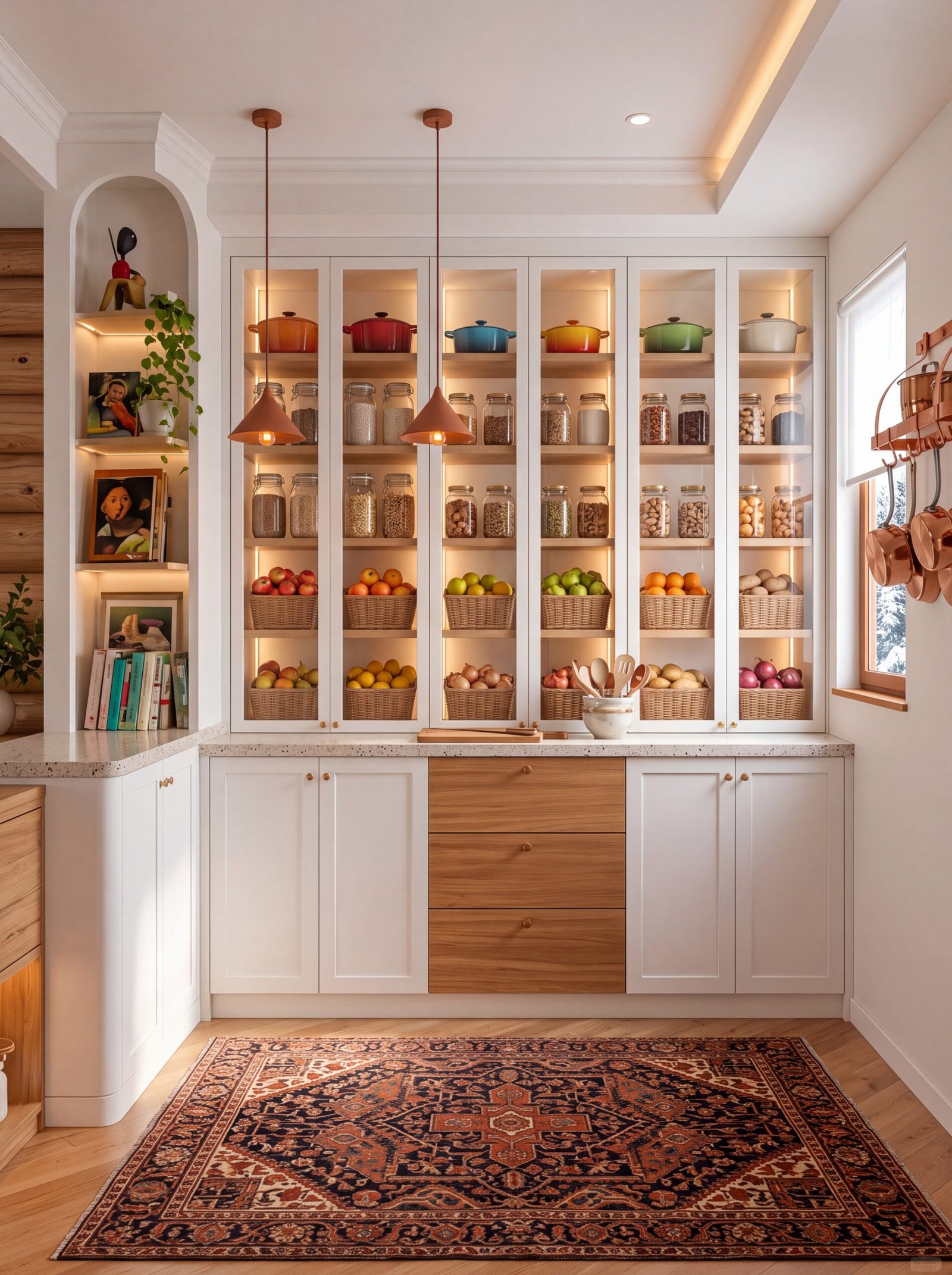
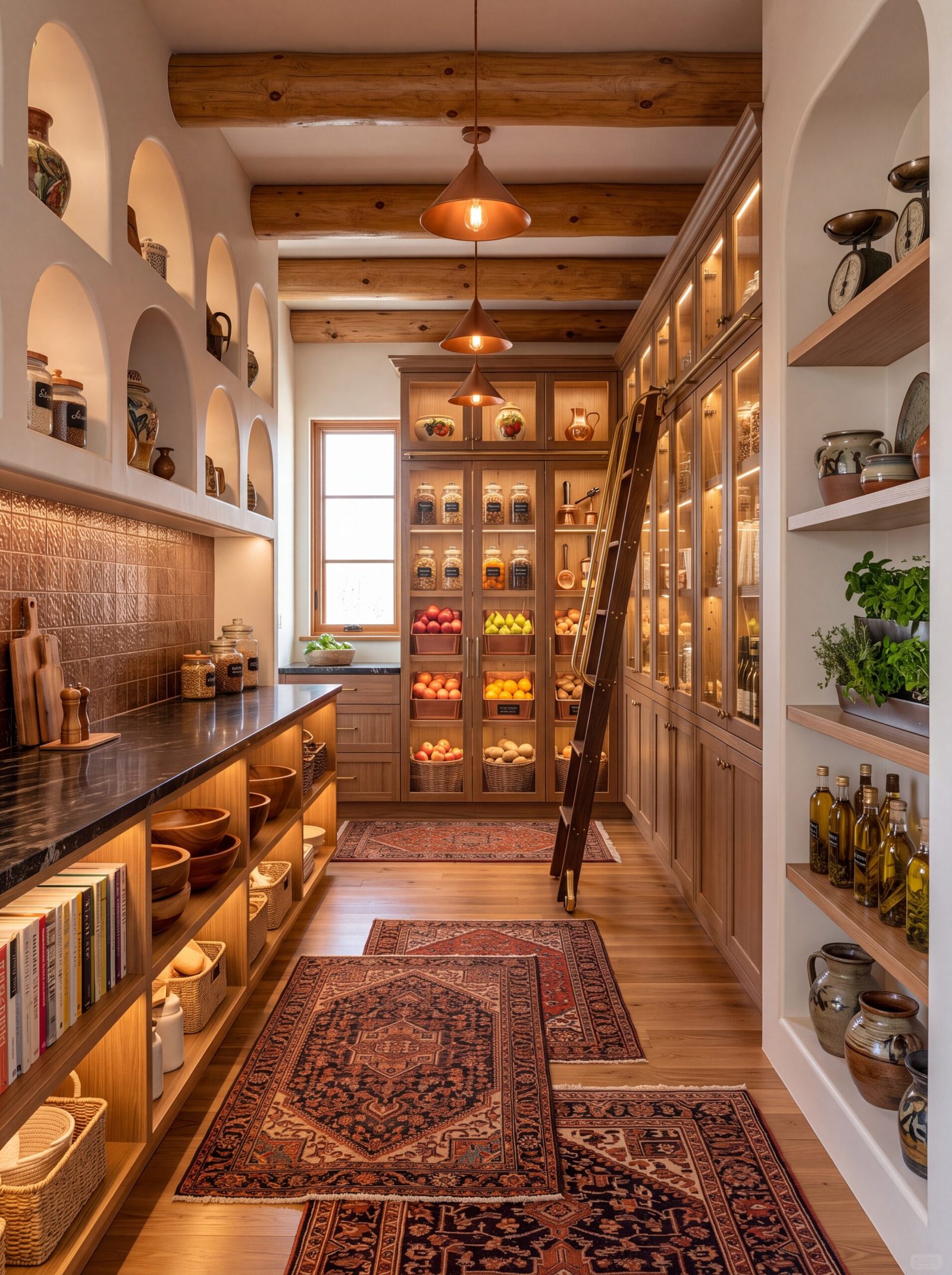
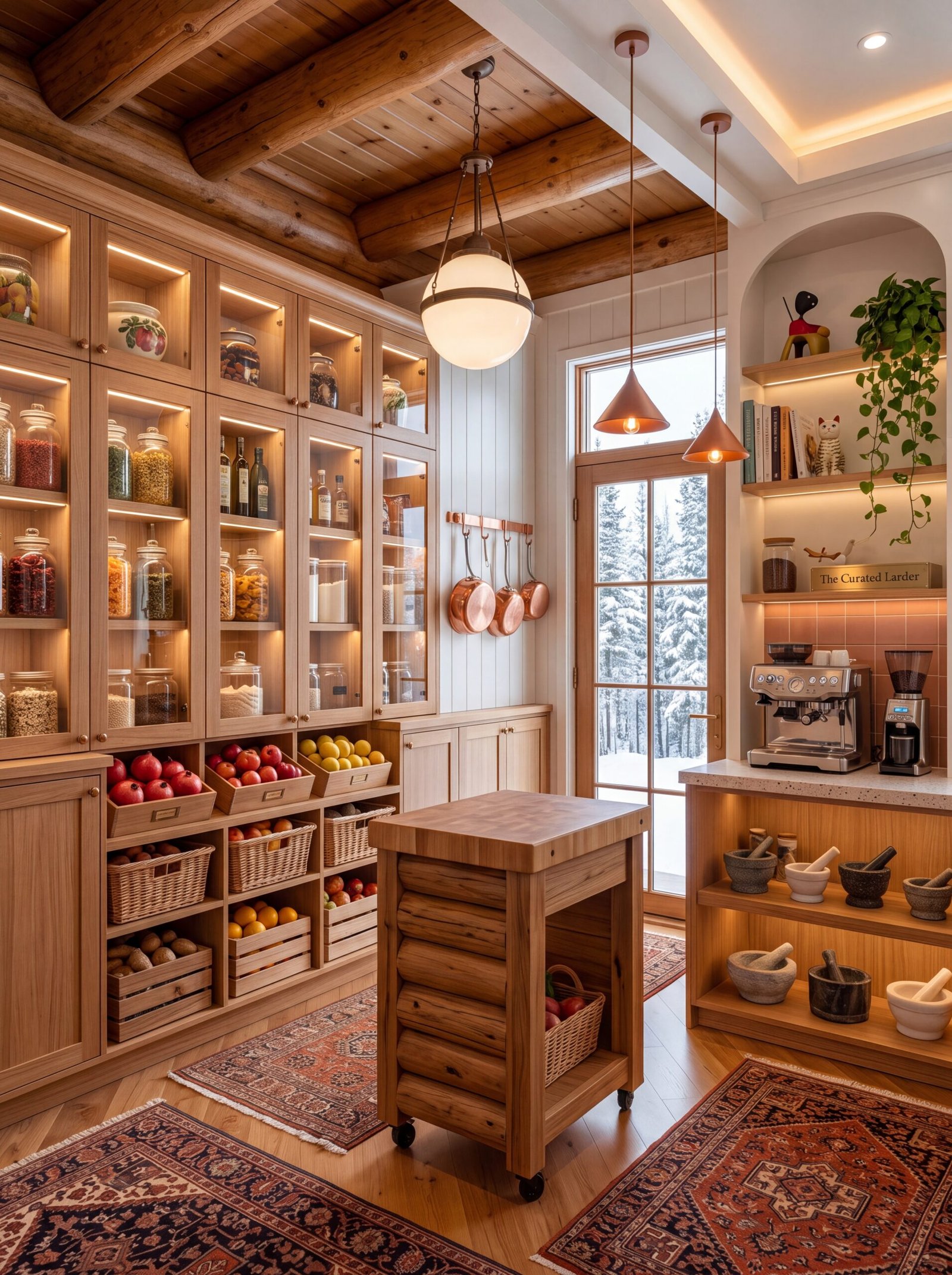
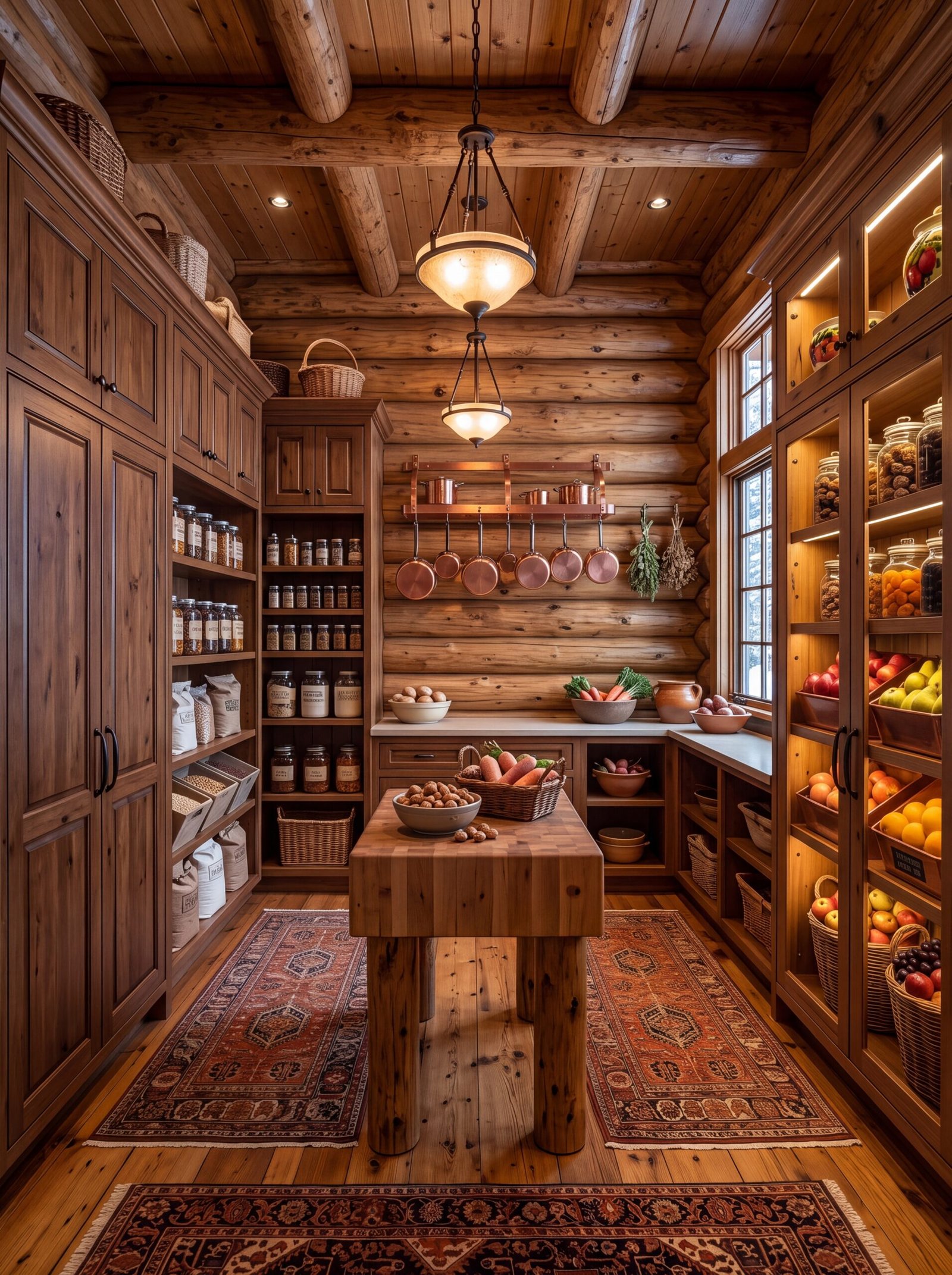
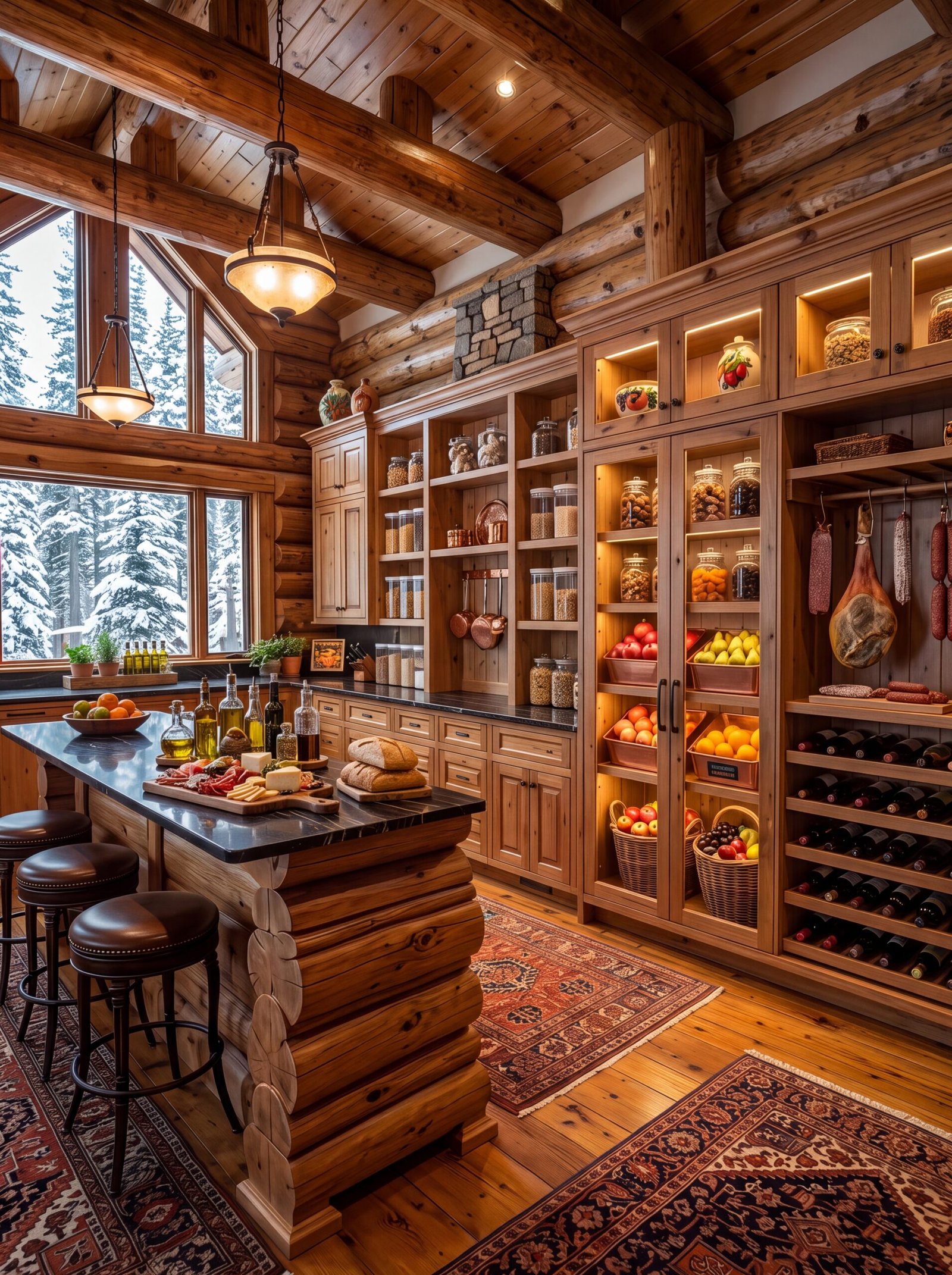
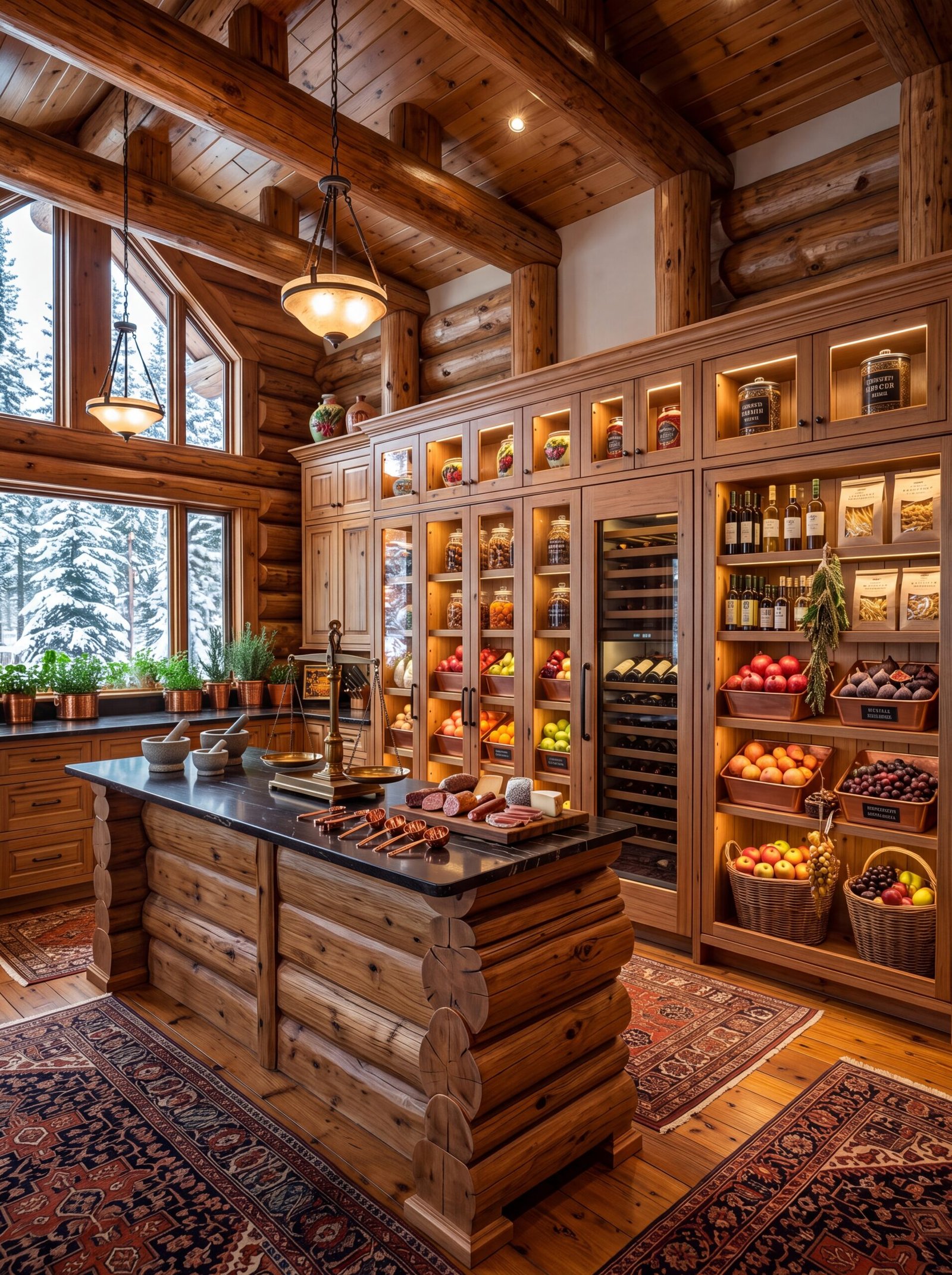
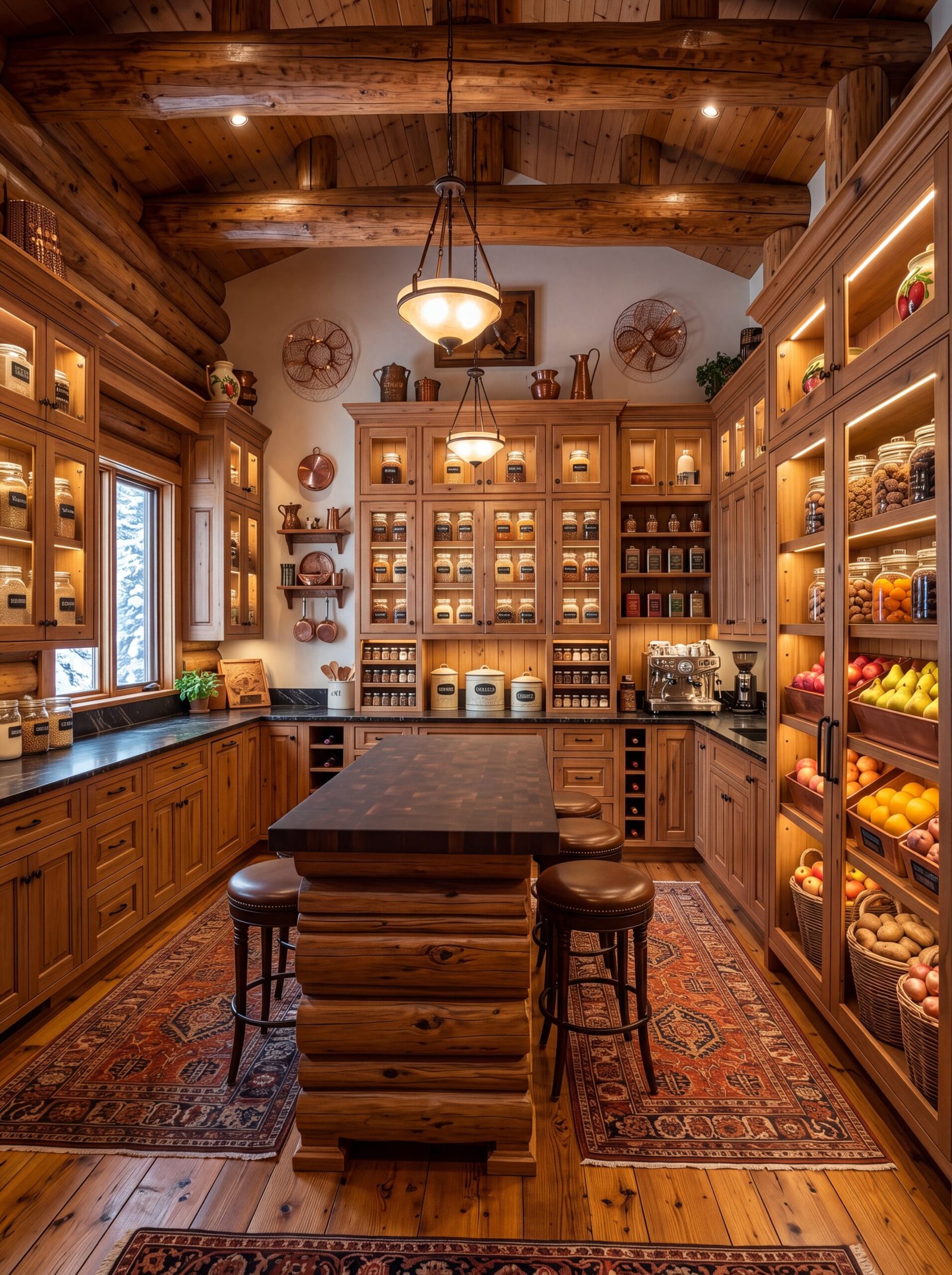
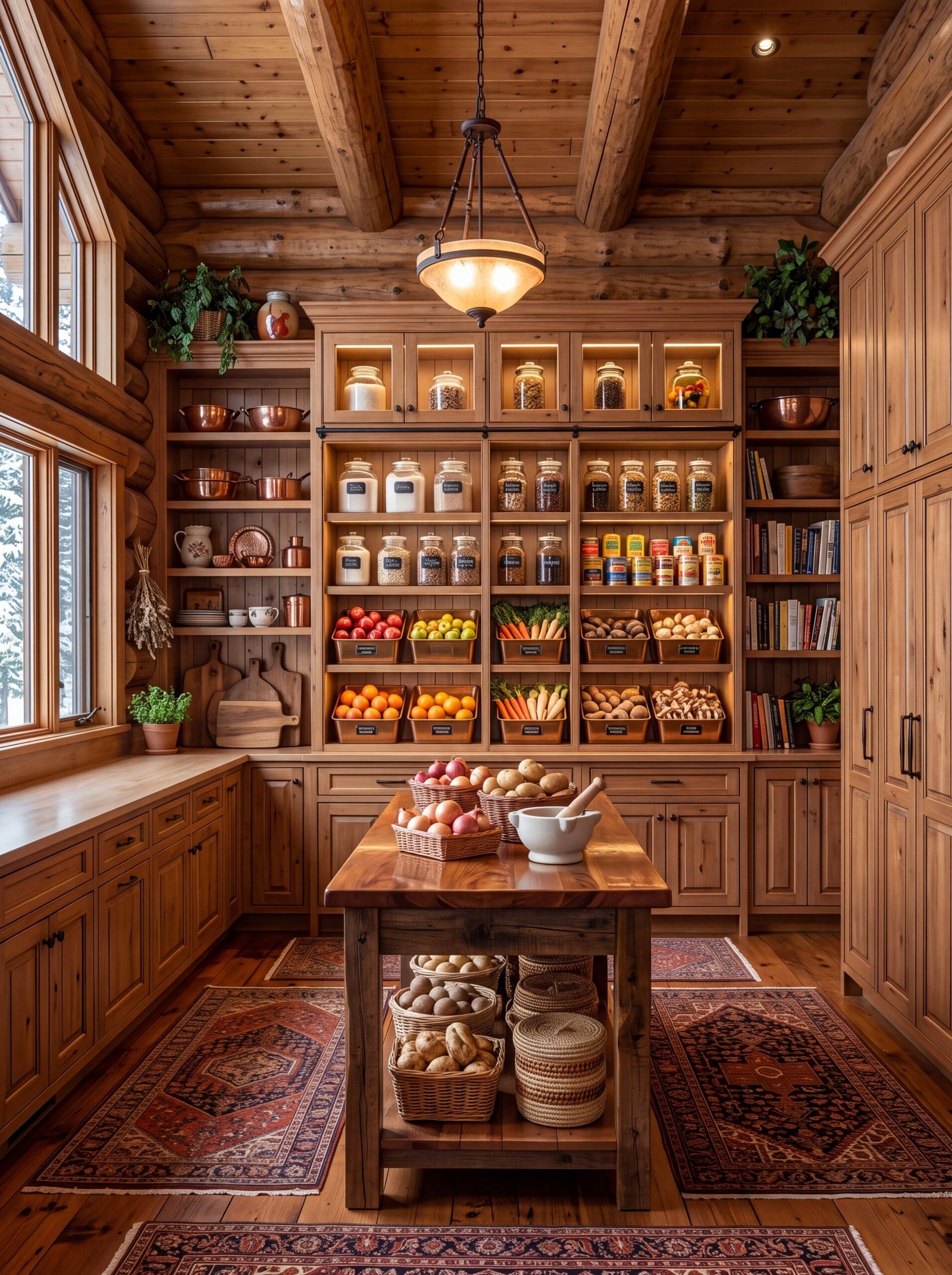
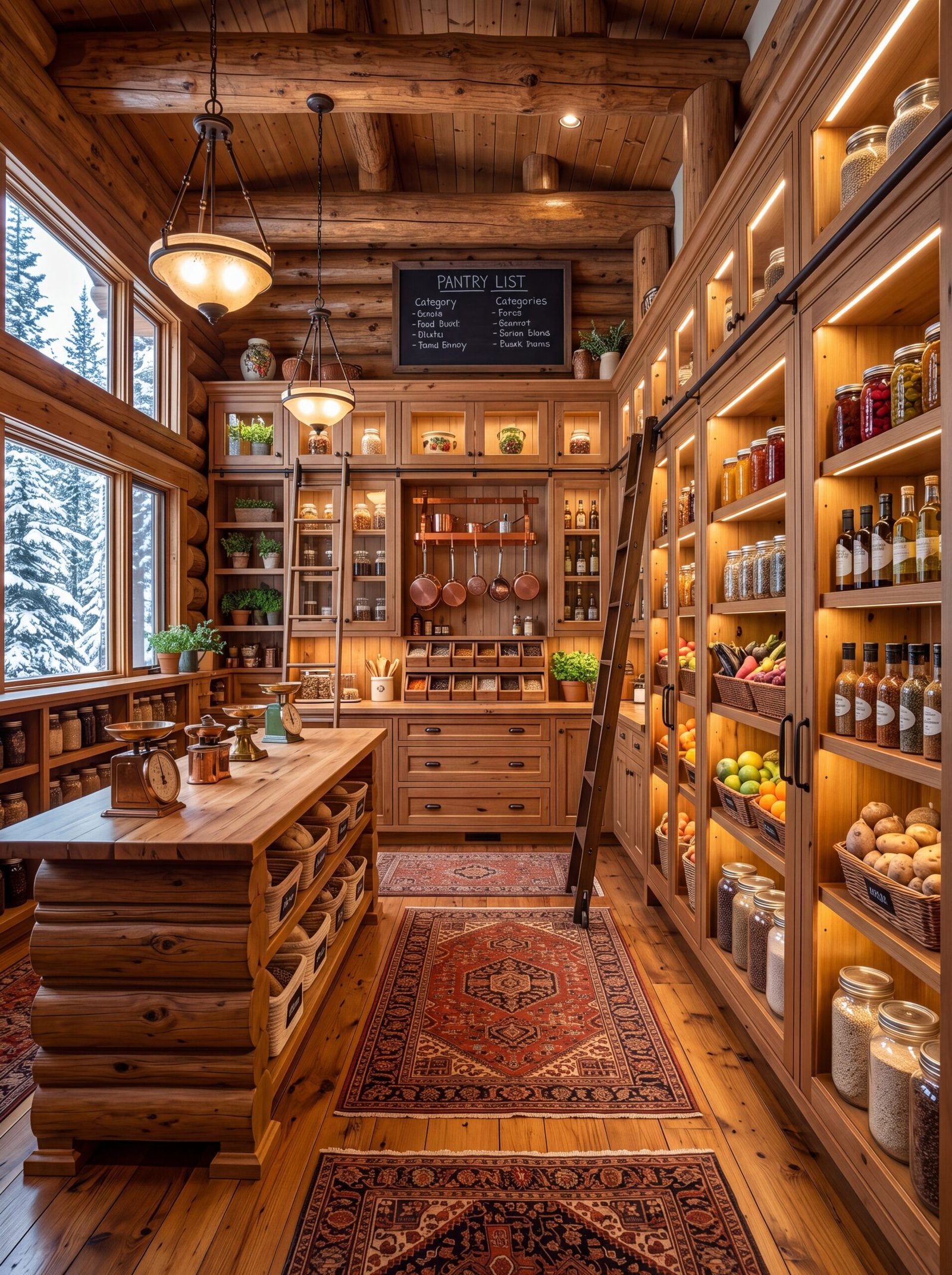
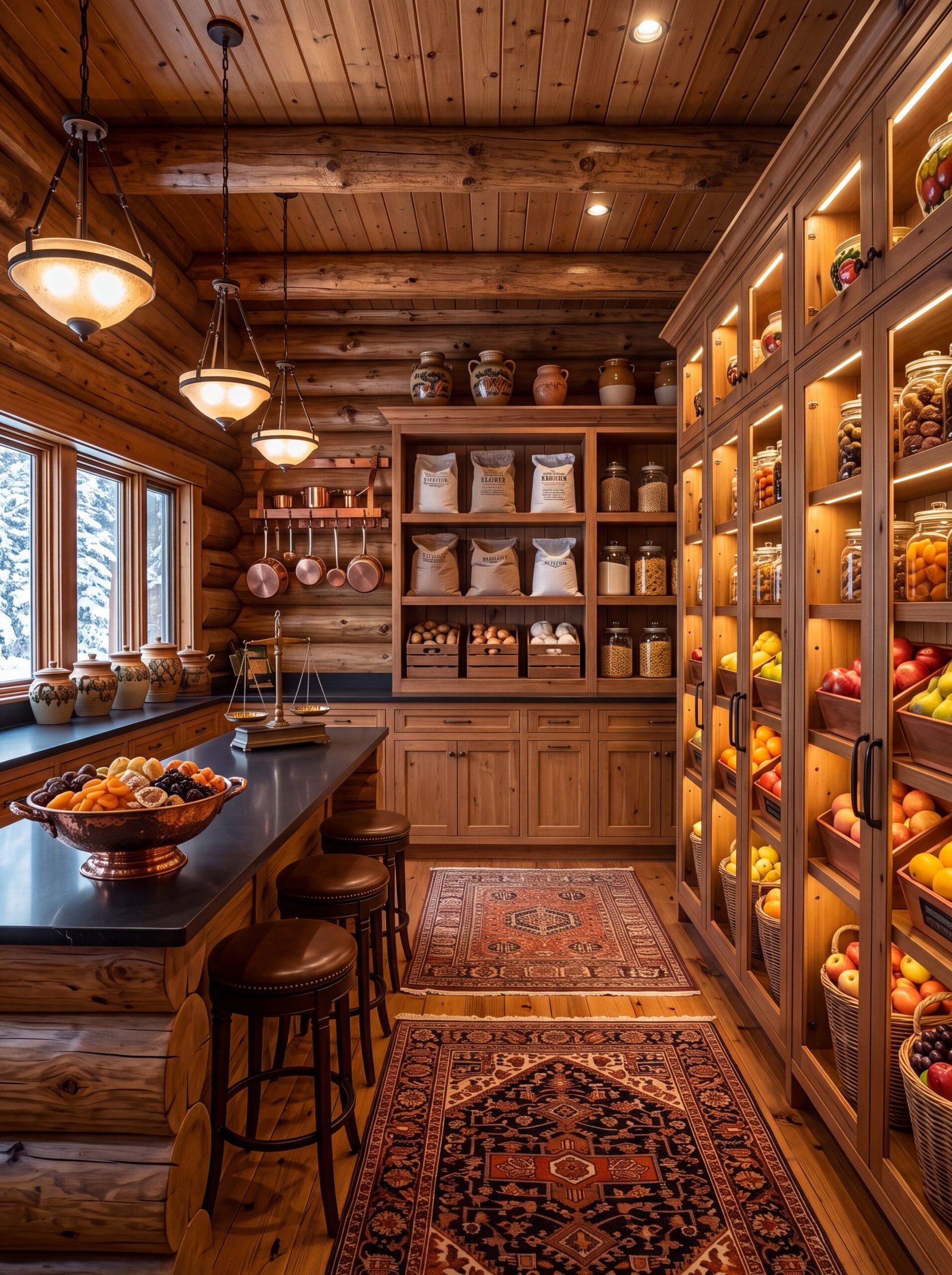
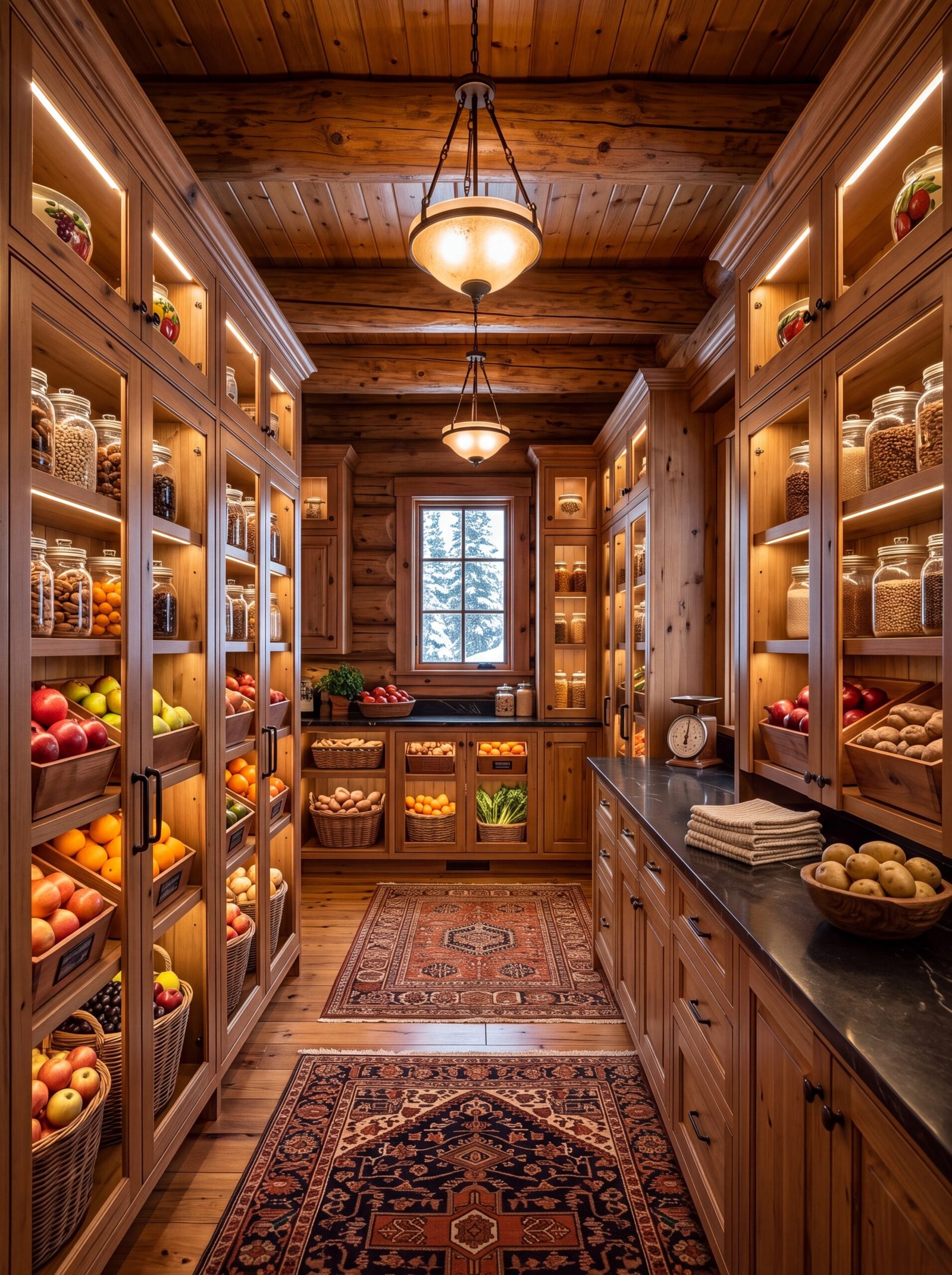
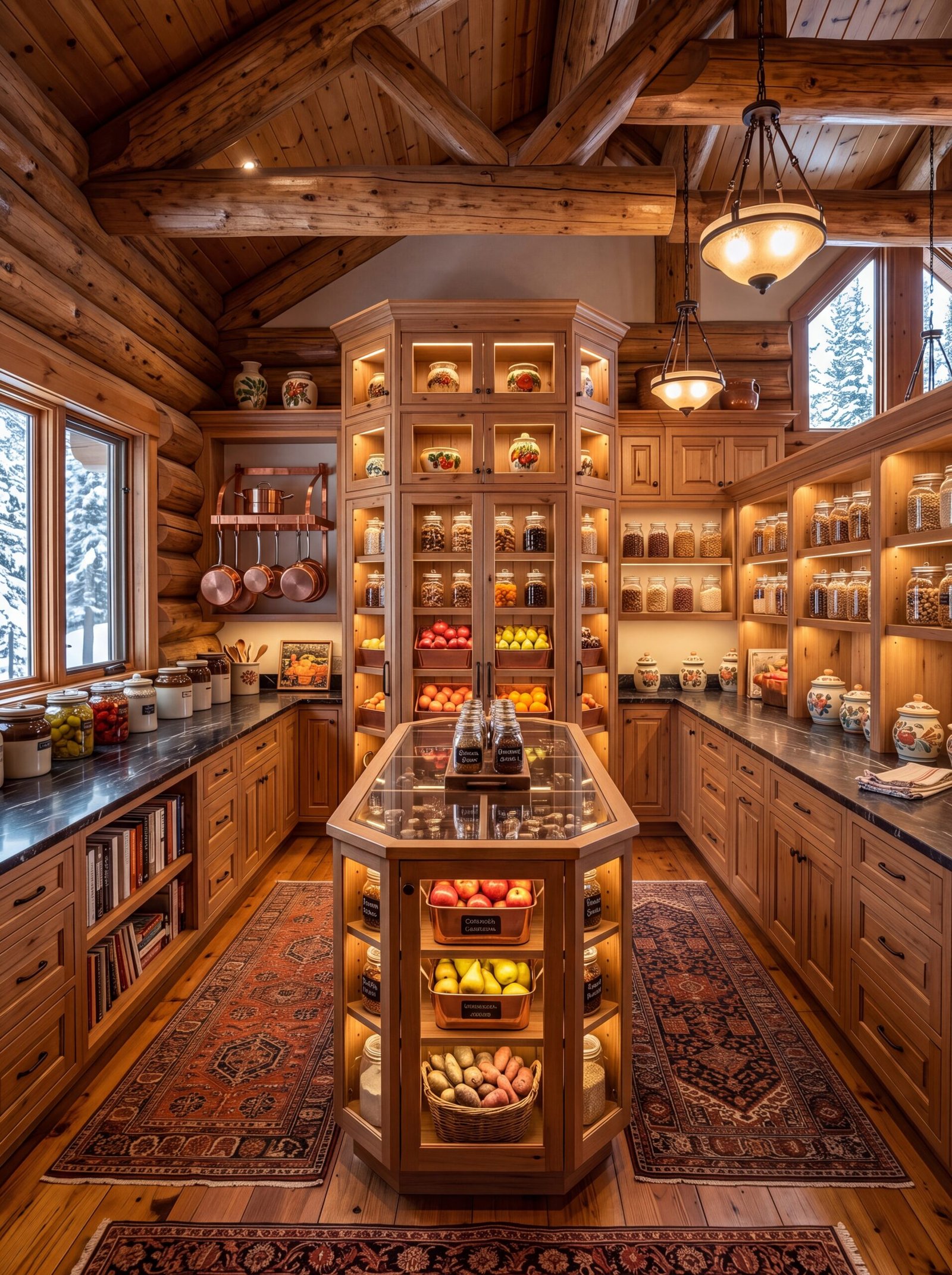
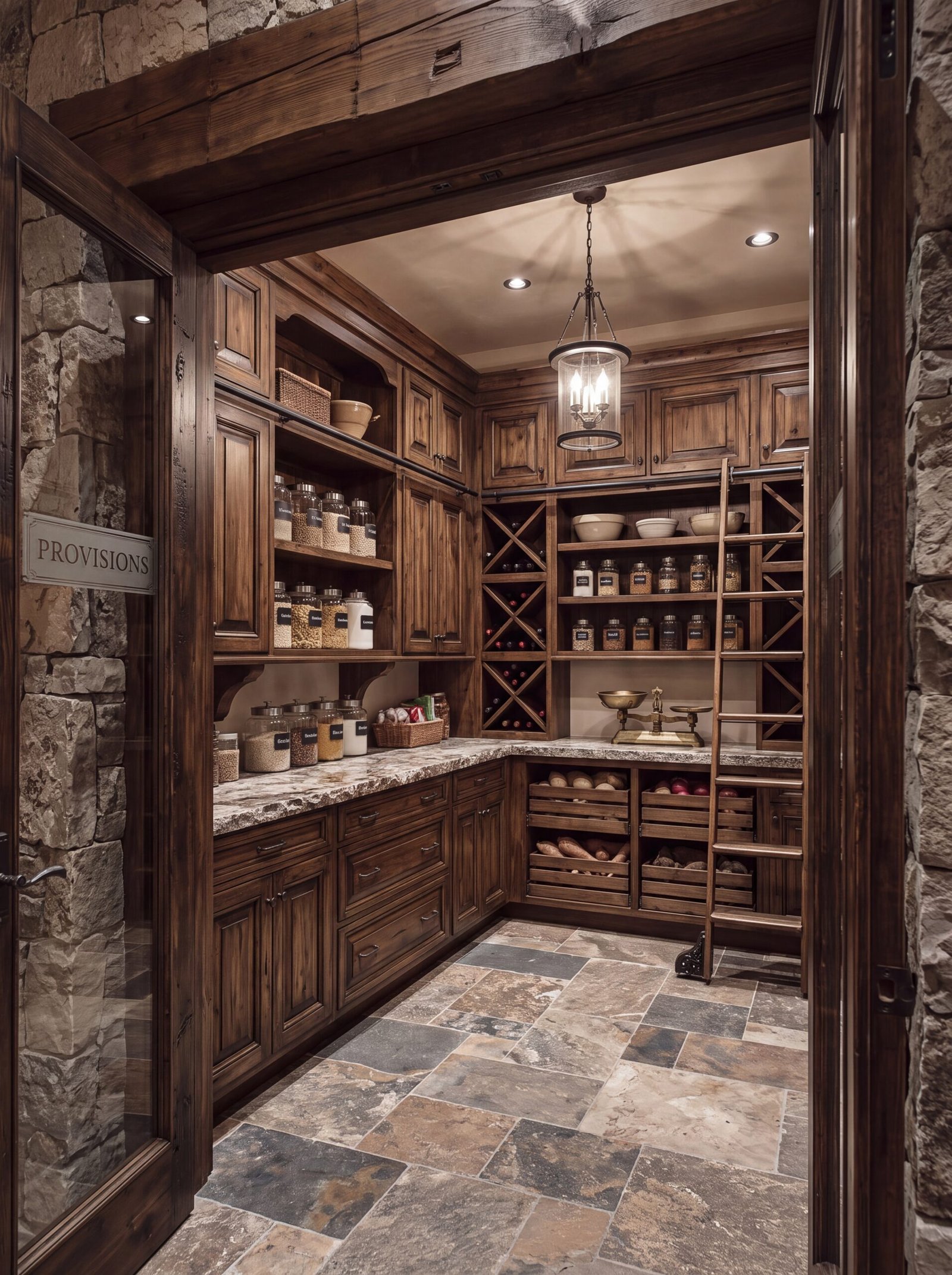
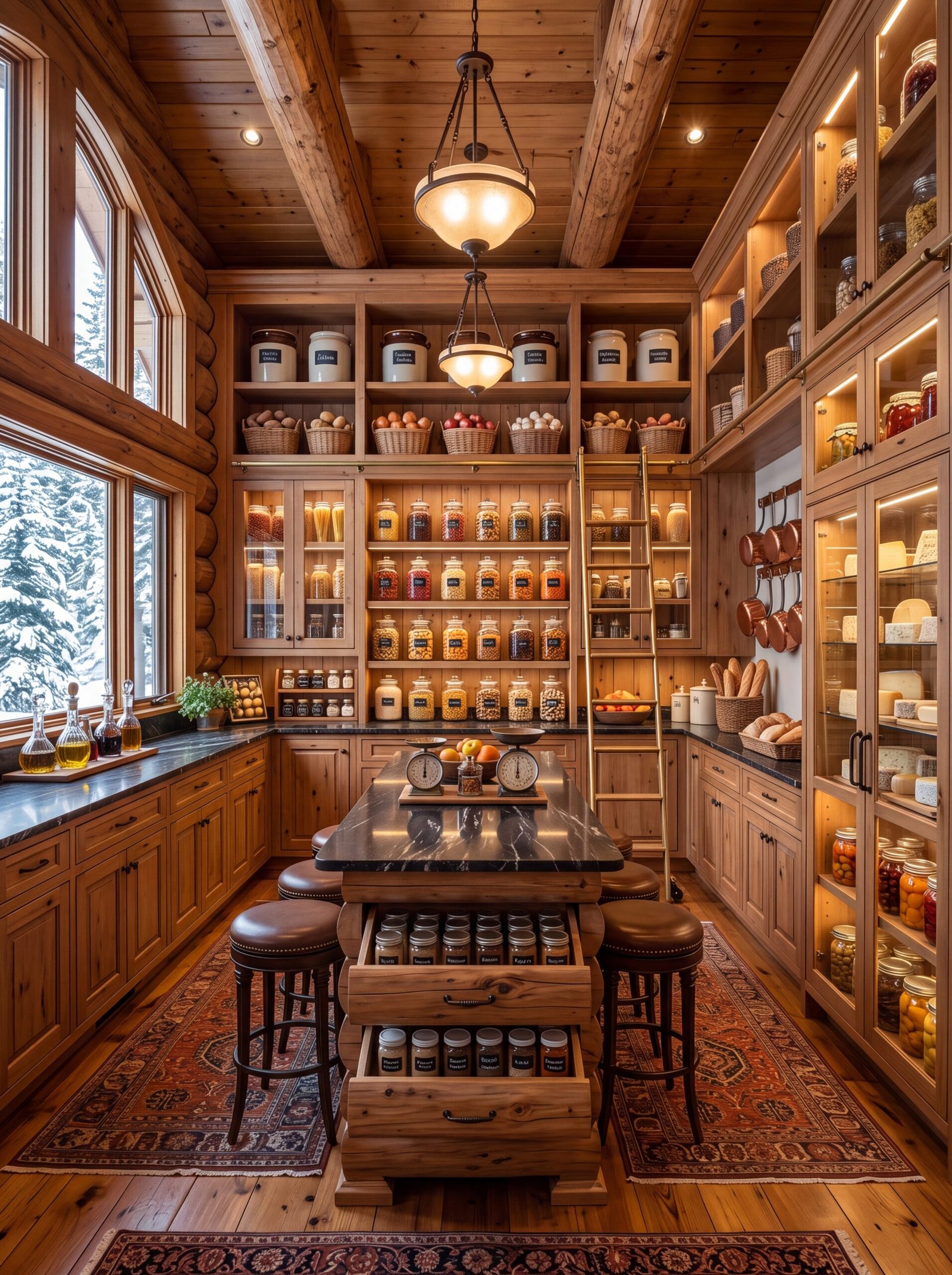
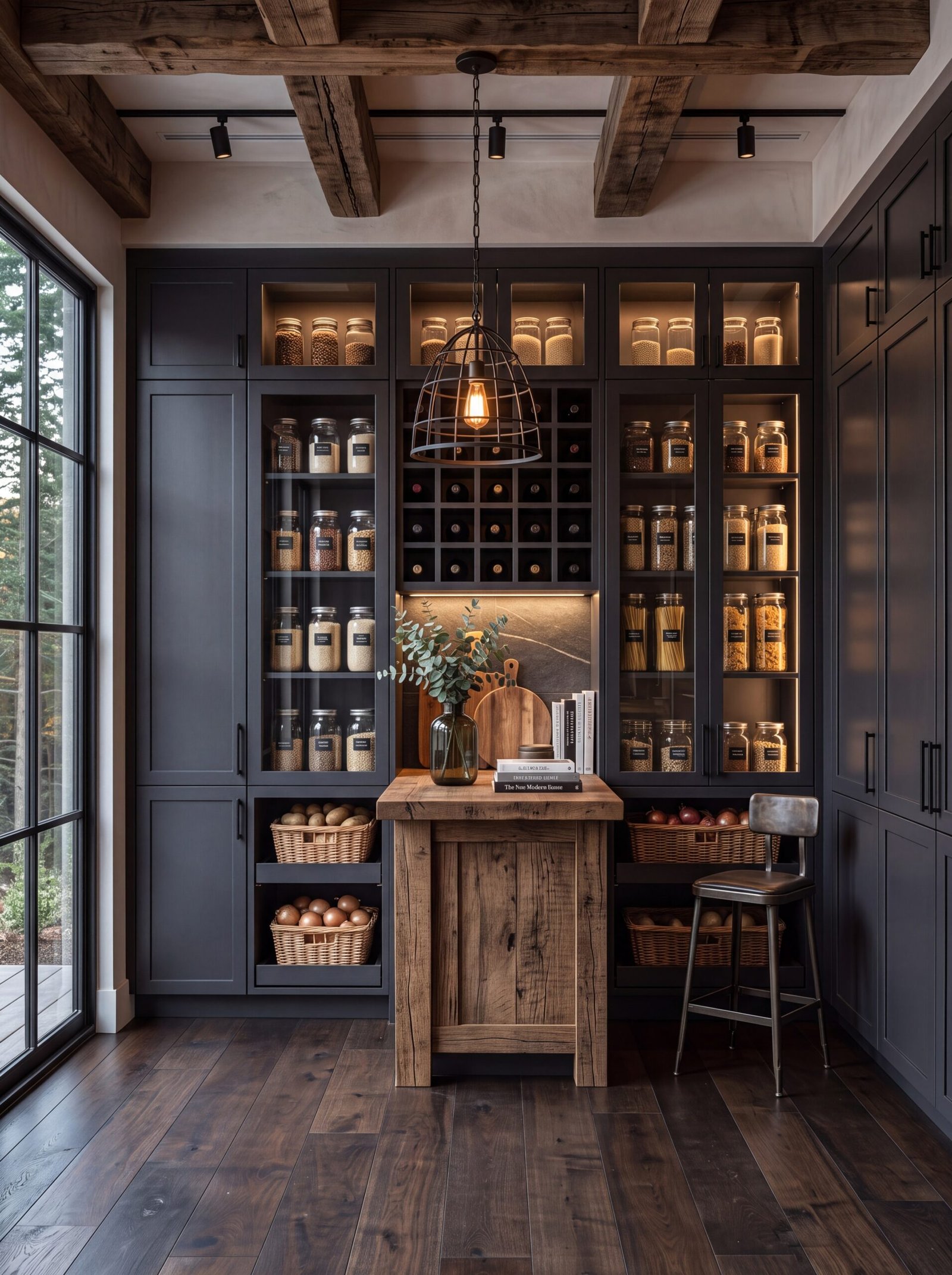
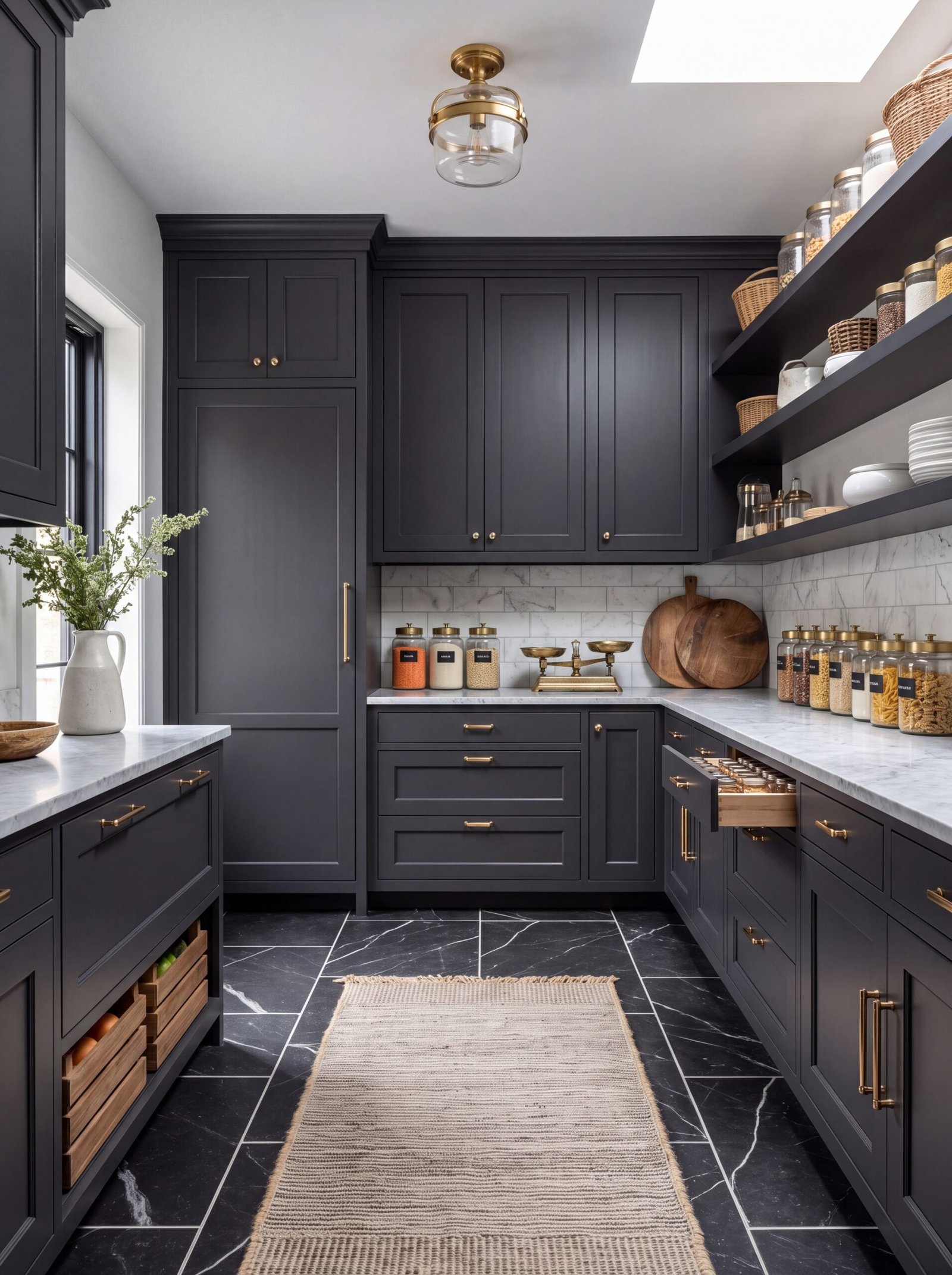
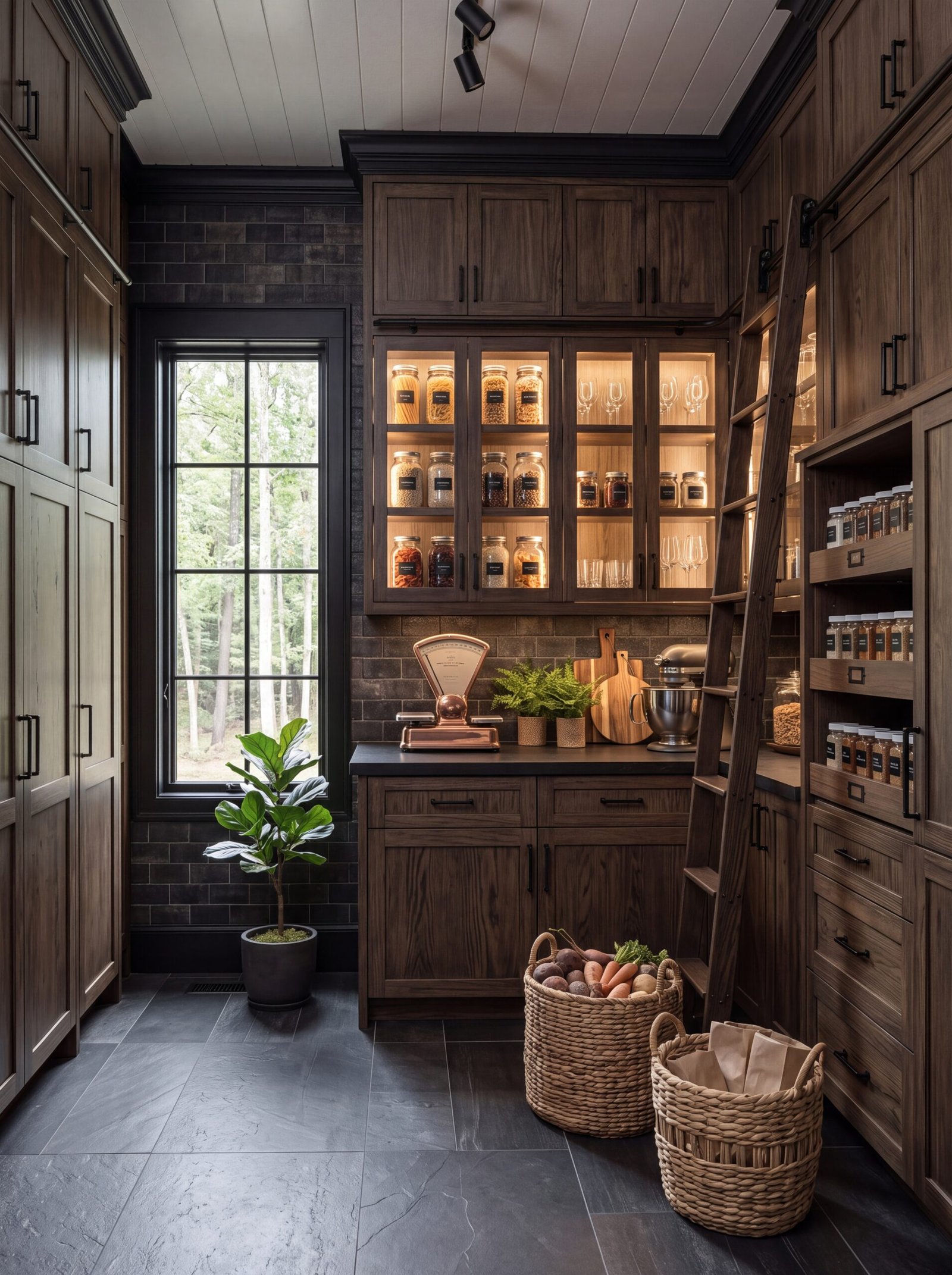
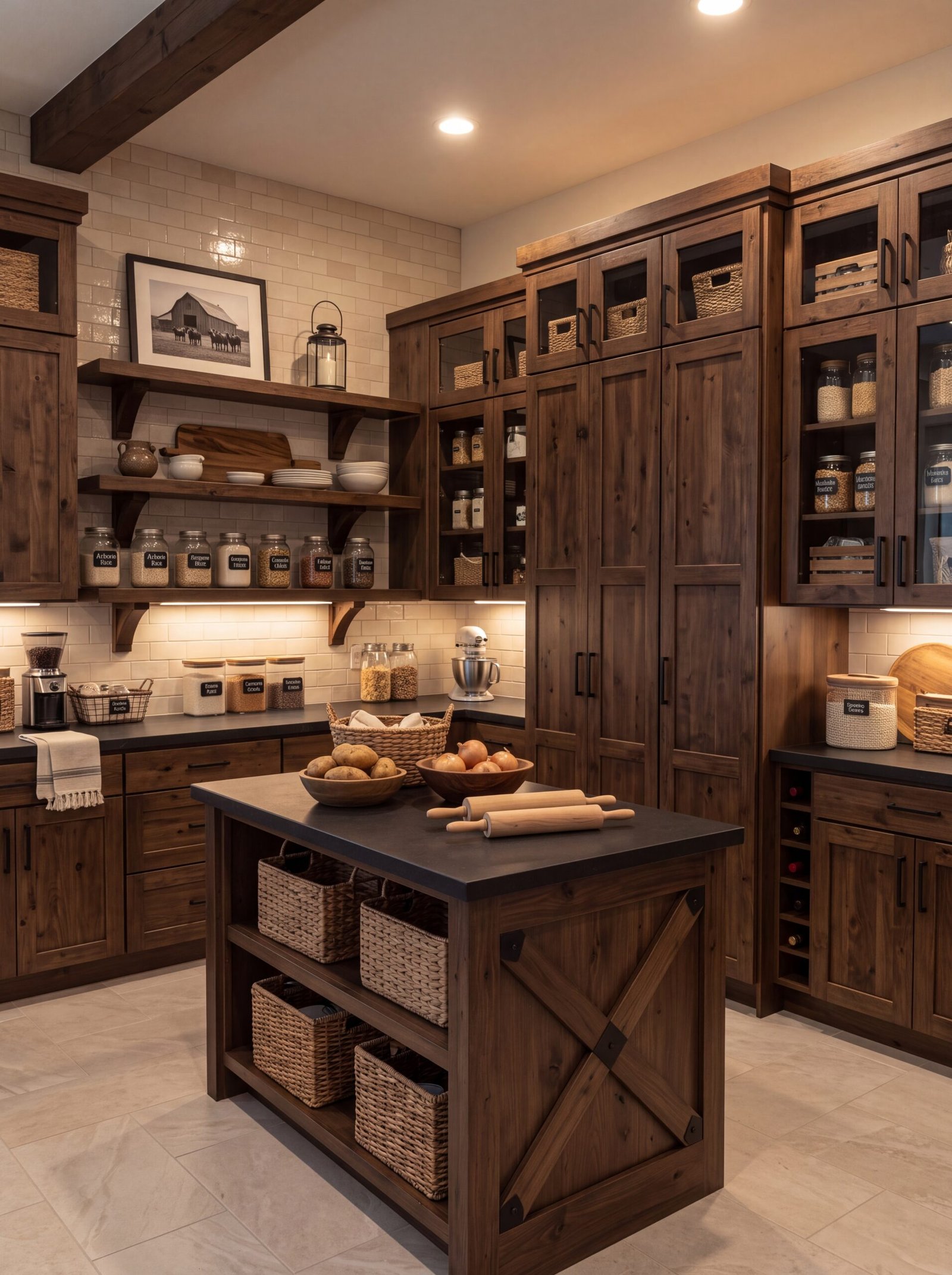
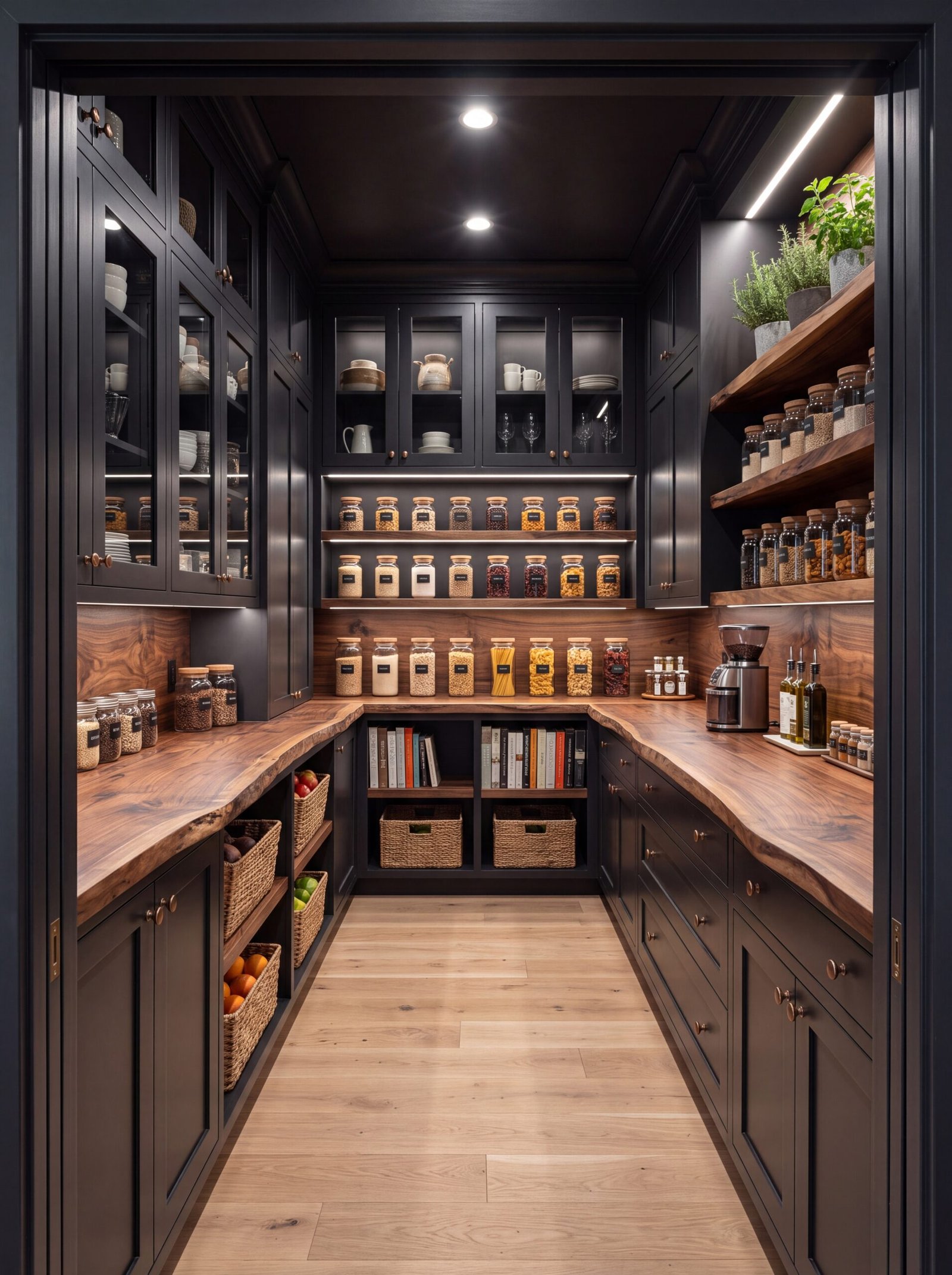
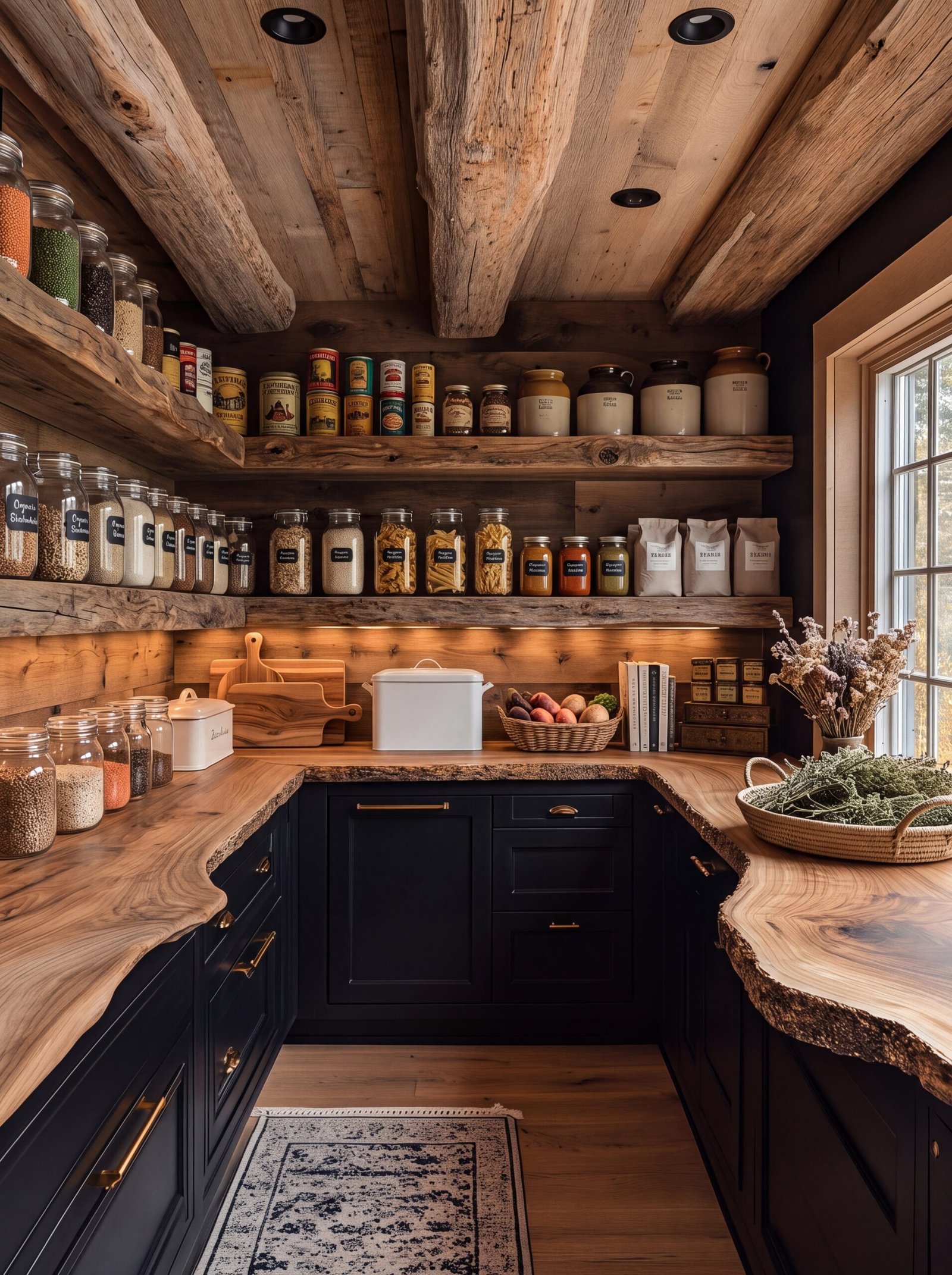
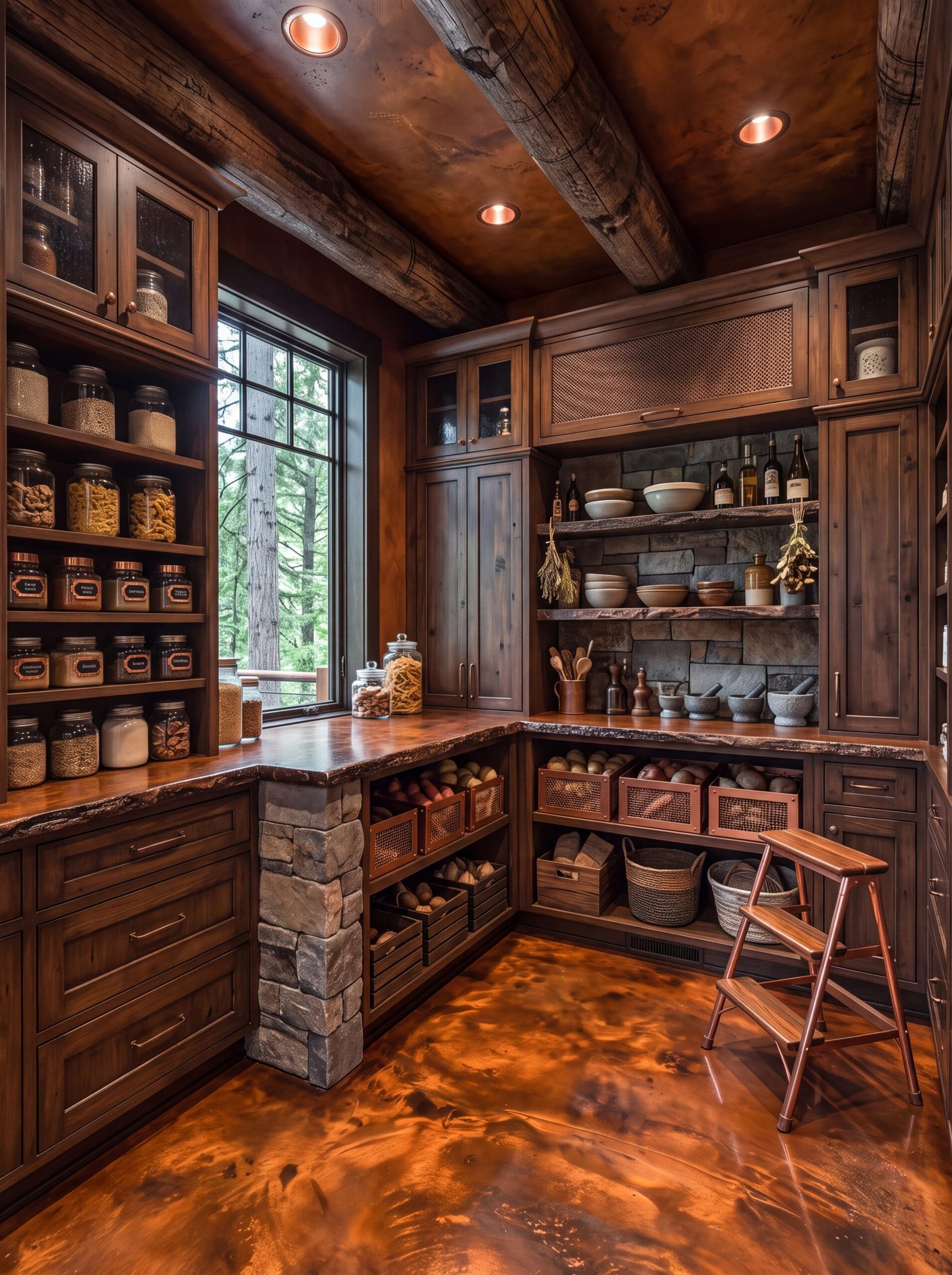
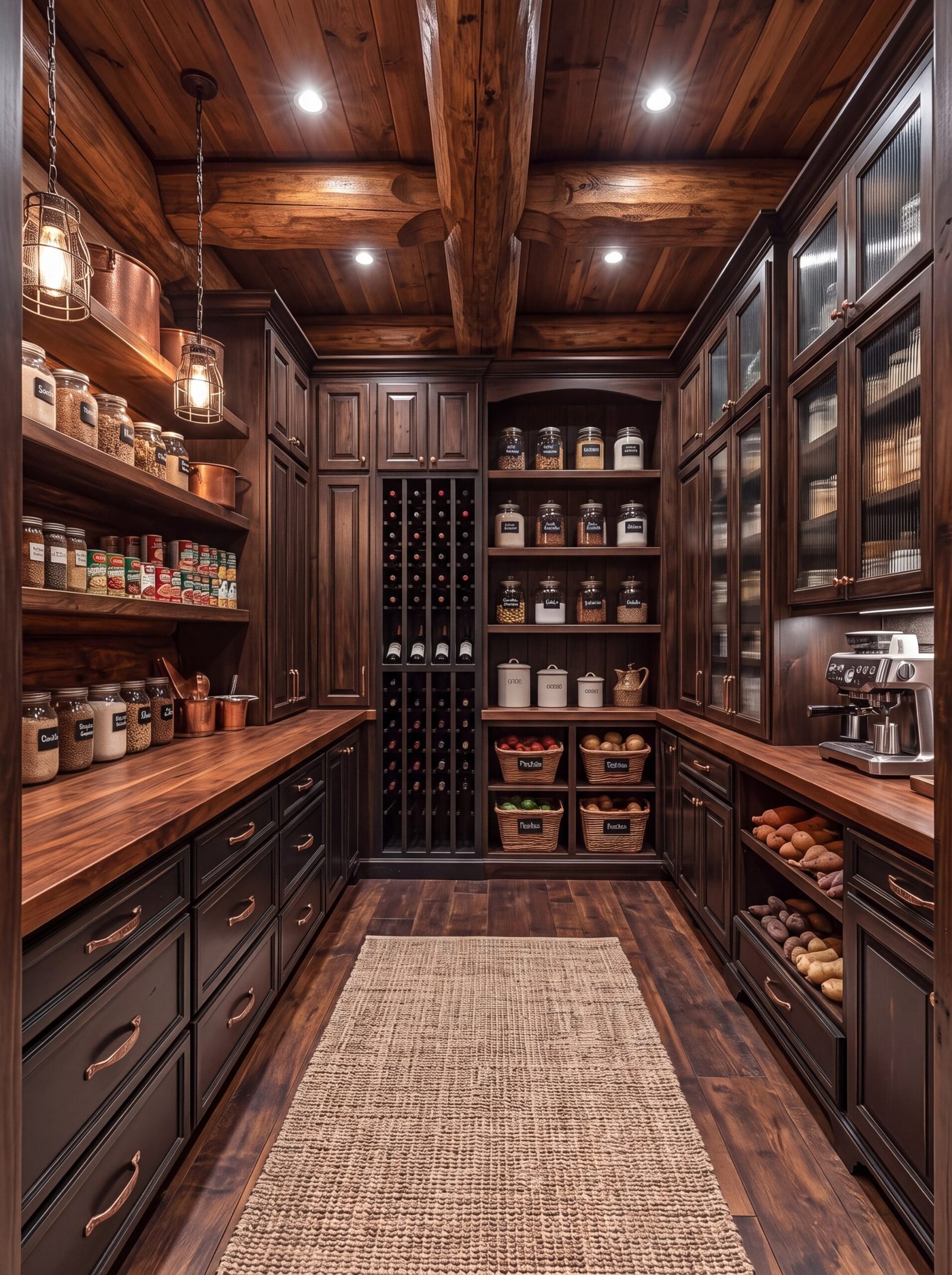
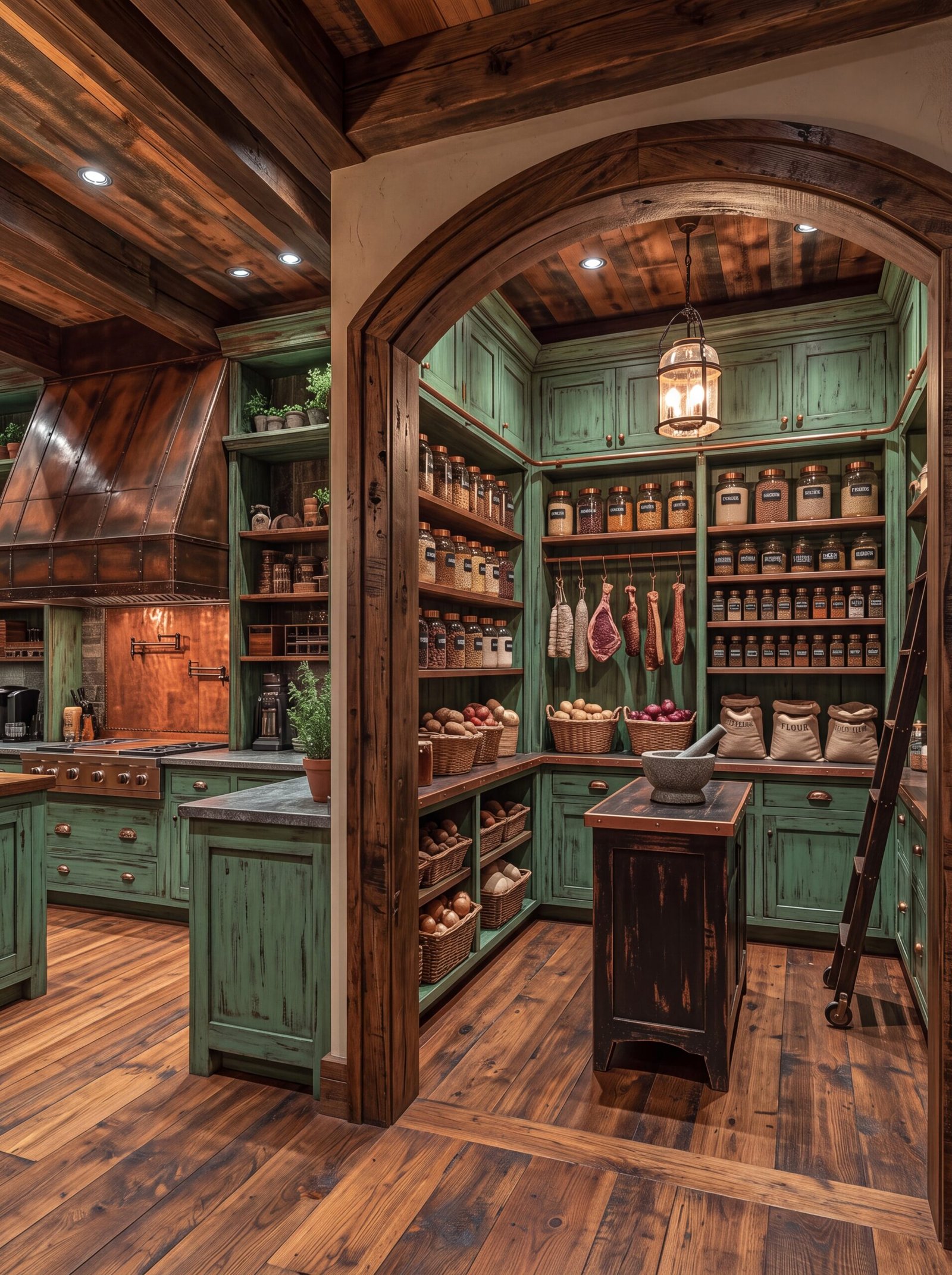
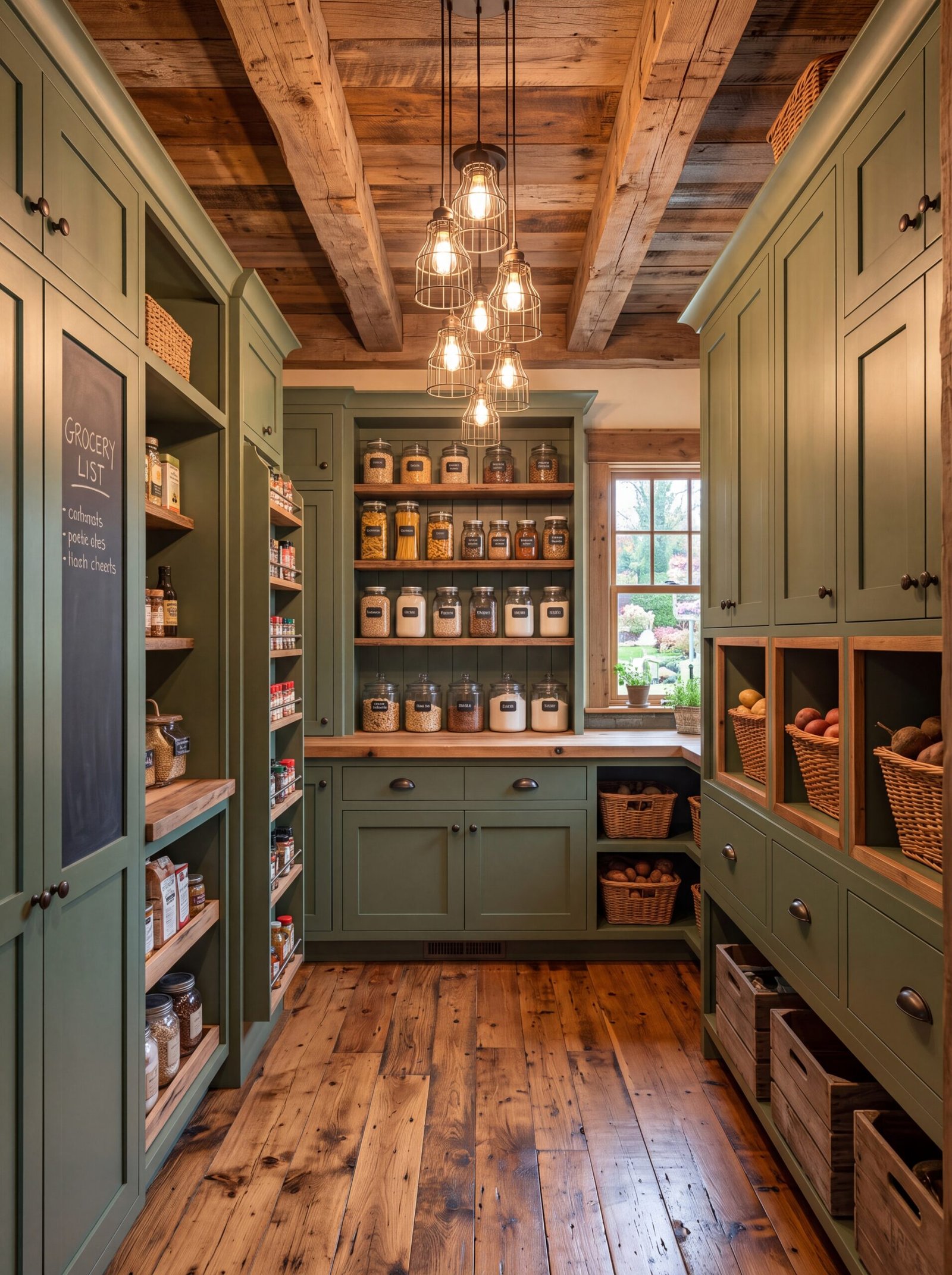
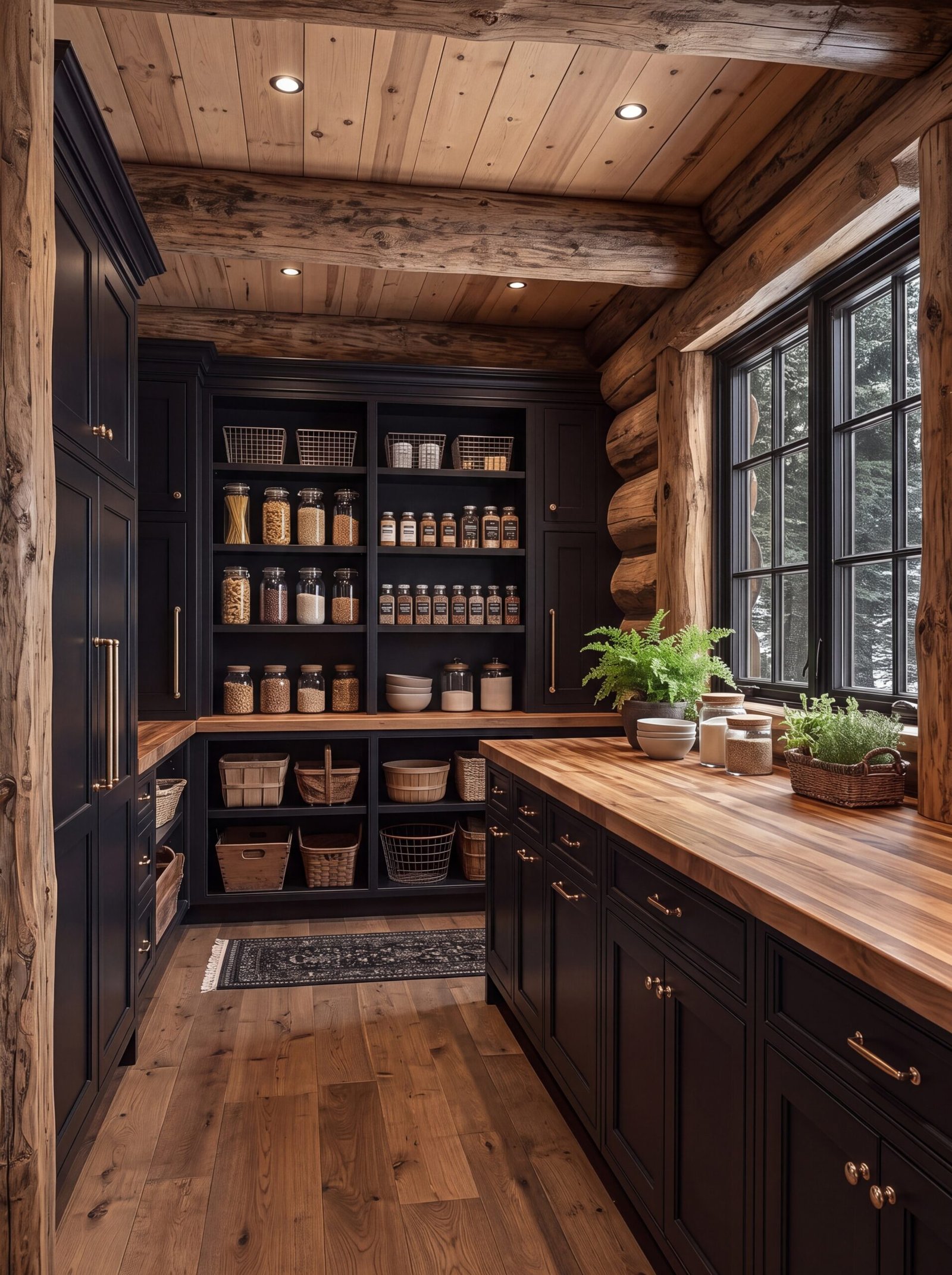
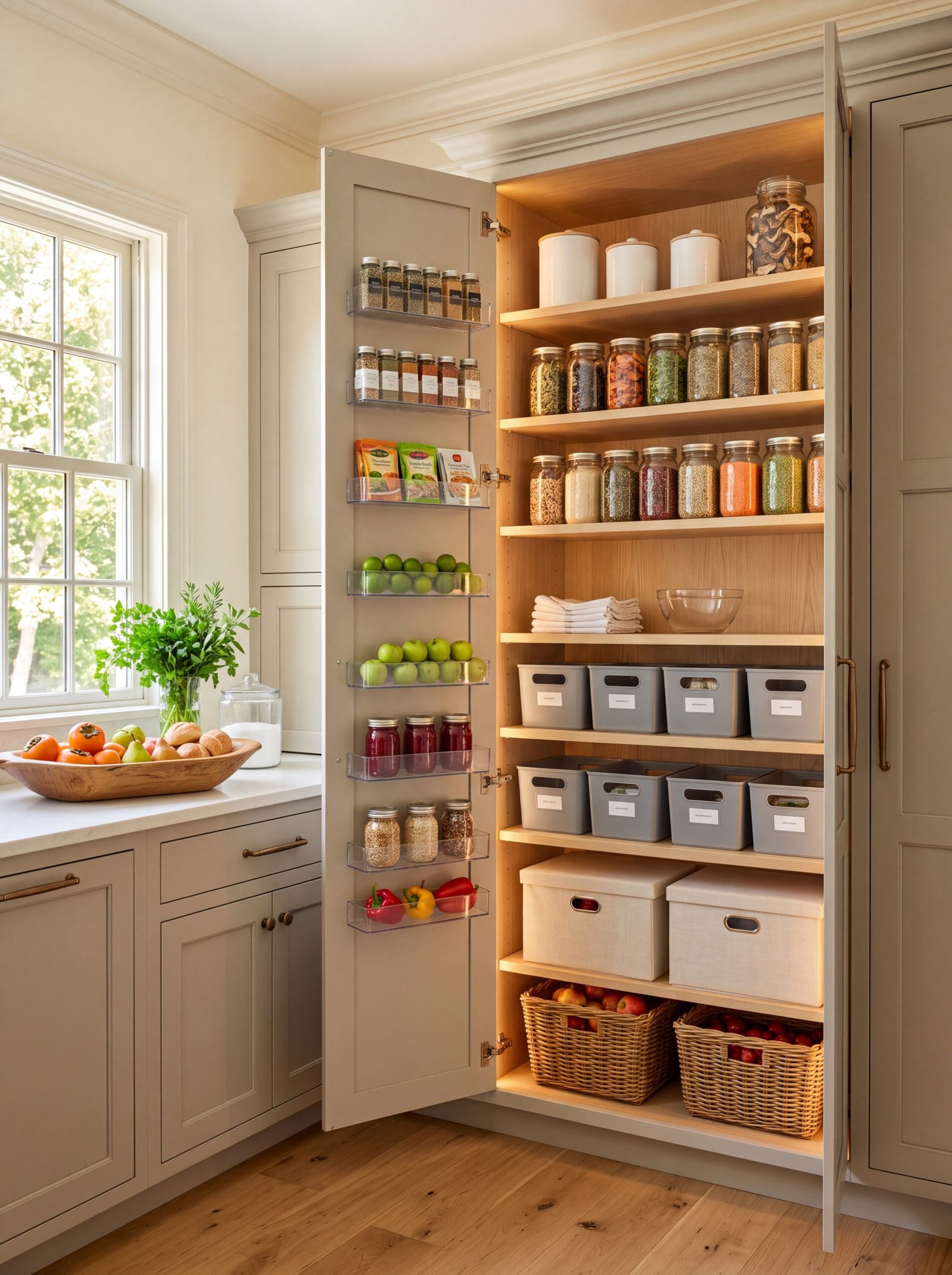
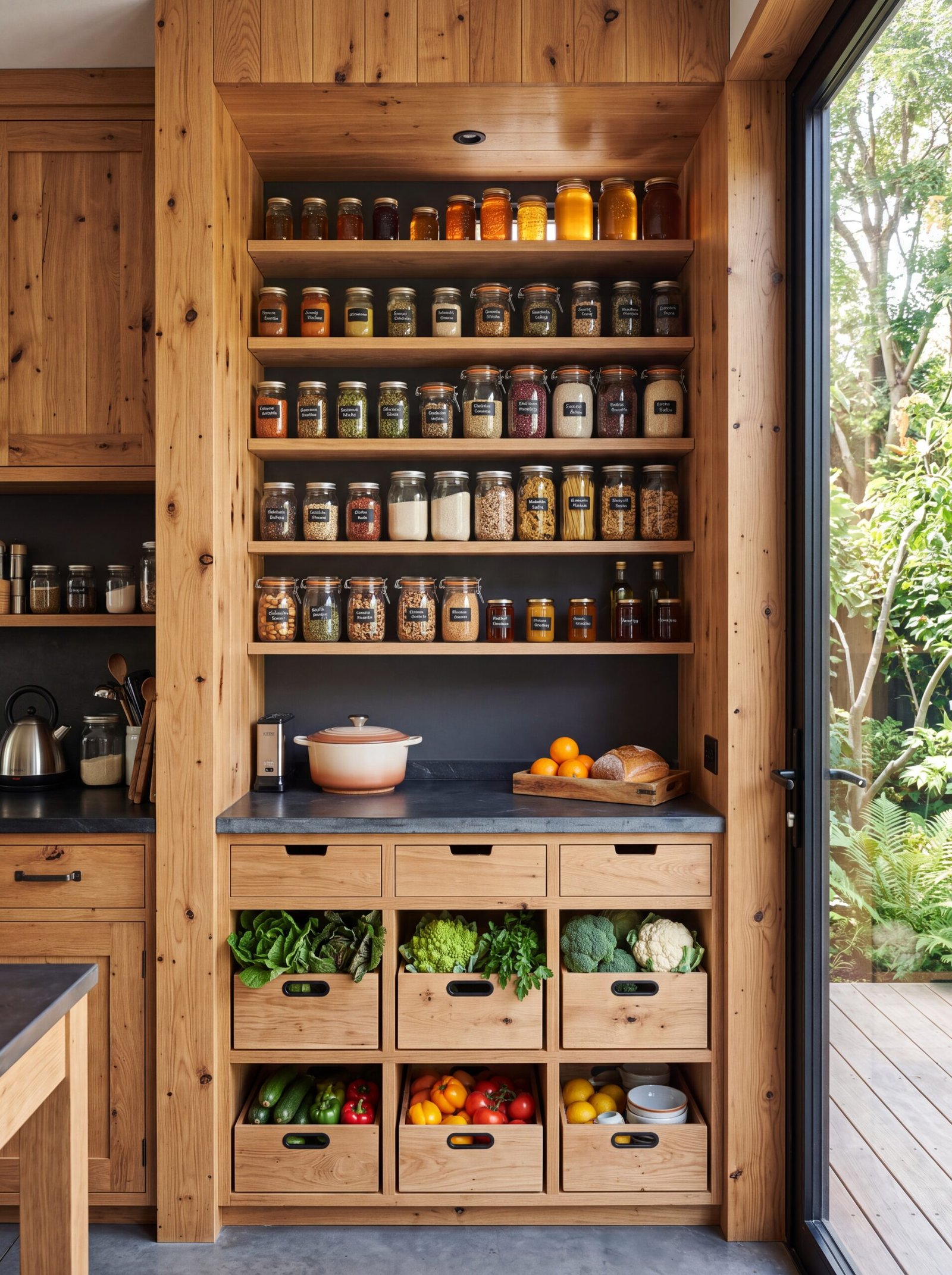
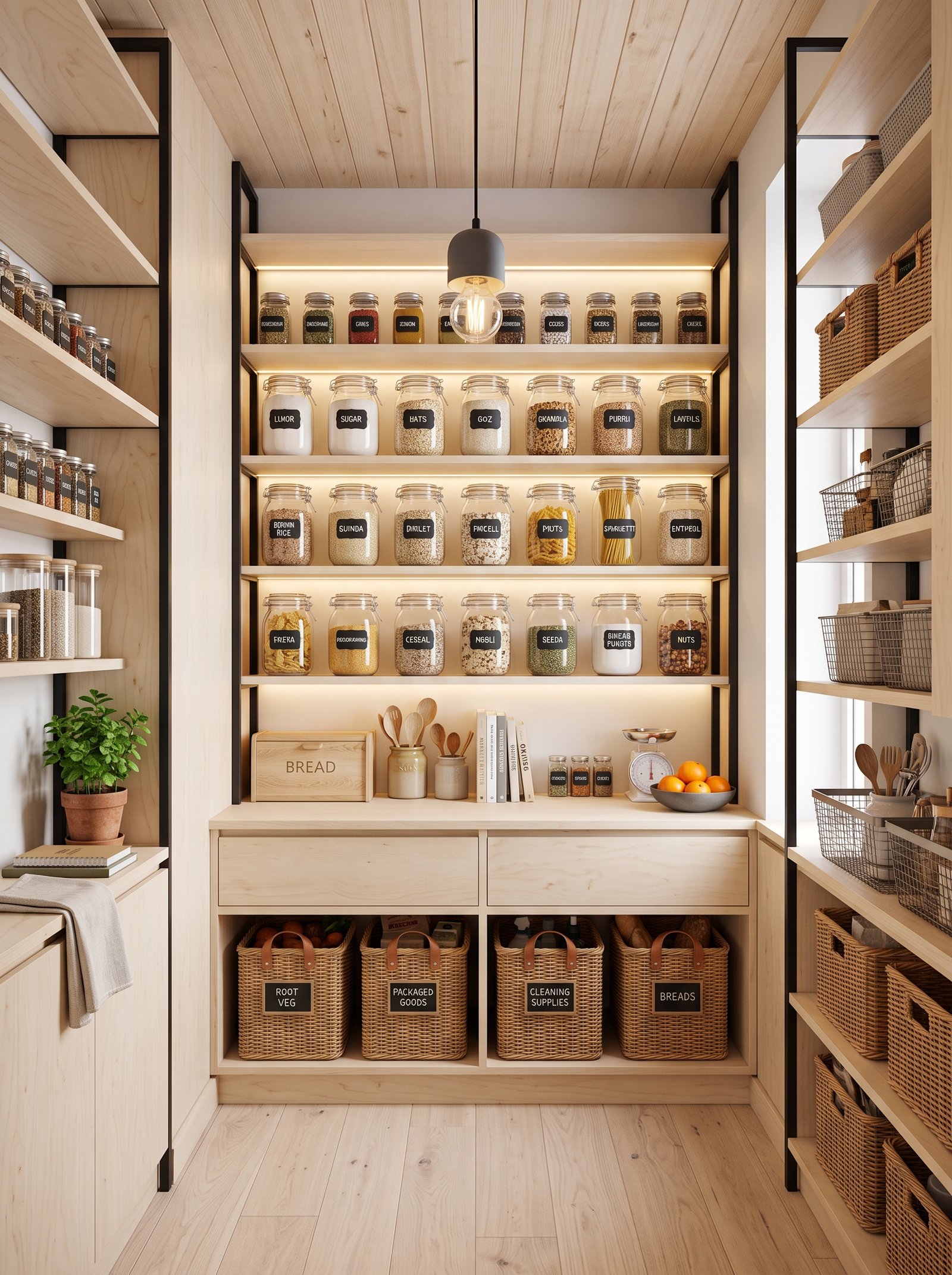
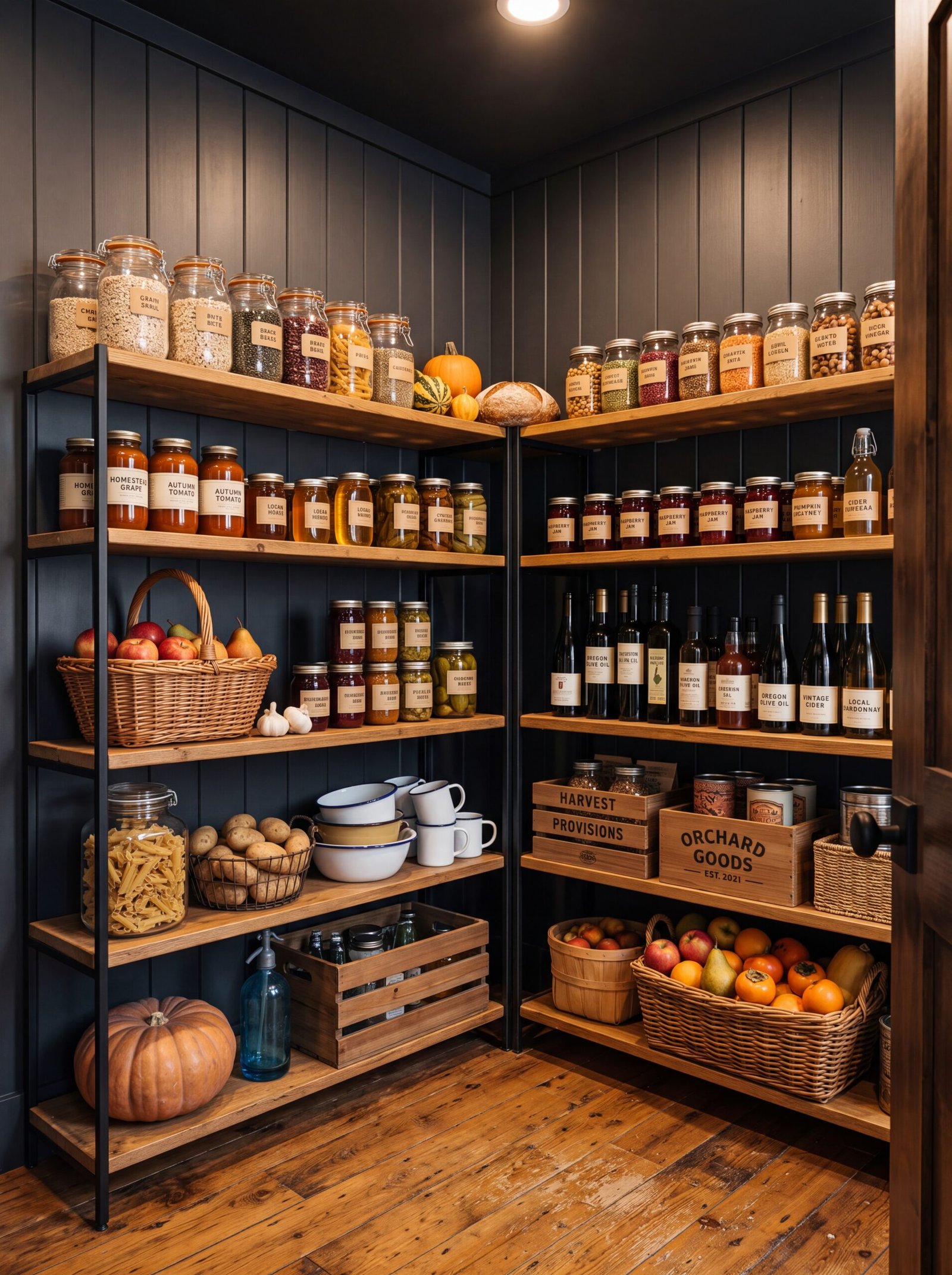
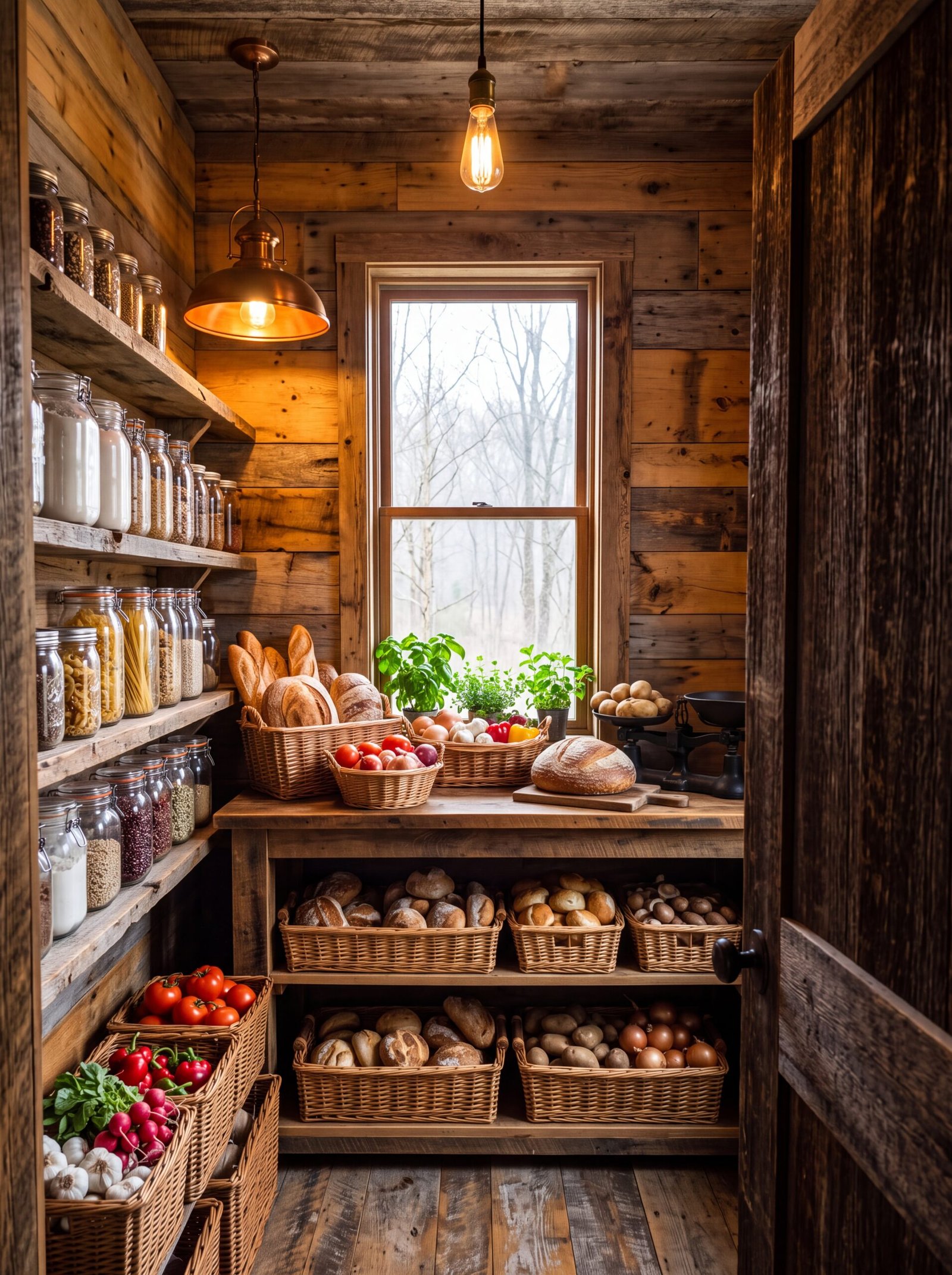
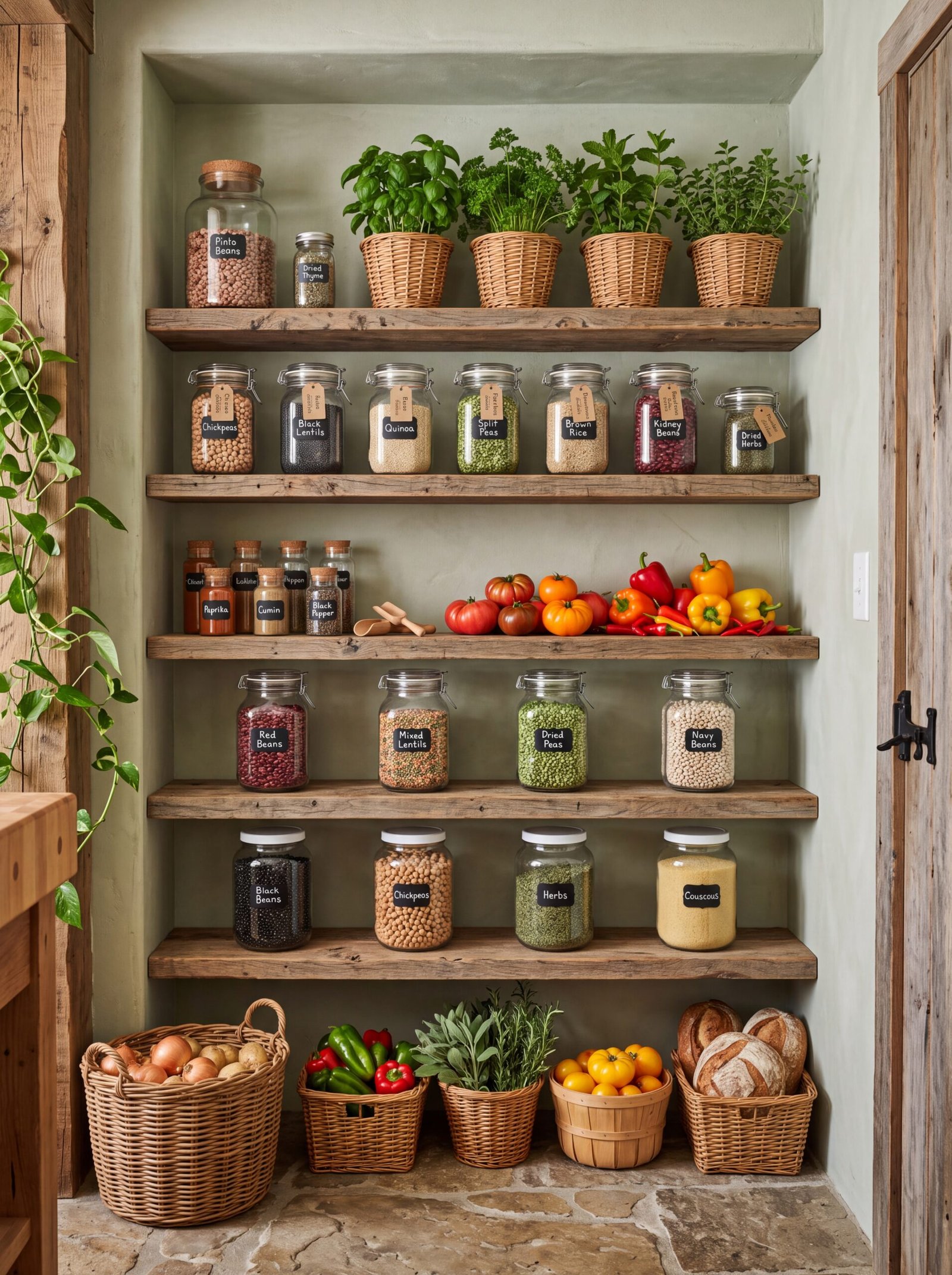
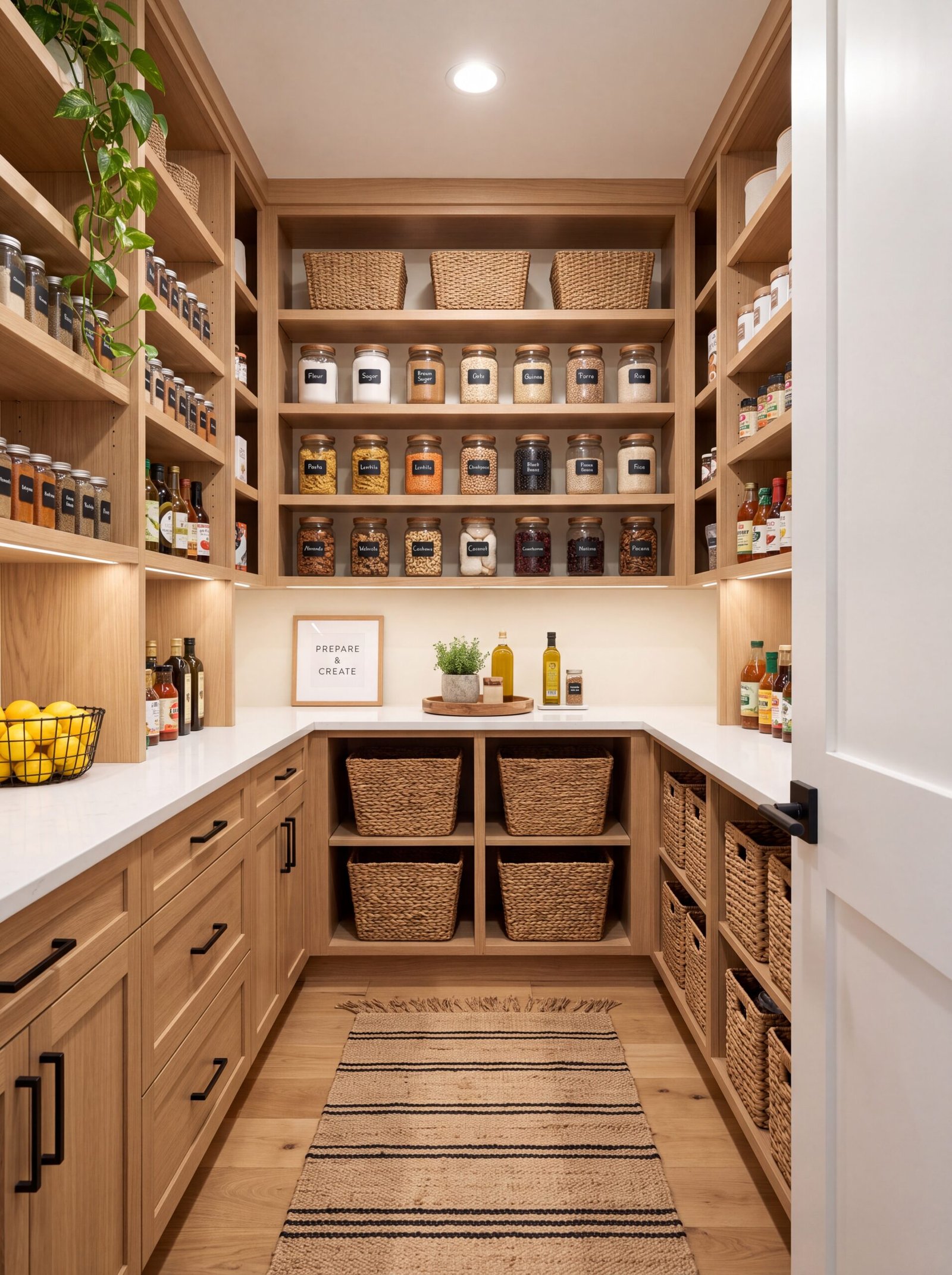
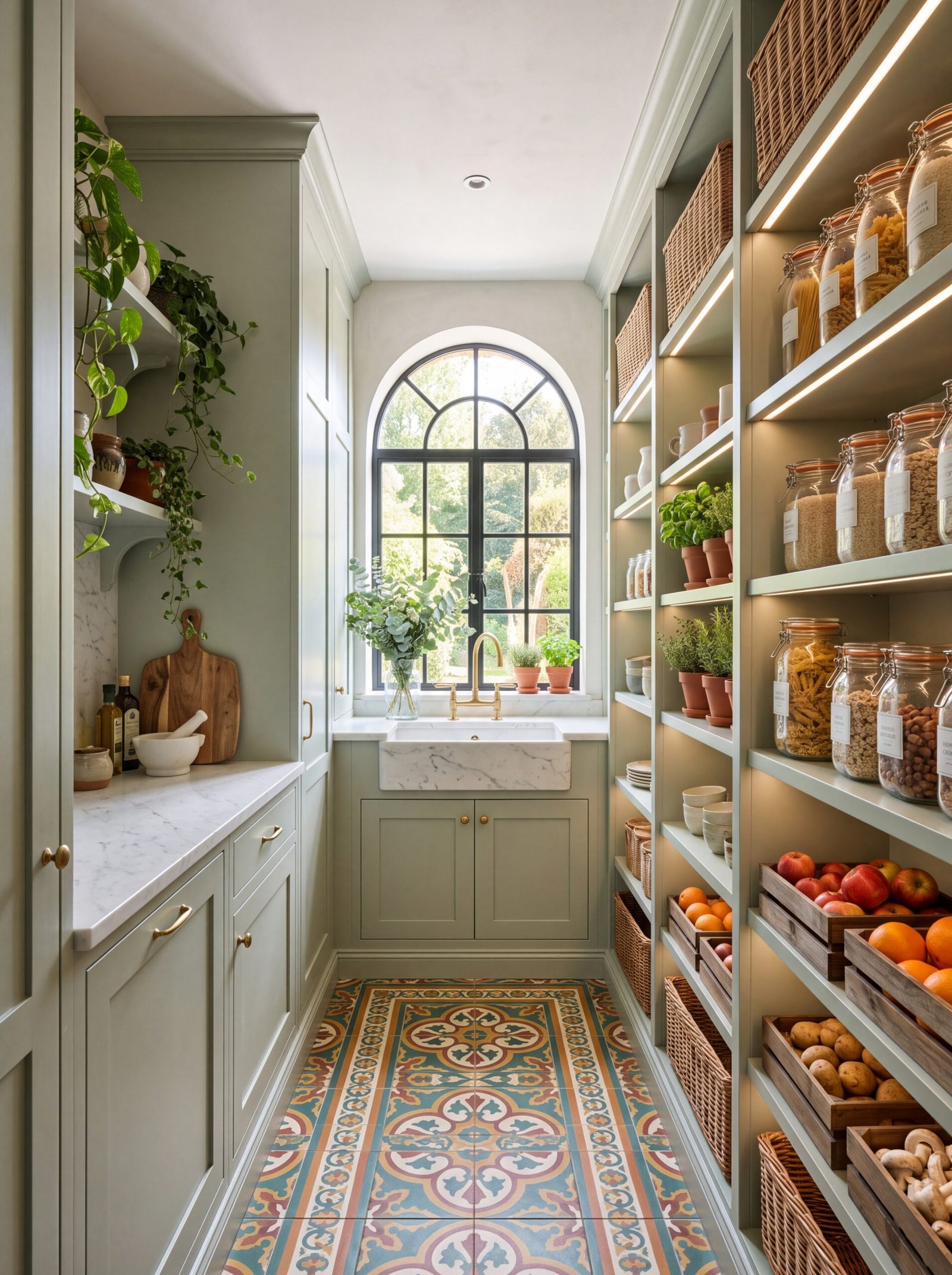
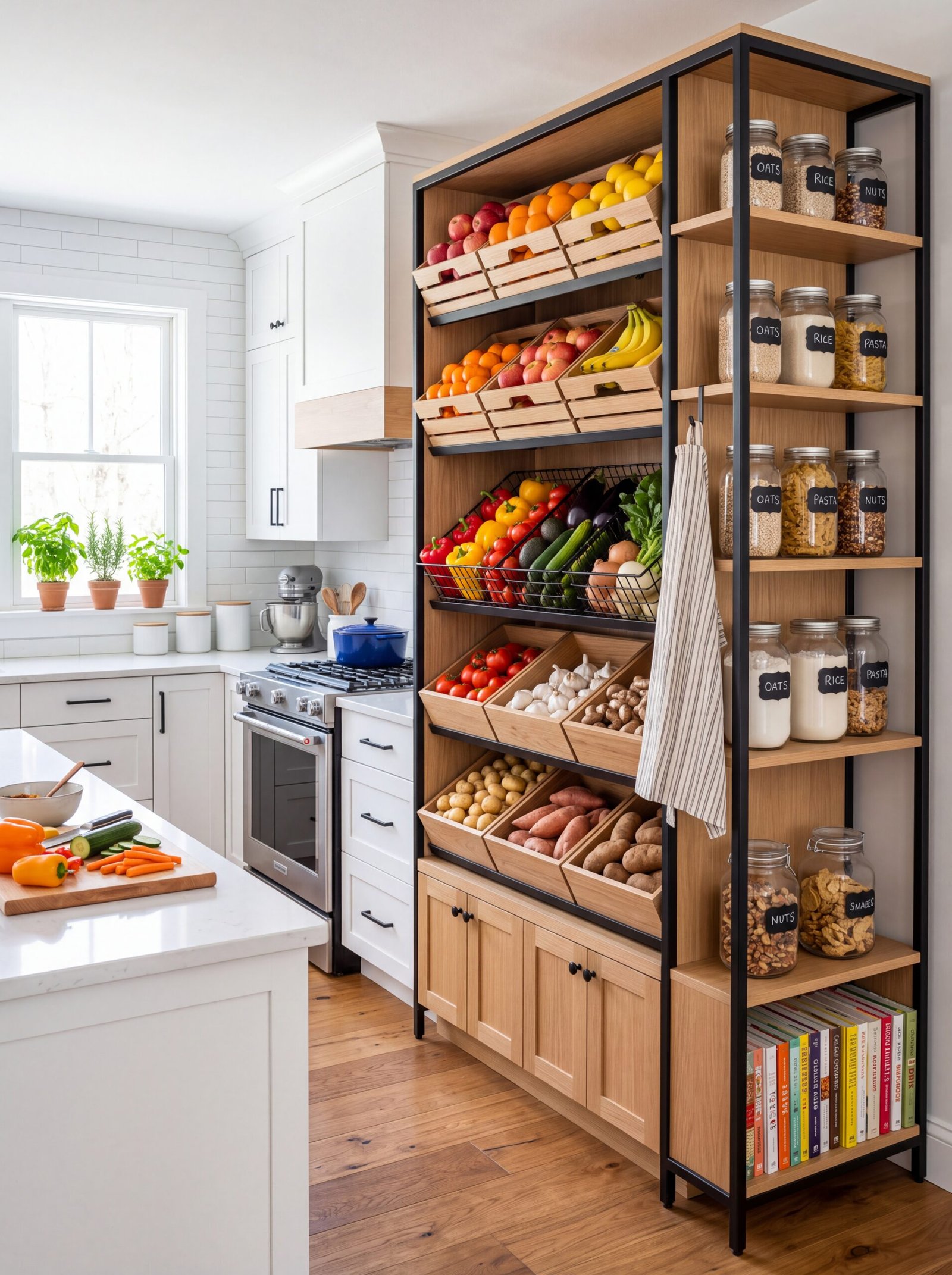
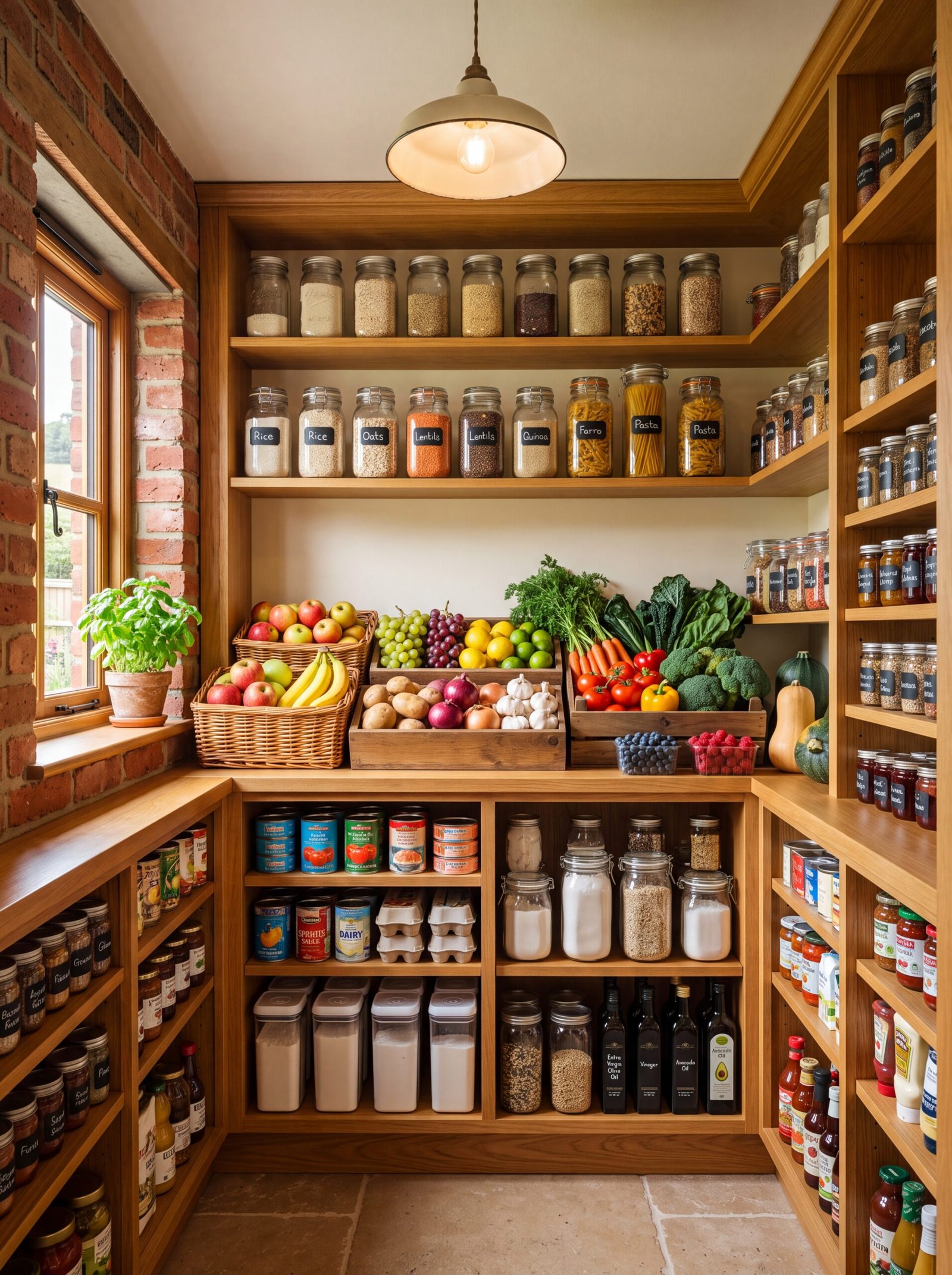
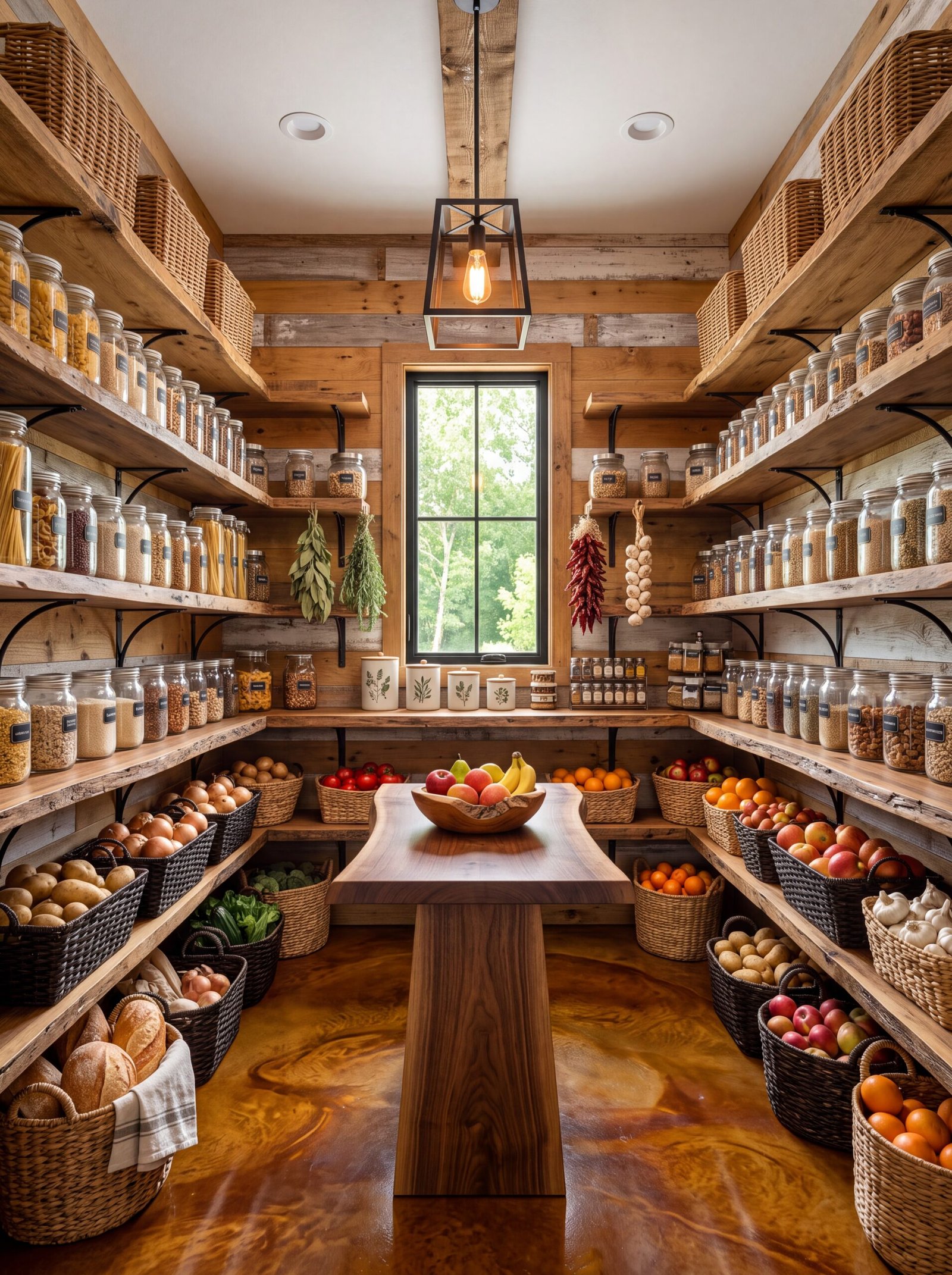
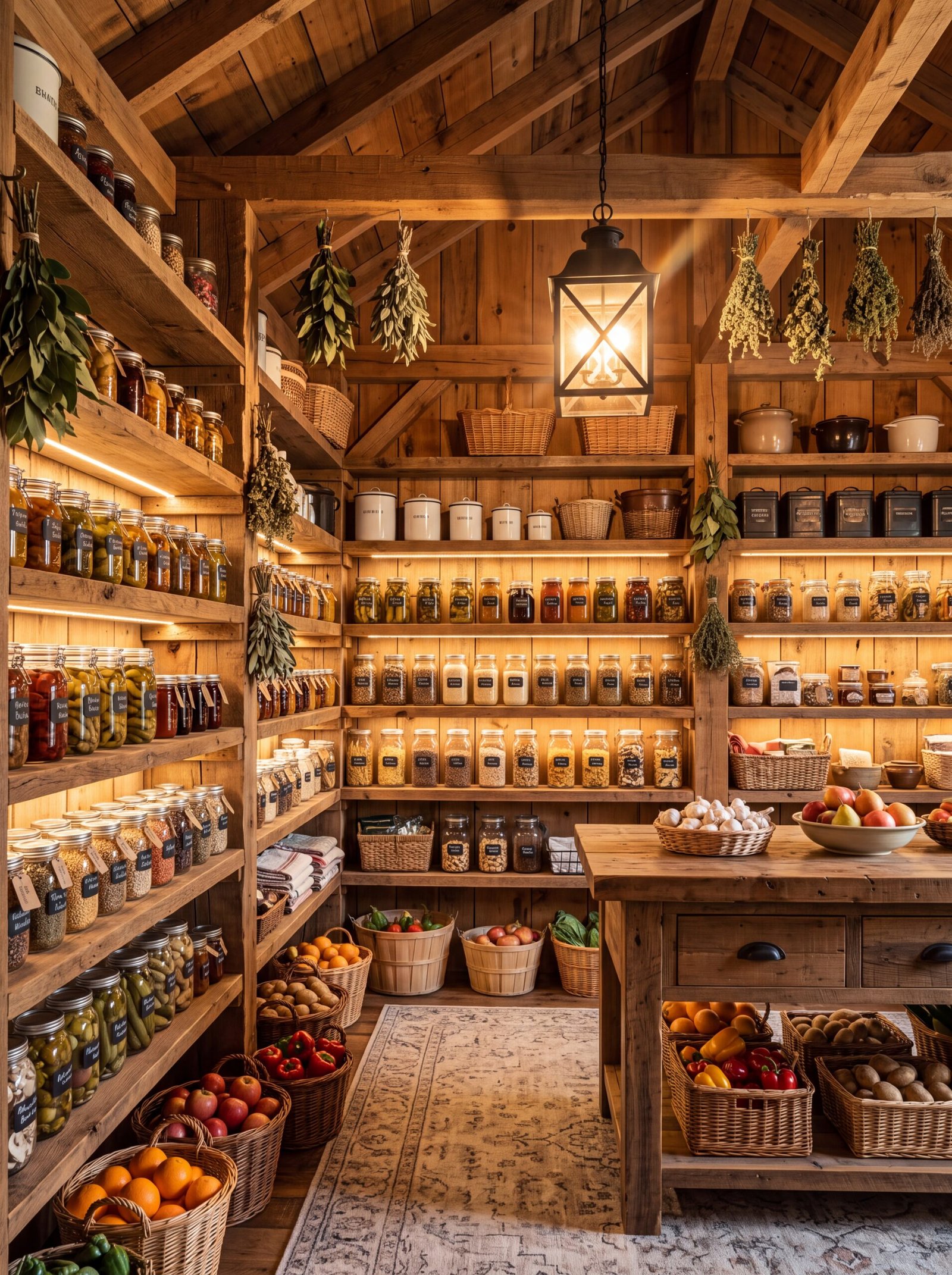
A rustic walk-in pantry is popular because it blends warmth with everyday practicality. Rich wood shelving, glowing cabinet lighting, a center island, and a Persian rug create a cozy, inviting mood. In this guide, you’ll learn how to plan the layout, choose materials, organize storage, and style your rustic pantry.
Planning a Galley Layout Around a Butcher Block Island
Keep the center clear for easy movement
A balanced layout makes this walk-in pantry feel generous despite its narrow footprint. Shelving hugs three walls; a butcher block island anchors the center. Copy this by choosing an island roughly 24 inches deep and leaving 36 inches of walkway on each side. Clear paths matter more than counter space.
Wooden Crates and Wicker Baskets for Fresh Produce
Store fruit and vegetables where they can breathe
Wooden crates on open lower shelves hold leafy greens, carrots, and radishes. Wicker baskets on the counter keep apples and oranges visible, while potatoes sit in a basket under the island. Crates for a rustic walk-in pantry cost little at farm stores. Breathable containers keep produce fresher than sealed bins.
Keeping Open Shelves and Glass Jars Fresh
Simple maintenance habits that save time
Open shelving and glass jars look stunning but demand routine care. Wipe shelves monthly with a damp microfiber cloth, and refill jars only after washing them to prevent stale layers. Rotate older stock forward. For a rustic walk-in pantry, finish wood shelves with matte polyurethane. Good habits keep storage beautiful.
Narrow Pantry Mistakes That Waste Space
Small planning errors with big consequences
Narrow pantries often fail through small oversights. Avoid shelves deeper than 16 inches, since items vanish at the back. Skip swinging doors in aisles; drawers and pull-outs work better, as seen on the right wall. Keep aisles 40 inches wide. Most rustic walk-in pantry frustrations begin with depth, not size.
A Pantry Island With Glass-Door Storage for Preserves
Make the island store, not just serve
Rather than solid doors, the island includes a lit glass cabinet stocked with jams, sauces, and pickled vegetables, so preserves stay visible. Aim for an island 7 feet long and 32 inches deep, with drawers on the working side. In a rustic walk-in pantry, islands should store, not just serve.
A U-Shaped Layout for Maximum Counter Space
Keep every supply within a few steps
Wrapping counters around three walls creates a U-shaped workflow where every jar, bin, and tool sits within a few steps. This rustic walk-in pantry needs roughly 12 feet of width to allow counters on both sides plus a central island. Without that, drop the island. Continuous counters beat scattered surfaces.
Sage Green Beadboard Cabinets and the Right Paint
Pick a muted green that calms the room
Sage green paint on beadboard cabinetry gives this small pantry a calming, garden-fresh mood that works year-round. For a similar sage green pantry, try Farrow & Ball Lichen or Sherwin-Williams Clary Sage in eggshell, which wipes clean. Pair it with brass and wood. Muted greens soothe better than bright ones.
A Log-Clad Island With Counter Seating
Plan stool sizes and overhangs correctly
Stacked log slabs wrap the island base, turning a standard work surface into a sculptural centerpiece with two leather counter stools. Allow a 12-inch overhang and 24 inches of width per seat. Counter-height stools measure 24 to 26 inches. In a modern log cabin pantry, seating invites morning coffee conversations.
Curved White Plaster Walls Against Rough Logs
Soften rugged architecture with gentle curves
Smooth white plaster curving around the nook softens the rough, horizontal logs and brightens a room that could feel dark. A creamy chalky white such as Farrow & Ball Wimborne White adds softness. Rounded edges make tight spaces safer. A log cabin pantry benefits when one wall breaks the grid.
Styling Floating Shelves With Books and Ceramics
Arrange in triangles and leave breathing room
Three floating shelves beside the arched window mix cookbooks, white pitchers, a trailing plant, and stoneware in neutral tones. Style in triangles: tall piece, medium piece, low stack. Leave a third of each shelf empty. In a Scandinavian pantry, breathing room on shelves matters as much as what fills them.
Wicker Versus Wire Baskets on Open Shelves
Give every container a job
Two basket types share the open shelves. Wicker hides snack packets and softens the look, while wire baskets let potatoes breathe and show stock levels at a glance. Measure shelves before buying, leaving 1 inch of clearance. Mixing containers in a pantry coffee bar works when each has a job.
Storing a Harvest Without a Root Cellar
Separate produce that doesn’t get along
Potatoes in wicker baskets and apples in lit cabinets reflect harvest storage done right. Apples release ethylene gas, which shortens potato storage life, so keep them in different zones. Store potatoes in the darkest, coolest spot, ideally 45 to 50°F (7–10°C). A homestead pantry can mimic a root cellar with careful placement.
Building the Pantry Into the Kitchen Itself
Choose a cabinet instead of a separate room
Blending pantry storage into the kitchen, this cabin kitchen pantry skips the separate room. A tall glass-front larder cabinet, 48 inches wide and 24 inches deep, holds much of what a walk-in would. It suits homes without spare square footage. Sometimes the best pantry is a cabinet, not a room.
A Walk-In Pantry Tucked Behind a Wall of Cabinetry
Make the pantry look like furniture
Behind what looks like another cabinet door, a full walk-in pantry hides within this wall of built-ins. Flanking glass cabinets store display-worthy fruit and jars, while bulkier items disappear inside. Plan the cabinet wall 24 inches deep so doors align flush. A hidden walk-in pantry keeps kitchens looking calm.
Fitting a Breakfast Nook Beside the Pantry
Turn a spare corner into a morning spot
Squeezed between the pantry cabinets and the windows, an L-shaped banquette turns a corner into a breakfast spot for three. Plan each bench run at least 48 inches long, with the tabletop overlapping the seat edge by 3 inches. A pantry breakfast nook makes quick meals happen right beside the ingredients.
Protecting Spices From Sunlight
Balance display with freshness
Spice jars on an open wooden rack beside the window look charming, but daylight fades flavor fast. Move spices a few feet from direct sun, or use amber or tinned jars. Replace ground spices yearly. Whole spices last longer. A butler’s pantry protects ingredients best when display never outranks freshness.
Cleaning and Caring for Knotty Pine Cabinets
Simple maintenance that protects the finish
Knotty pine cabinetry like this collects kitchen grease slowly and invisibly. Clean doors twice a year with diluted dish soap, dry immediately, then buff with a quality furniture wax. Avoid vinegar and all-purpose sprays that dull finishes. A pantry organization system includes caring for the cabinets that hold it all.
Choosing a Light-Colored Runner That Lasts
Keep bright floors practical
An ivory Persian-style runner keeps the sunlit galley pantry bright, though pale rugs show spills. Choose washable or polypropylene versions for kitchens, and rotate the runner every few months so sun fades it evenly. Size runners to leave 6 inches of floor at each end. Lighter rugs reward careful choice.
Oak Barrels and Casks as Storage
Give old vessels a new job
Copper-banded oak barrels on the lower shelves and top cabinets add cellar-like character. Small casks can hold dry beans, rice, or even serve as ice buckets for parties. Line food-storage barrels with food-grade bags. Mini whiskey barrels sell cheaply online. A farmhouse pantry welcomes vessels with a working past.
Hutch Proportions for a Built-In Pantry Wall
Step the depth for reach and workspace
Built like a hutch, this pantry wall pairs 24-inch-deep base cabinets with shallower 13-inch uppers resting on the counter. That stepped depth keeps jars reachable and leaves a usable work surface. Order stock tall uppers and set them on the countertop. Depth, more than width, determines a pantry wall’s usefulness.
A Curved Plaster Niche With Floating Shelves
Soften straight cabinetry with a rounded frame
A tall, 12-inch-deep rounded plaster niche beside the cabinetry holds floating shelves of books, pitchers, and a trailing plant. If walls are too thin to recess, build the niche out with drywall. LED strips under each shelf finish the effect. A modern rustic pantry welcomes soft curves beside straight cabinetry.
Choosing the Right Paint for White Cabinetry
Pick a finish that lasts and stays white
Clean white cabinetry demands the right paint. Choose a hard-wearing enamel like Benjamin Moore Advance or Sherwin-Williams Emerald Urethane in satin for a durable, furniture-like finish. Pure oil-based paints tend to yellow slightly over time. A soft white such as Sherwin-Williams Pure White keeps white pantry cabinets from looking stark.
Getting the Adobe Plaster Look Over Drywall
Walls with gentle, handmade movement
Smooth, subtly mottled white walls mimic traditional adobe plaster. Get the effect over drywall with Roman clay or limewash, applied in two thin coats by trowel or brush. Both breathe and hide minor imperfections. Seal areas near counters for wipeability. A Southwestern pantry depends on walls with gentle, handmade movement.
A Glass Door Straight to the Garden
Plan outdoor access for everyday ease
A glazed door with a transom opens straight out onto the snowy garden, handy for bringing in groceries or harvested herbs. Exterior doors in a larder need tight weather-stripping and insulated glass to keep temperatures stable. Keep a boot tray nearby. A walk-in larder with outdoor access simplifies daily life.
Baskets on Cabinet Tops for Lightweight Overflow
Use the space up high, but safely
Woven baskets lined along the cabinet tops use dead space for lightweight overflow like paper towels, napkins, or linens. Choose lidded baskets to keep dust out, and label fronts. Never store heavy items that high. Keep a step stool nearby. Rustic pantry storage should stretch to the ceiling, but safely.
Safe Knife Storage Near the Prep Zone
Keep blades sharp and stored properly
A wooden knife block sits on the counter near the windows, keeping blades ready for slicing bread and cheese. Blocks protect edges, but magnetic strips save counter space; mount strips 12 inches above the counter. Never store knives loose in drawers. An entertaining pantry needs sharp, safely stored, well-honed tools.
A Row of Matching Copper Herb Planters
Turn everyday herbs into a polished display
A neat row of matching copper planters along the windowsill turns everyday herbs into a polished display. Choose planters with drainage holes, or nest plastic pots inside and empty saucers after watering. Pinch off flower buds to keep leaves tender. A gourmet pantry makes even basil part of the design.
Mini Bracket Shelves for Copper Accessories
Put narrow strips of wall to work
Small bracket shelves mounted beside the cabinets hold copper pitchers, a copper tray, and hanging pans, filling an awkward, narrow strip of wall. Use shelves 5 to 7 inches deep with hooks underneath for double duty. They install in minutes. A mountain home pantry turns leftover walls into charming storage.
Balancing Open Shelves With Closed Cabinets
Keep open storage the exception
Open shelves fill the center wall while a floor-to-ceiling bank of closed cabinets flanks the right, striking a comfortable balance. Aim for roughly 30 percent open and 70 percent closed storage; too much open shelving looks visually cluttered fast. Open pantry shelving shines when it’s the exception, not the rule.
Low Shelving Beneath the Windows
Store more without blocking the view
Low shelving runs beneath the windows, storing jars of grains without blocking the snowy view. Keep under-window units below sill height, 30 inches or less, and 12 inches deep. Avoid storing oils or spices there, since sunlight degrades them. A library ladder pantry uses every wall, even under glass.
Protecting Wood Cabinetry From Dry Winter Air
Manage humidity to prevent cracks and gaps
Wood stoves and cold air make winter cabins dry, and this solid wood cabinetry feels it. Low humidity causes doors to shrink, gaps to open, and joints to crack. Keep indoor humidity between 35 and 50 percent with a humidifier. A winter cabin pantry protects its woodwork by managing air.
Choosing Cabinet Doors for a Tight Aisle
Keep door swings from blocking the way
Swinging glass doors look beautiful, but in a tight aisle they can block movement when open. Consider bi-fold or sliding glass doors on narrow walk-in pantry cabinets, or keep door widths under 15 inches so swing stays short. Soft-close hinges prevent slamming. Door style matters as much as aisle width.
Repurposing a Vintage Store Display Case
An affordable alternative to custom glass
Vintage store display cases, once used for candy or hardware, make affordable alternatives to custom glass islands like this one. Search salvage yards and online marketplaces, often under $500. Add casters or a plinth for counter height. A pantry display cabinet with shop history brings instant character and good conversation.
Lighting a Windowless Pantry
Plan layers so it never feels gloomy
Without a window, this pantry relies on layered artificial light: recessed cans for general brightness and a glass lantern for character. Windowless rooms need 30 to 50 lumens per square foot. Choose 2700K bulbs to flatter dark wood. An old world pantry feels intimate, never gloomy, when lighting is planned.
Planning Storage and Seating Without Conflict
Decide which faces get drawers and which get legroom
Drawers here open at the island’s end, while stools tuck along the long sides, so storage and seating never compete. Plan which island faces get drawers and which get legroom before ordering. Dual-access drawers work on islands 42 inches deep or more. A pantry island earns its footprint twice over.
A Light Ceiling to Balance Dark Walls
Give the eye somewhere to breathe
Bright white plaster between the reclaimed beams keeps that charcoal from closing in. Dark walls and cabinets feel dramatic, but a light ceiling preserves height and bounces light down. Use a flat white like Benjamin Moore Chantilly Lace overhead. A moody pantry still needs somewhere for the eye to breathe.
A Semi-Flush Light for Standard Ceilings
Light the room without losing headroom
With standard ceiling height, a semi-flush brass and clear-glass fixture provides light without hanging low into the room. Semi-flush mounts suit 8- to 9-foot ceilings where pendants would crowd heads. Choose clear glass to spread light. Add under-shelf strips for counter tasks. A charcoal pantry stays bright without sacrificing headroom.
Storing Stemware in Lit Glass Cabinets
Turn everyday glassware into display
Wine glasses and tumblers fill the right glass cabinets, turning drinkware into gleaming display under the LED lights. Store stemware upright, since resting rims down can trap moisture and chip edges. Leave an inch between glasses for easy grabbing. A modern farmhouse pantry makes everyday glassware part of the design.
Setting Up a Baking Zone
Keep tools and ingredients within one step
Rolling pins, a stand mixer, flour canisters, and grains cluster around the island and counter, forming a baking zone. Group tools, ingredients, and a work surface within one step. Store sheet pans vertically nearby. Drawers hold cutters and piping tips. A barn style pantry rewards bakers who keep everything together.
Pocket Doors for a Space-Saving Entrance
Open the pantry without stealing floor space
Pocket doors slide into the walls at the entrance, leaving the opening clear without swinging into the kitchen. Choose soft-close tracks rated for solid doors, and keep plumbing and wiring out of the pocket wall. Paint door edges black. A black and walnut pantry opens and closes without stealing space.
Inky Navy Cabinets Instead of Black
Choose depth with a hint of blue
Inky navy cabinetry reads almost black in dim light yet softer than true black in daylight, a versatility worth copying. Try Benjamin Moore Hale Navy or Sherwin-Williams Naval in satin. Navy pairs with brass and honey wood. Test samples at night. A reclaimed wood pantry gains depth from blue undertones.
A Metallic Epoxy Floor That Glows
Start the drama underfoot
The glossy, swirling copper floor is a metallic epoxy coating poured over concrete, and no two floors look alike. Epoxy resists stains and spills, making it practical for pantries. Professional installation costs roughly $5 to $12 per square foot. Add anti-slip additive for safety. A copper pantry starts dramatically underfoot.
Planning the Renovation in the Right Order
Follow a clear sequence from wiring to styling
Planning a pantry like this? Sequence matters. Finish electrical and lighting first, then ceiling and beams, flooring, cabinetry, countertops, then hardware and styling. Templating counters needs cabinets installed. Order long-lead items like custom cabinets eight to twelve weeks ahead. A dark wood pantry renovation runs smoother with a clear timeline.
Why Green and Copper Work So Well Together
Let each color make the other glow
Sage-jade cabinets and copper sit opposite on the color wheel, so each makes the other glow. Add copper through hardware, trim, and cookware, repeating it in several places. Deep wood floors bridge both tones. Paint ideas include Sherwin-Williams Rosemary. Green pantry cabinets never look better than beside burnished copper.
Choosing the Right Olive Green Paint
Go earthy rather than trendy
Muted olive green with a slight yellow undertone gives this pantry an earthy, grounded mood that harmonizes with reclaimed wood. Try Farrow & Ball Treron, Sherwin-Williams Oakmoss, or Benjamin Moore Saybrook Sage. Test large swatches beside your wood floors before committing. An olive green pantry feels rooted rather than trendy.
Black Cabinets Against Honey-Toned Logs
Choose soft blacks for rich contrast
Black cabinetry against honey-toned logs creates striking contrast, grounding a room that might otherwise feel like all one color. Soft blacks work best; try Farrow & Ball Off-Black or Benjamin Moore Black Beauty, which read rich rather than harsh. A black log cabin pantry feels modern without losing rustic soul.
Sizing a Tall Pantry Cabinet Correctly
Proportion matters more than sheer size
Most tall pantry cabinets stand 84 to 96 inches high, 24 inches deep, and 30 to 36 inches wide, like this double-door unit. Deeper isn’t better; items vanish at the back. Choose adjustable shelves spaced 10 to 14 inches apart. A tall pantry cabinet succeeds through proportion, not sheer size.
A Recessed Pantry Nook Built Into the Kitchen
Get walk-in charm without the footage
Framed by oak panels and topped with a paneled soffit, this pantry nook sits recessed into the kitchen wall like a built-in hutch. A single downlight in the soffit washes the shelves. Plan nooks 18 to 24 inches deep. A pantry nook gives small kitchens walk-in charm without square footage.
Broad Category Baskets That Forgive Mess
Label zones, not individual items
Wicker baskets labeled Root Veg, Packaged Goods, and Breads use broad categories rather than specific items, so labels rarely need changing. Broad zones forgive messy restocking. Leather handles make heavy baskets easy to pull. Keep cleaning supplies elsewhere, away from food. A birch plywood pantry stays organized with forgiving systems.
L-Shaped Corner Shelving With Freestanding Units
Make the corner work harder
Two freestanding metal-and-wood shelving units meet in the corner, forming an L that maximizes a small walk-in pantry. Where units meet, the corner becomes a dead zone, so store rarely used items there or add a corner shelf unit. Leave 36 inches of floor clear, and anchor both units to studs.
Storing Homemade Bread the Right Way
Plan for freshness, not just display
Crusty loaves, baguettes, and rolls fill baskets here, but bread stales fast in open air. Crusty bread keeps two to three days in linen bread bags or paper; slice and freeze extras within a day. Never refrigerate bread, which speeds staling. A bread pantry works best with a freezer plan.
Floating Shelves Strong Enough for Gallon Jars
Plan for the weight of bulk staples
Reclaimed floating shelves carry gallon jars of beans, and those add up fast; a gallon of beans weighs about seven pounds. Use hidden brackets with steel rods drilled into studs, rated 100 pounds per shelf. Keep spans under 48 inches. A plant-based pantry needs shelves as sturdy as its staples.
White Quartz Counters in a Pantry
Low maintenance with one important caution
White quartz counters brighten the U-shaped work surface and reflect light from the single recessed fixture. Quartz never needs sealing and resists stains, but high heat can scorch its resin, so use trivets. Choose a matte or honed finish to hide smudges. A white oak pantry pairs with clean quartz.
Caring for a Carved Marble Sink
Accept a softly aging patina
Carved from a solid block, the marble farmhouse sink is a showpiece, but marble etches from lemon juice, vinegar, and tomato. Seal it every three to six months, rinse acids immediately, and accept a softly aging patina. Honed finishes hide wear best. A scullery pantry with marble rewards relaxed owners.
Arranging Tiers by Weight and Habit
Heavy items low, daily snacks at eye level
Light fruit sits on the top tiers while heavy potatoes and sweet potatoes fill the bottom crates, and that order matters. Heavy produce low keeps the unit stable and saves your back. Put daily snacks at eye level for everyone. A produce station works best arranged by weight and habit.
An Exposed Brick Wall With Cottage Character
Seal it before storing food nearby
Exposed brick frames the window, adding old-cottage texture to the oak shelving. Unsealed brick sheds dust and absorbs spills, so apply a clear matte masonry sealer before storing food nearby. Limewash softens orange brick. Brick slips mimic it on drywall. A well-stocked pantry looks characterful with one original wall showing.
Wraparound Shelving on Three Walls
Turn the room into continuous storage
Shelves wrap all three walls, turning the room into continuous storage with no dead ends. Where shelves meet at corners, overlap one board atop the other rather than mitering, which is stronger and easier. Keep lower shelves 16 inches deep for baskets. A wraparound pantry maximizes every linear foot.
Color-Blocking Containers by Shelf
Create calm among hundreds of items
Each shelf holds one container style: white enamel canisters on one level, black metal tins on another, glass jars below. Color-blocking containers by shelf creates order even when contents vary. Limit yourself to two or three container families. Tins protect coffee. A timber frame pantry looks calm despite hundreds of items.
A rustic walk-in pantry proves that storage can be both hardworking and beautiful. Warm wood cabinetry, open shelving, soft lighting, and a central island turn an ordinary storage room into a welcoming part of the home. The practical benefits are just as strong: everything stays visible, bulk groceries have a proper place, and meal prep becomes faster and calmer. You don’t need a huge space to get this look. Start with one change, such as wood shelves or warm under-shelf lights, and build from there. With a few thoughtful choices, your rustic pantry can become the heart of your kitchen.