These natural swimming pool ideas prove you don’t need a big yard or harsh chemicals to enjoy a beautiful place to swim at home. Natural pools use plants, stone, and gentle water movement to stay clear, so they look more like a hidden pond than a blue concrete box. In this guide, you’ll find 20 designs, from countryside ponds with wooden docks to tiny plunge pools for city yards. Along the way, we’ll cover real costs, the best water plants, safety rules, and simple mistakes to avoid, so you can plan a pool that fits your space, budget, and style.
Steps That Make Swimming Feel Easy
A good entry decides whether people swim or just admire. At the back of this natural pond with boardwalk, wide cedar steps lead straight into the clear water. For comfortable steps, keep each rise around 7 inches and each tread at least 11 inches deep. Add a simple handrail if older family members will swim. Cedar and thermally modified wood last much longer than untreated pine when they sit in water all summer. A gentle, sturdy entry is what turns a pretty pond into a weekly swim spot.
Water Plants That Work as Your Filter
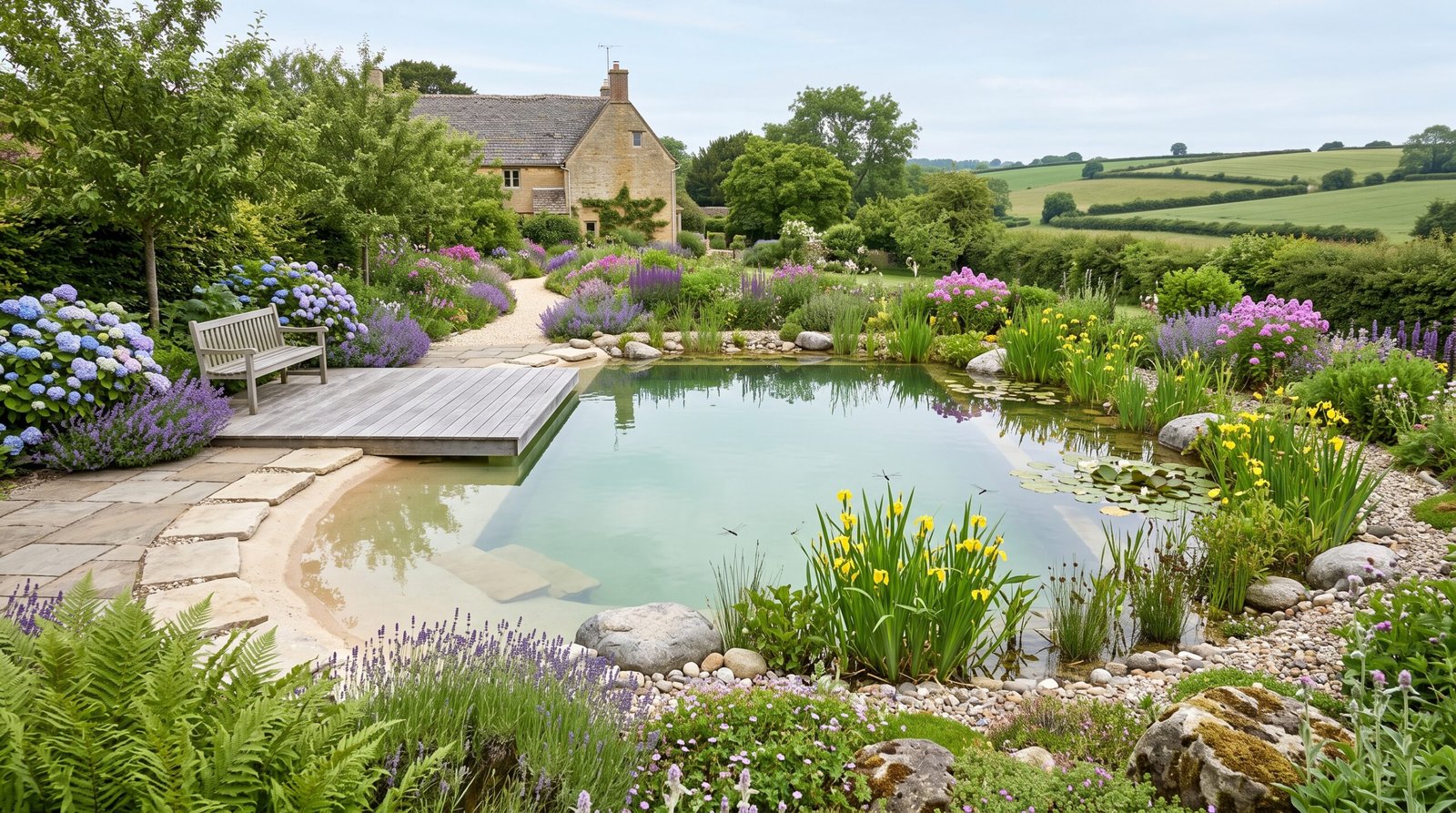
Every plant around the edge has a job. In this wildflower garden natural pond, irises, lilies, and reeds grow in shallow gravel shelves, where their roots absorb nutrients that would otherwise feed algae. Be careful with the bright yellow flag iris shown here: it’s invasive in many US states. Native blue flag iris, pickerelweed, and marsh marigold give a similar look safely. Plant in shallow zones about 6 to 12 inches deep. Checking your state’s invasive plant list before buying saves you from a costly mistake.
Why Green Tiles Make a Pool Look Like a Pond
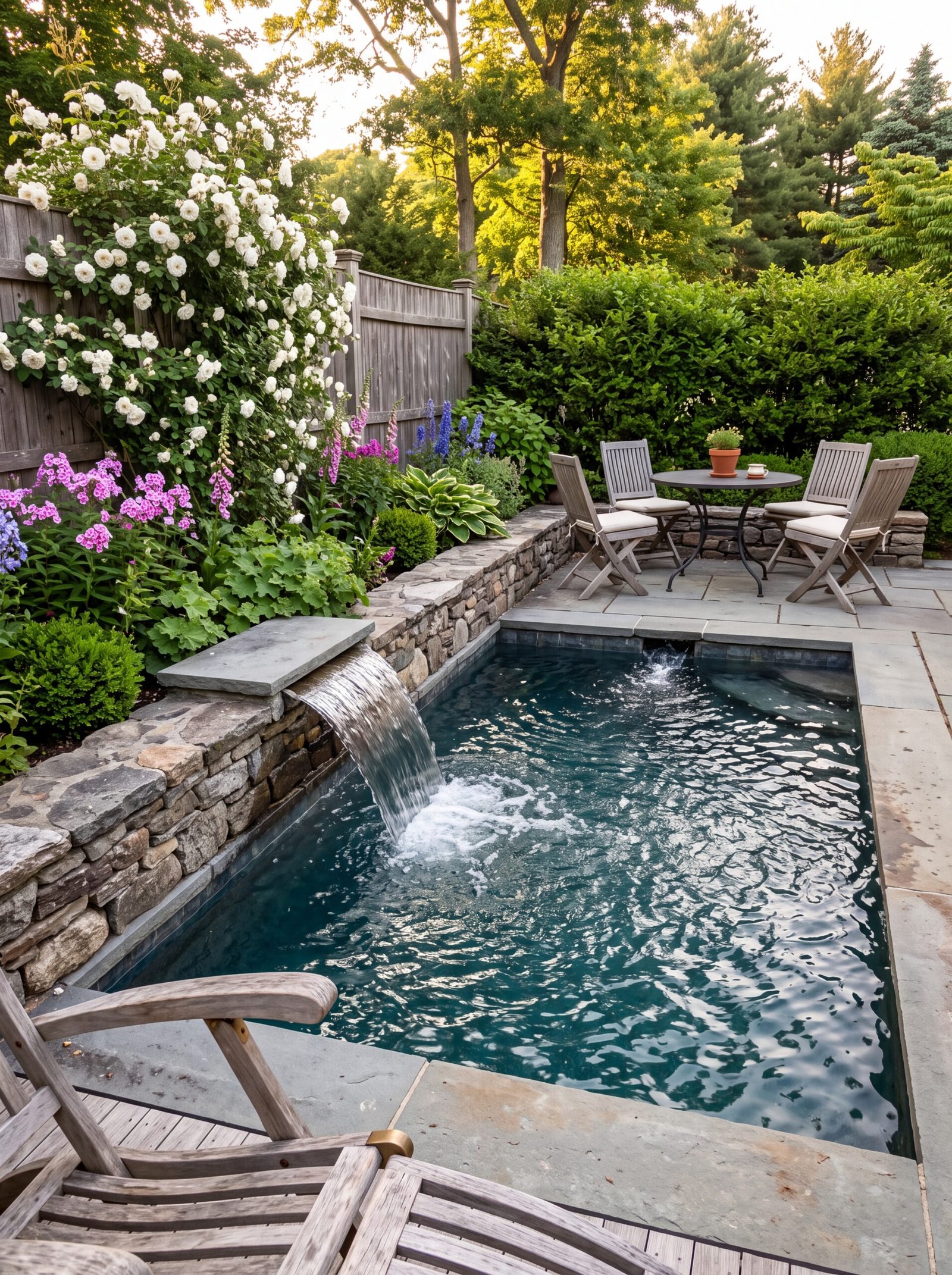
Tile color changes how water looks from across the garden. In this garden plunge pool, sea-green glass mosaic gives the water a soft, lagoon-like shade that blends with the ferns and roses instead of glowing bright blue. Glass mosaic costs more than plaster, so on a budget, tile only the waterline and use a colored pebble finish below. For the nearby studio or fence, muted greys work well, such as Sherwin-Williams Dovetail or Farrow & Ball Pavilion Gray. Greener water always feels more at home among plants.
Planning a Small Dining Spot Near the Water
Eating outdoors feels special when the table sits near water, but not right at the edge. Beside this stone plunge pool, a round metal bistro table and wooden folding chairs rest on bluestone, a few steps back from the splash zone. A 30-inch round table fits two people; go 36 to 42 inches for four. Leave about 36 inches behind each chair so guests can stand up easily. Keeping the table 4 to 6 feet from the pool keeps plates dry and wet feet off the dining area.
Caring for a Dark Hardwood Deck
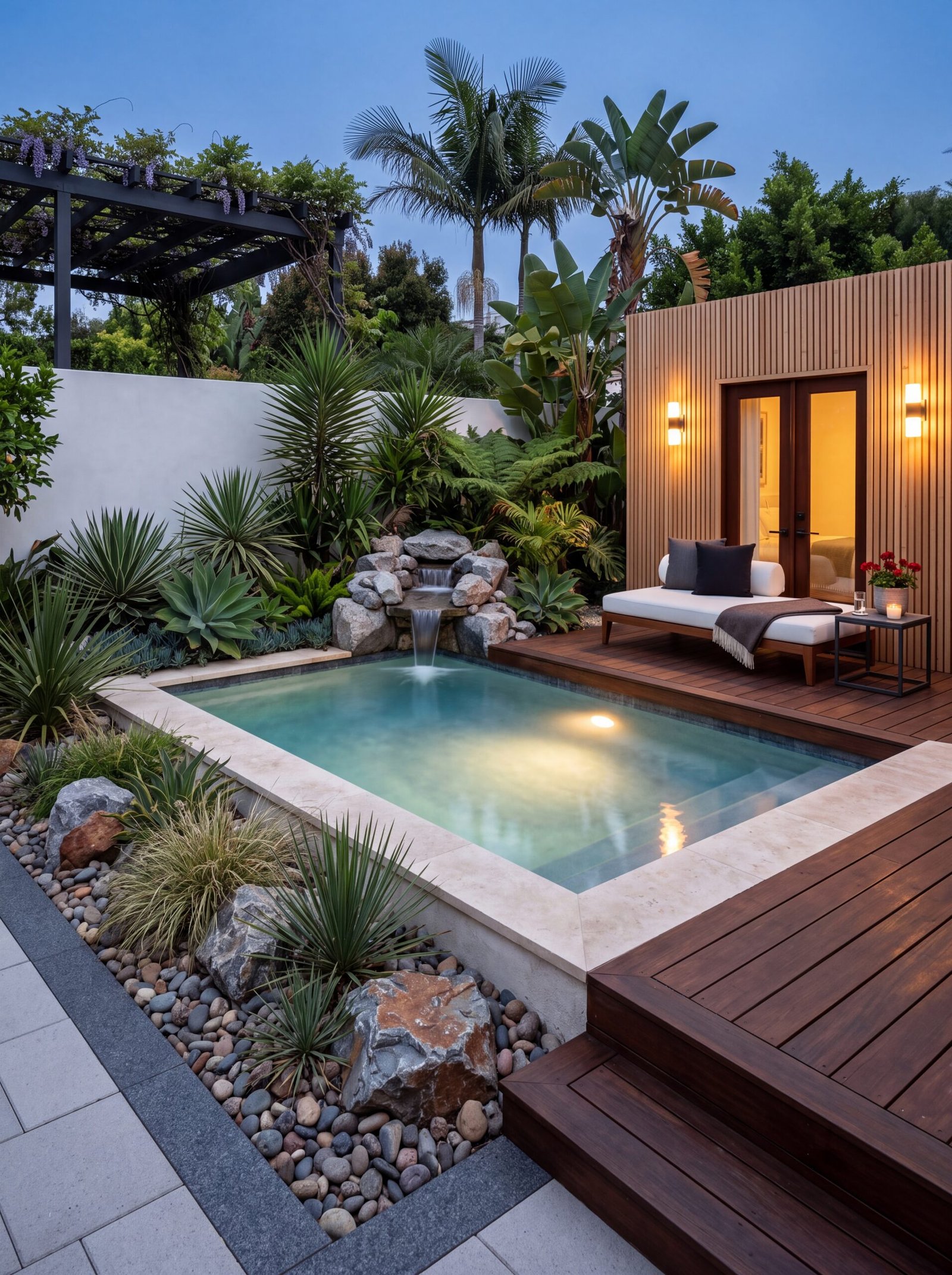
Dark hardwood decking looks rich, but it needs some care. The ipe deck around this modern plunge pool is dense and very durable, though it fades to silver-grey unless you oil it once or twice a year. The cream travertine coping helps here too, because pale stone stays cooler underfoot than dark wood in summer sun. For less upkeep, composite boards from brands like Trex or TimberTech need no oiling, but they can also get hot. Store daybed cushions indoors in winter, even outdoor-fabric ones, to make them last much longer.
Shade That Keeps People by the Water Longer
Shade decides how long people stay by the water. Next to this river rock pool landscaping, a pale yellow umbrella covers the lounge chairs on the flagstone patio. A standard 9-foot market umbrella shades about one lounger, while a 10- to 11-foot cantilever umbrella can cover two. Use a base of at least 50 pounds, and heavier for cantilever styles, because wind near open lawns catches umbrellas fast. Leave about 3 feet of walking space between loungers and the pool edge so wet feet never have to squeeze past.
Low-Water Plants That Handle Pool Splash
Succulents and pools might sound like an odd pair, but they get along well. This pool rock garden mixes sedums, hens and chicks, and blue fescue between smooth river stones, all plants that need little water and very little care. Plant them in a gritty, fast-draining soil mix, because soggy soil rots succulents quickly. A raised bed, like the curved one here, helps with drainage. Keep delicate flowering plants a couple of feet back, since chlorinated splash can burn their leaves. You’ll water far less than with lawn or flower beds.
A Roofed Pavilion for Shade and Rainy Afternoons
A roofed shelter makes the pool useful on hot afternoons and even in light rain. Behind this rock pool with dock, a timber-frame pavilion with stone columns gives a shaded place to eat, rest, and store towels. A space about 12 by 14 feet fits a small lounge set comfortably. Place it far enough back that splashes don’t reach the furniture, but close enough to watch swimmers. Many towns require permits for roofed structures, so check first. A pergola kit or shade sail is a much cheaper option.
Getting the Depth and Liner Right
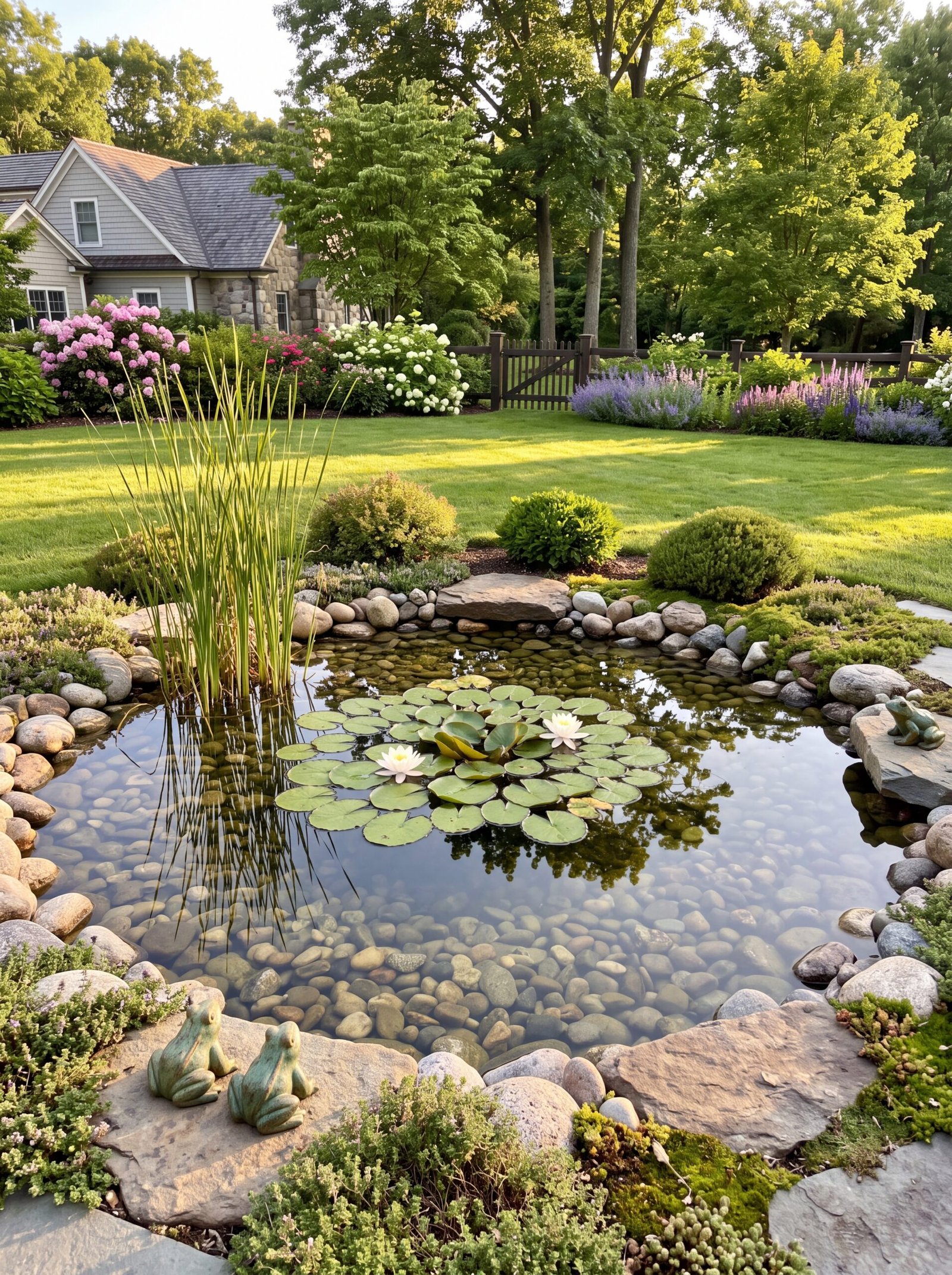
Depth matters more than size in a little pond. A small lily pond like this one needs about 18 to 24 inches of water in the center, because hardy water lilies grow best at that depth. Use a 45-mil EPDM liner over a soft underlayment, which protects it from sharp stones below. Hide the liner edge completely with overlapping river pebbles, as shown here, since exposed black liner is the fastest way to make a pond look cheap. A well-hidden edge makes even a DIY pond look professional.
Turning a Small Dock Into a Sunset Seat
A dock doesn’t need to be large to become someone’s favorite spot. On this garden pond with dock, one Adirondack chair and a folding side table make a quiet corner for evening tea. An Adirondack chair is about 30 inches wide and 35 inches deep, so a platform around 6 by 8 feet fits one chair and a small table. Recycled plastic Adirondack chairs never need painting and handle damp air well. Add a solar lantern for the walk back after dark, and the spot works well into the evening.
Framing a View From Your Seating Area
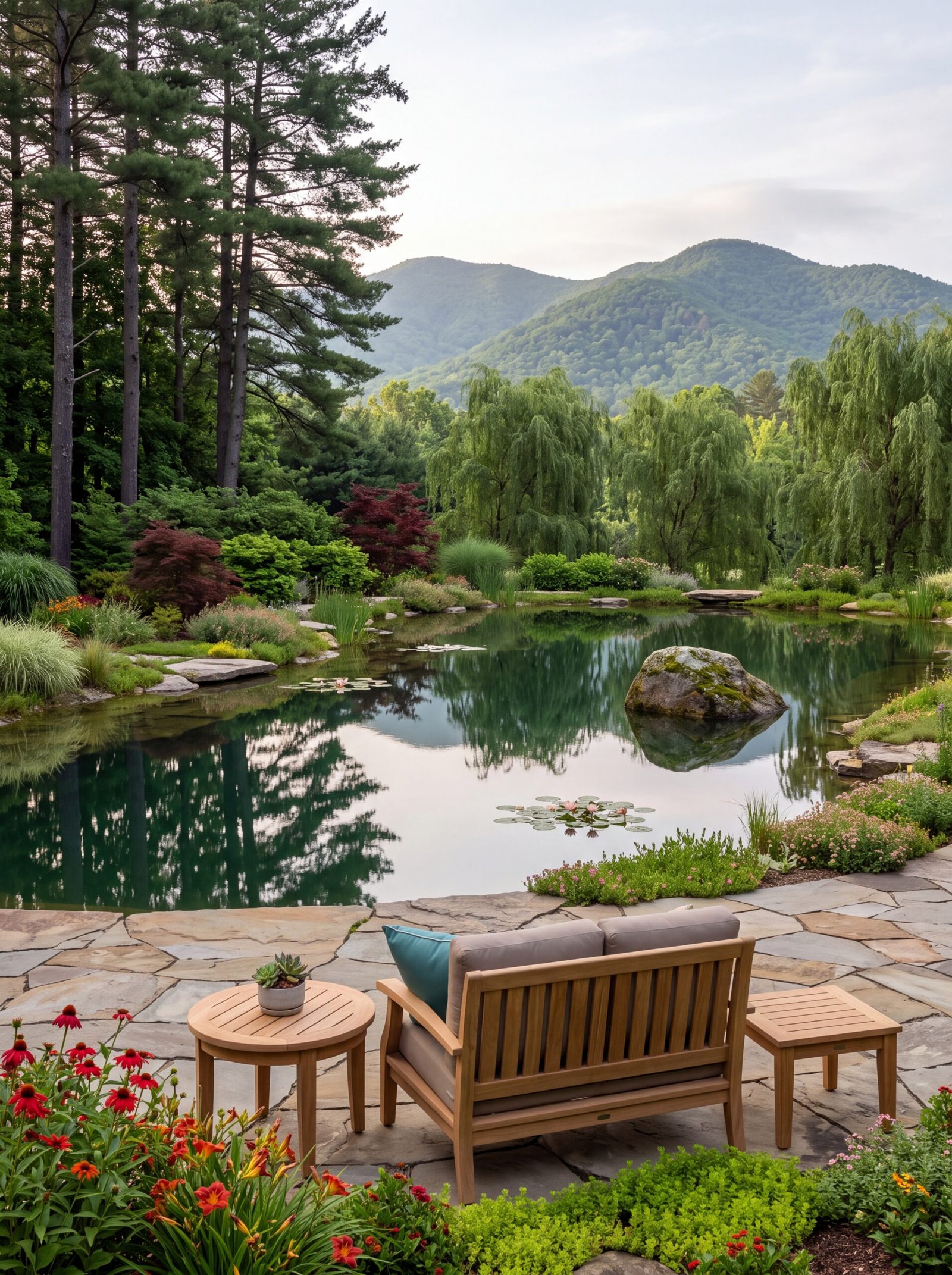
Where you sit matters as much as what you see. On this pond view patio, the loveseat faces straight across the water toward the willows and the mountain, so the best view is always in front of you. Keep plants low in the foreground and use taller trees at the sides, like the pines here, to frame the scene like a picture. Raising the patio even one step above the water level improves the view. Before building, sit in a chair on the spot for a morning and an evening.
Connecting Deck, Patio, and Pool in a Small Yard
Small yards work best when every area has a clear job. Around this pebble beach plunge pool, the cedar deck is for lounging, the stone patio under the pergola is for dining, and the lawn connects them. Using a different material for each zone shows where one space ends and the next begins. Keep walkways 3 to 4 feet wide so people can pass with a plate or towel. For siding like this soft greige, try Sherwin-Williams Agreeable Gray or Farrow & Ball Elephant’s Breath. Clear zones make a small yard feel bigger.
Caring for a Natural Pool Through Cold Winters
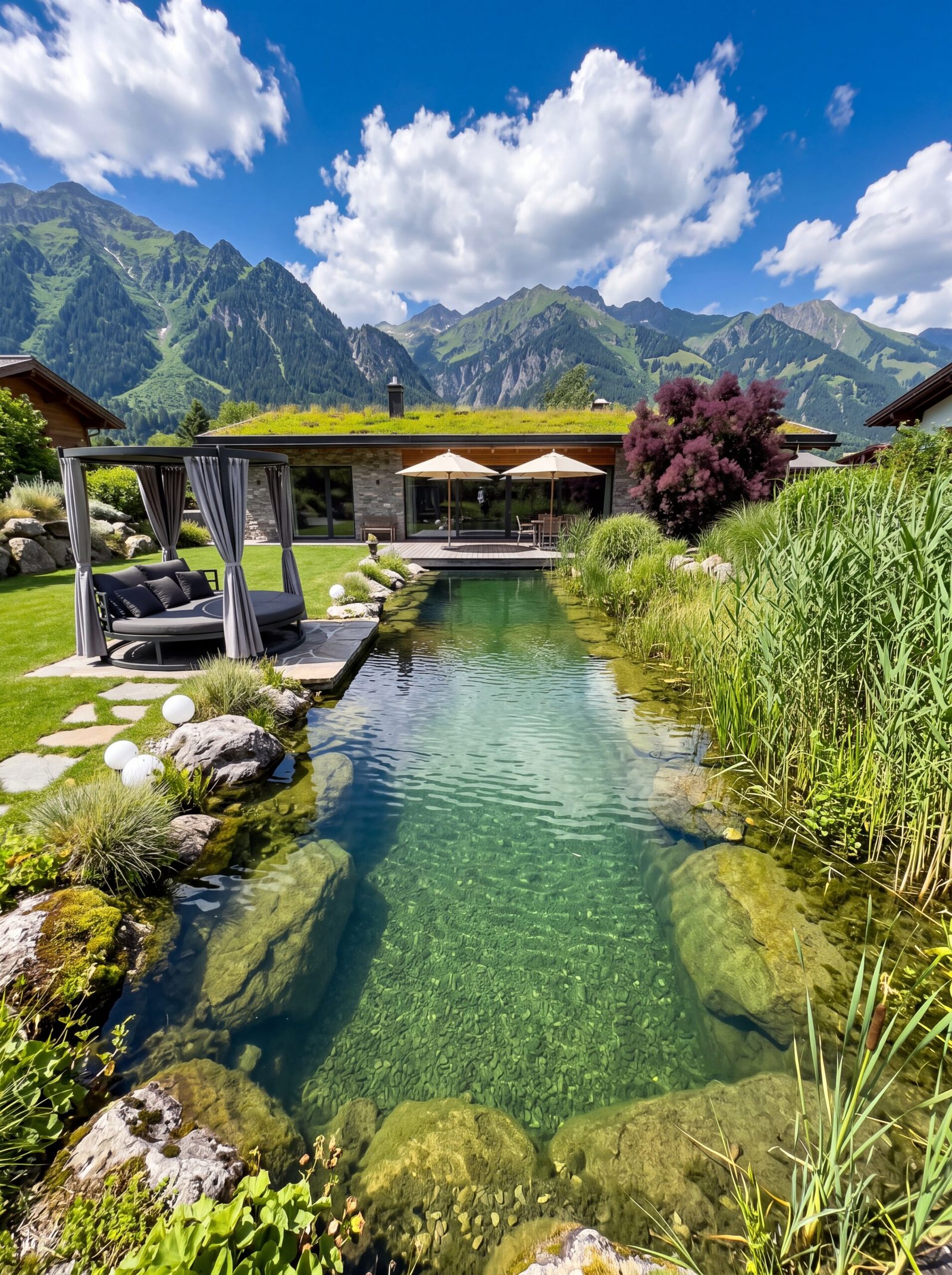
Cold winters don’t rule out a natural pool. A mountain natural swimming pond like this one usually stays full all year and simply freezes over, so there’s no draining and no winter cover. In autumn, cut back dead reeds and water plants so they don’t rot in the water. Follow your builder’s plan for the pump, since some systems run all winter and others are switched off. If you keep fish, use a floating de-icer to hold a small hole open. Never walk on pond ice, even when it looks thick.
What to Know Before Building a Beach Entry
Walking slowly into water, like at a beach, suits every age. This beach entry pool with spa has a wide, gentle slope that is perfect for small children, older adults, and anyone who likes to sit in shallow water. The trade-off is space: a beach entry needs a larger footprint, which usually raises the cost. Leaves and dirt also settle in the shallow area, so plan for more frequent brushing. A pebble finish gives better grip than smooth plaster. The shallow area warms quickly, a nice bonus in spring.
Getting the Tropical Look in Colder Climates
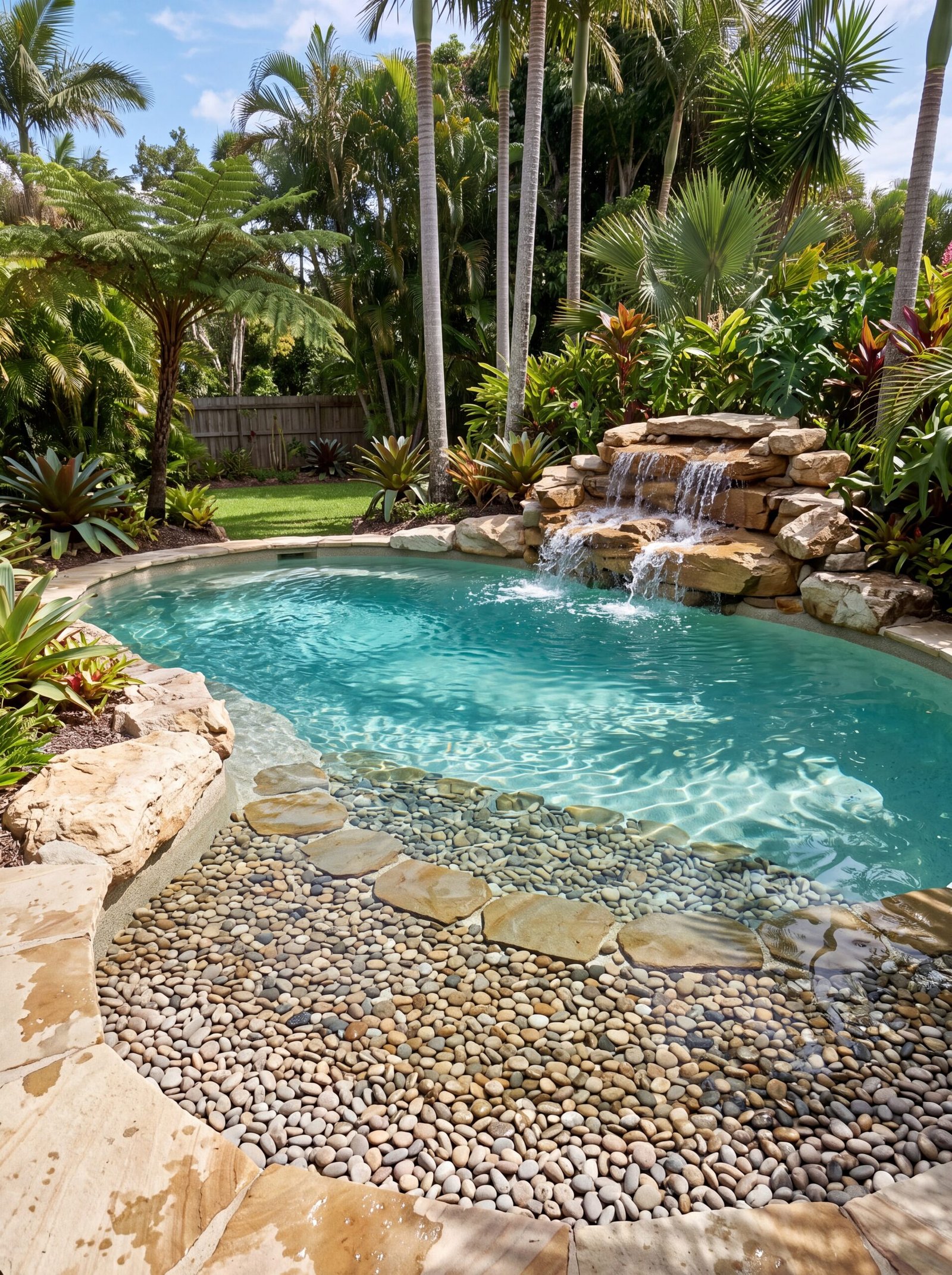
Palm trees aren’t only for Florida. The lush tree ferns and palms around this tropical rock pool can be copied in cooler areas with hardier plants. Windmill palms handle winters down to about 5°F, and hardy bananas can come back each spring in many northern zones with heavy mulch over their roots. Canna lilies and elephant ears give big tropical leaves for one season, and you can store the bulbs indoors over winter. Potted palms can also move into a garage when frost arrives, keeping the tropical look for years.
An Outdoor Kitchen Under the Pergola
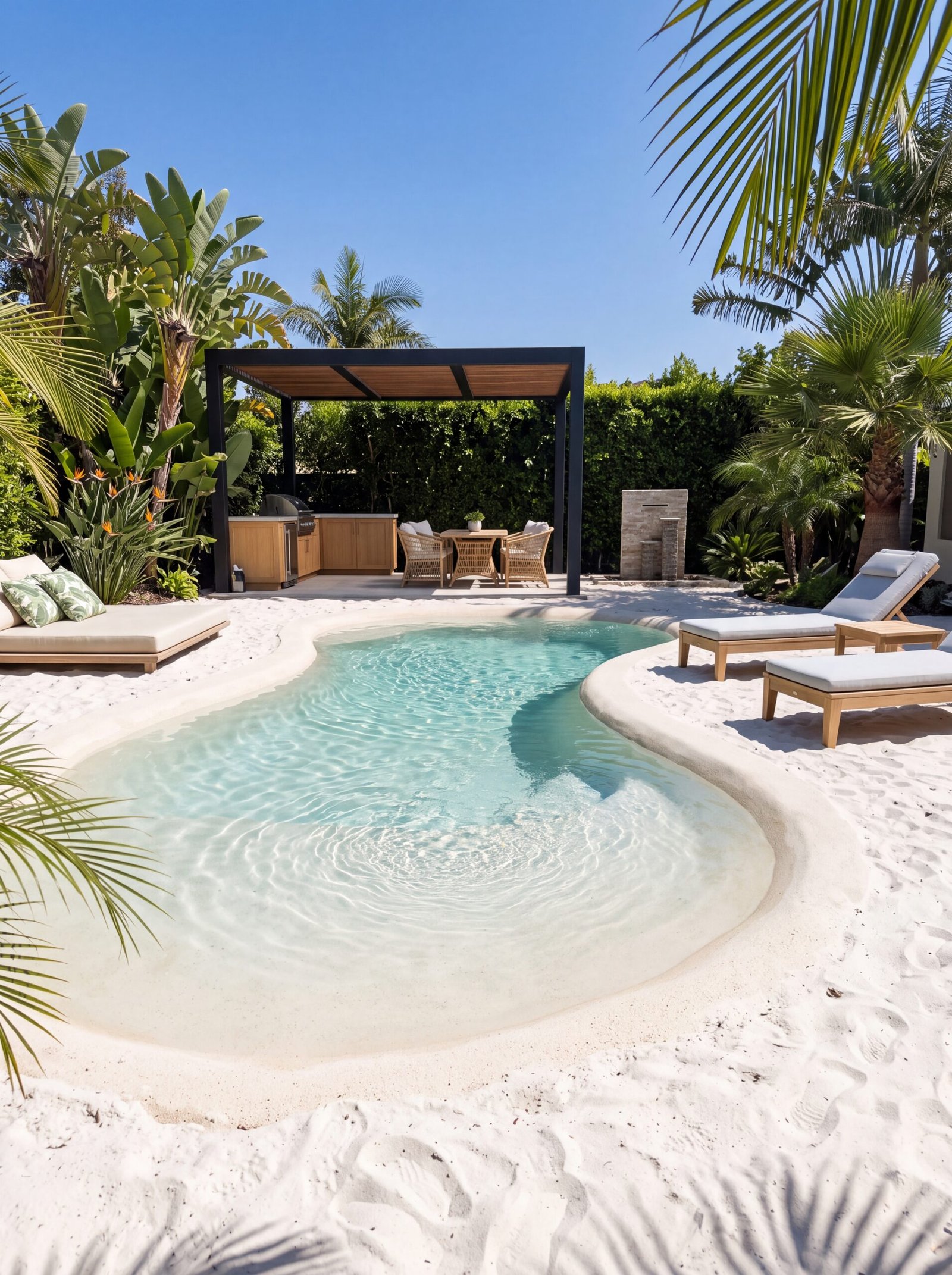
Cooking a few steps from the water keeps the host part of the fun. Next to this sand beach pool, a shaded outdoor kitchen with light oak cabinets sits under a slatted pergola. Standard counter height is 36 inches, and a raised bar ledge at 42 inches lets guests sit and chat. Outdoor cabinets made from marine-grade polymer or stainless steel handle humidity better than wood. Always follow your grill’s clearance guidelines, and don’t grill under a wooden roof unless it’s designed with a vent hood. Safe cooking spots make every gathering more relaxed.
Planting for Privacy Instead of Building Walls
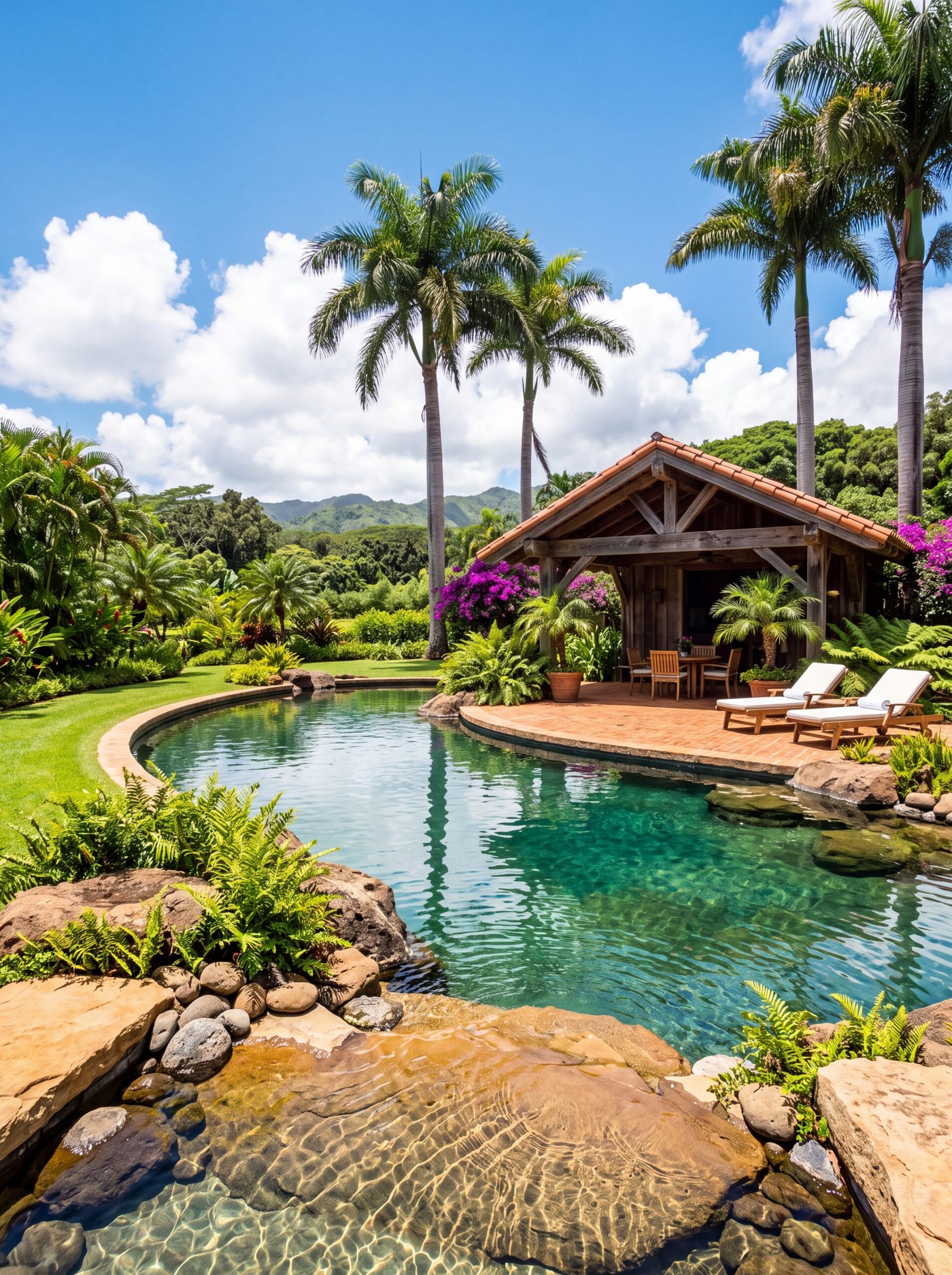
Plants can make privacy walls that feel softer than any fence. Around this natural pool with cabana, tall palms, dense shrubs, and climbing bougainvillea hide neighbors while keeping the view open to the hills. Layer plants in three heights: tall trees at the back, shrubs in the middle, and low plants in front. If you use bamboo, pick clumping types like Fargesia, since running bamboo spreads aggressively and is hard to remove. Thorny bougainvillea also discourages anyone from climbing through. A layered green screen grows more beautiful every year.
Helping Dogs Get In and Out Safely
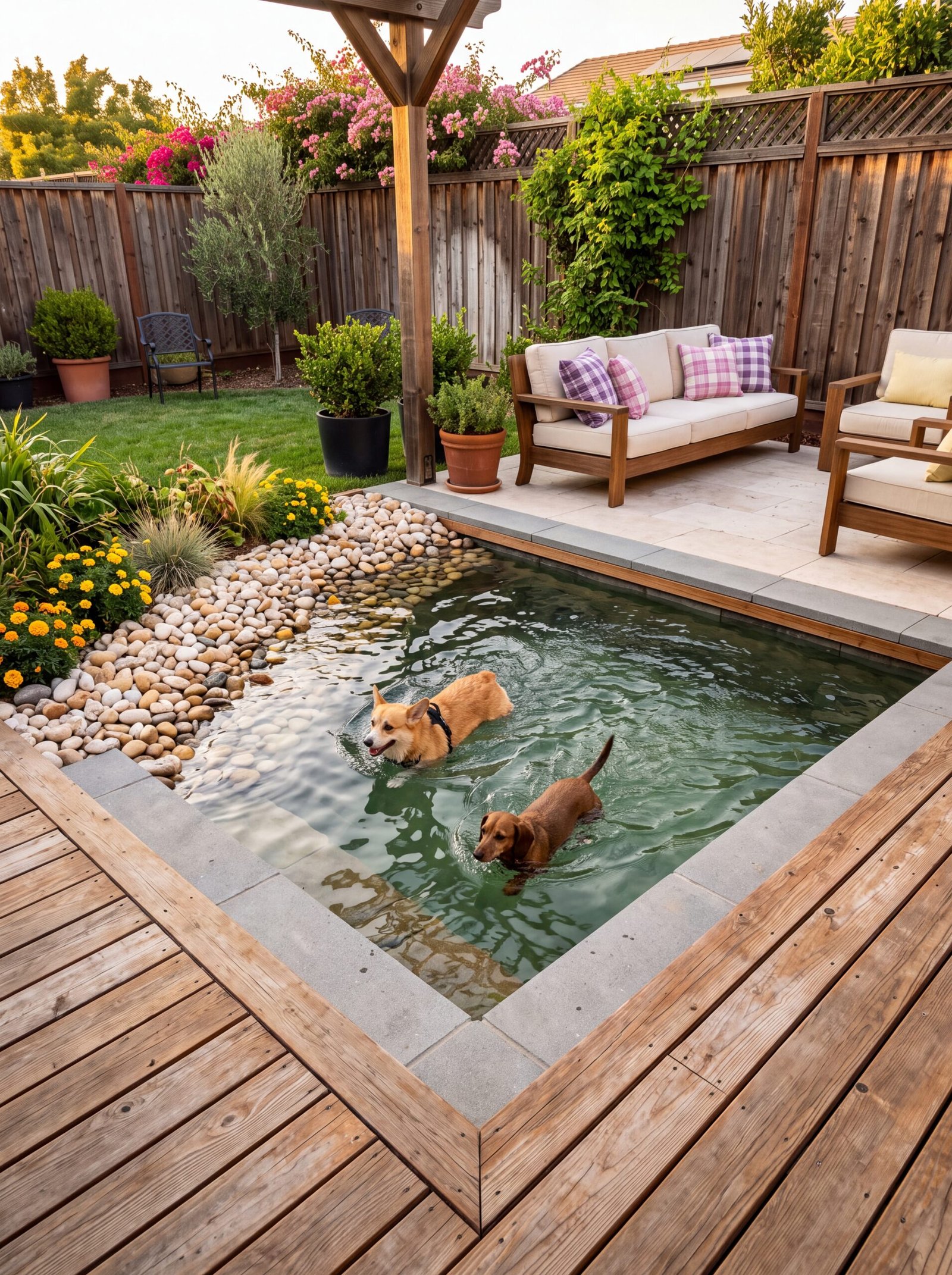
Most dogs love to swim, but many can’t figure out how to climb out. In this dog-friendly backyard pool, the shallow, gently sloped edges make it easier for dogs to find their footing. With steep sides, add a pet ramp or a wide shallow step, then practice with your dog so they learn where the exit is. Put a visual marker, like a potted plant, beside the exit to help them remember. Always supervise swim time, and fence the pool so dogs can’t reach it alone.
Adding Fish Without Clouding the Water
Fish bring color and movement, but they change how a pond works. The small fish in this garden pond with waterfall add life, yet every fish adds waste that feeds algae. Many natural swimming pools skip fish entirely for that reason. If you want koi, plan for water at least 3 feet deep so they survive winter and hide from herons, plus stronger filtration. Smaller goldfish or native minnows are easier choices. Feed lightly, only what they eat in a few minutes, and the water stays much clearer.
FAQ
How much does a natural swimming pool cost?
A professionally built natural pool often costs about as much as a conventional pool, and sometimes more because of the planted filter zone and excavation. A small DIY pond or hybrid plunge pool can cost far less. Get at least three local quotes, since prices vary a lot by region.
How do natural swimming pools stay clean?
Plants, gravel, and helpful bacteria in a separate regeneration zone remove the nutrients that algae feed on. A small pump usually keeps water moving between the swimming and planted areas, and regular skimming of leaves helps keep things balanced.
Do natural pools attract mosquitoes?
Well-designed natural pools rarely have mosquito problems, because moving water and natural predators like dragonflies keep larvae down. Mosquitoes breed mostly in still, stagnant water, so a gentle pump or waterfall makes a big difference.