
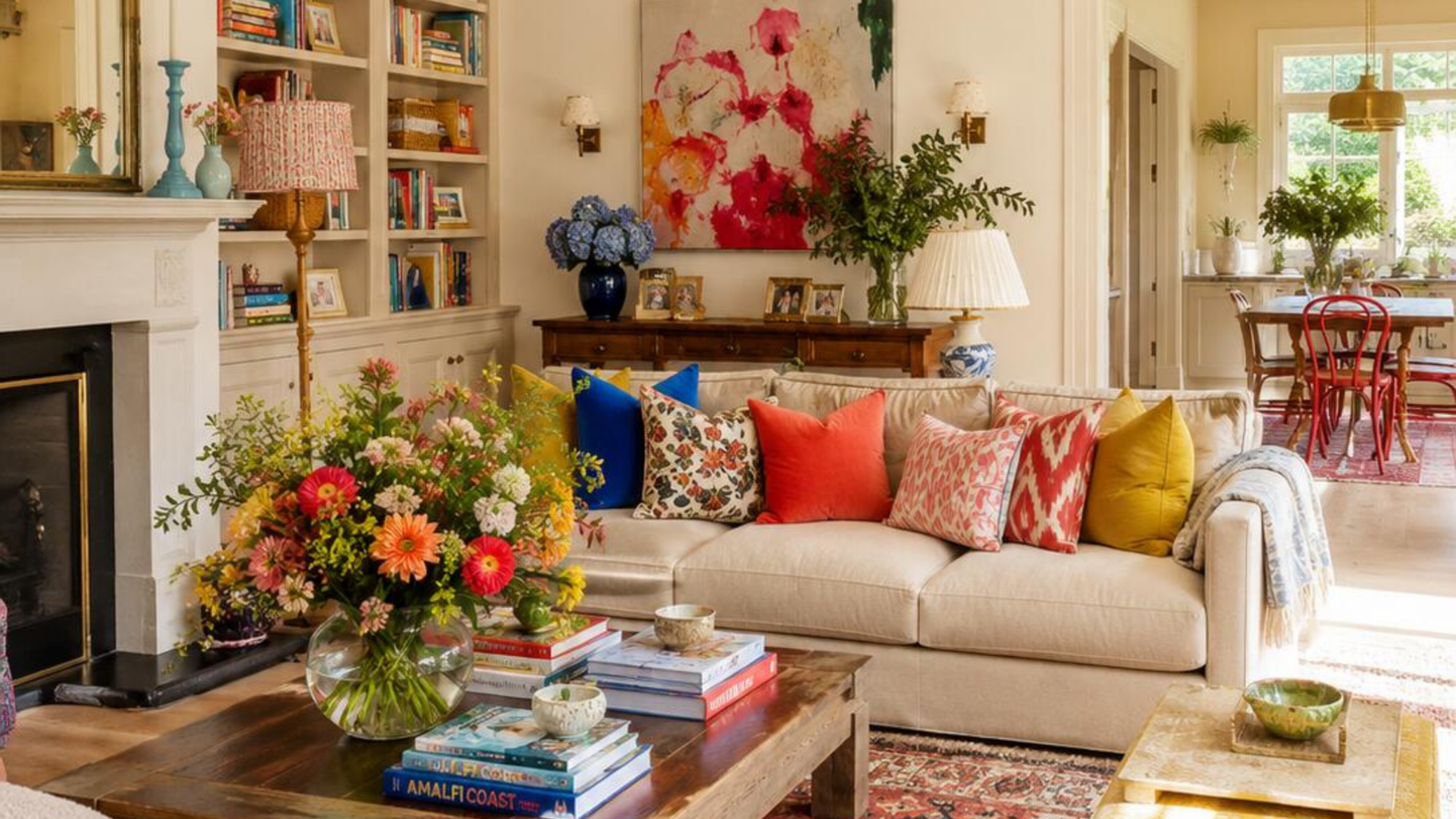
A simple cottage house design creates a home that feels warm, welcoming, and comfortable every day. This style is loved for its timeless charm, practical layouts, and relaxed atmosphere. Soft cream walls, natural wood furniture, colorful textiles, vintage rugs, and fresh flowers work together to create a cozy and inviting space. Cottage interiors focus on comfort rather than perfection, making them ideal for families, small homes, and anyone who wants a peaceful living environment. In this article, you will learn how to recreate this beautiful style, choose the best colors and materials, arrange furniture effectively, and add charming decorative details that make a cottage home feel authentic and timeless.
Why a Simple Cottage House Design Feels So Welcoming
One of the biggest reasons people love a simple cottage house design is the feeling it creates. Cottage homes are designed to feel lived-in, relaxed, and personal rather than formal or overly decorated.
Simple Cottage House Design Living Room Ideas with Colorful Charm
A thoughtfully decorated cottage living room does not need expensive furniture or a large floor plan to feel beautiful. One of the strongest features of this space is how it combines comfort with personality through layered textures, colorful accents, and traditional architectural details. The cream walls, built-in bookshelves, floral artwork, and richly patterned rugs create a home that feels collected over time rather than perfectly matched. This is the kind of simple cottage house design that remains appealing for years because it focuses on warmth, functionality, and everyday living. Readers can borrow many of these ideas, from mixing vintage-style textiles to arranging furniture for better conversation and natural movement.
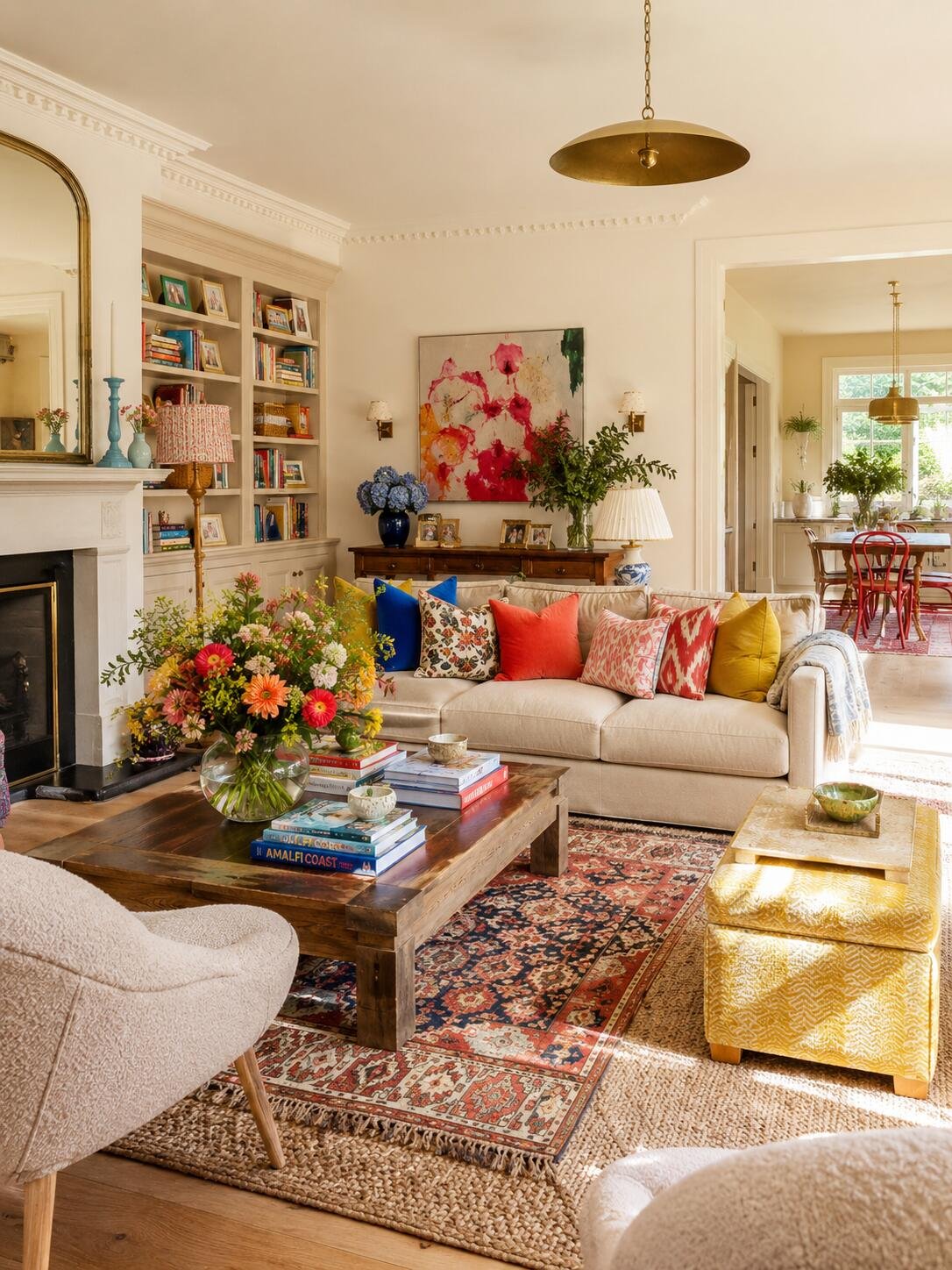
The built-in bookshelves add both function and character. Instead of displaying only books, the shelves include framed photos, ceramics, artwork, and decorative objects that make the room feel personal.
A practical styling method is to mix vertical and horizontal book stacks, leave some open space, and repeat a few colors throughout the shelves. This prevents the storage from looking crowded while maintaining visual interest.
A simple cottage house design often relies on a calm foundation with carefully chosen bursts of color. The neutral sofa allows the vibrant pillows in coral, blue, mustard, and floral patterns to stand out without overwhelming the room.
This strategy is easy to update seasonally. Changing pillow covers, throws, and flowers can refresh the entire space without replacing major furniture pieces. It is also a budget-friendly way to experiment with color.
The crown molding, fireplace, and tall mirror provide elegant architectural structure. Rather than covering these features with excessive decoration, the styling allows them to remain visible and contribute to the room’s timeless character.
In many homes, preserving original trim, moldings, and fireplaces can have a greater visual impact than adding new decorative accessories. These architectural elements give a simple cottage house design lasting appeal.
Simple Cottage House Design Kitchen Ideas with Colorful Character
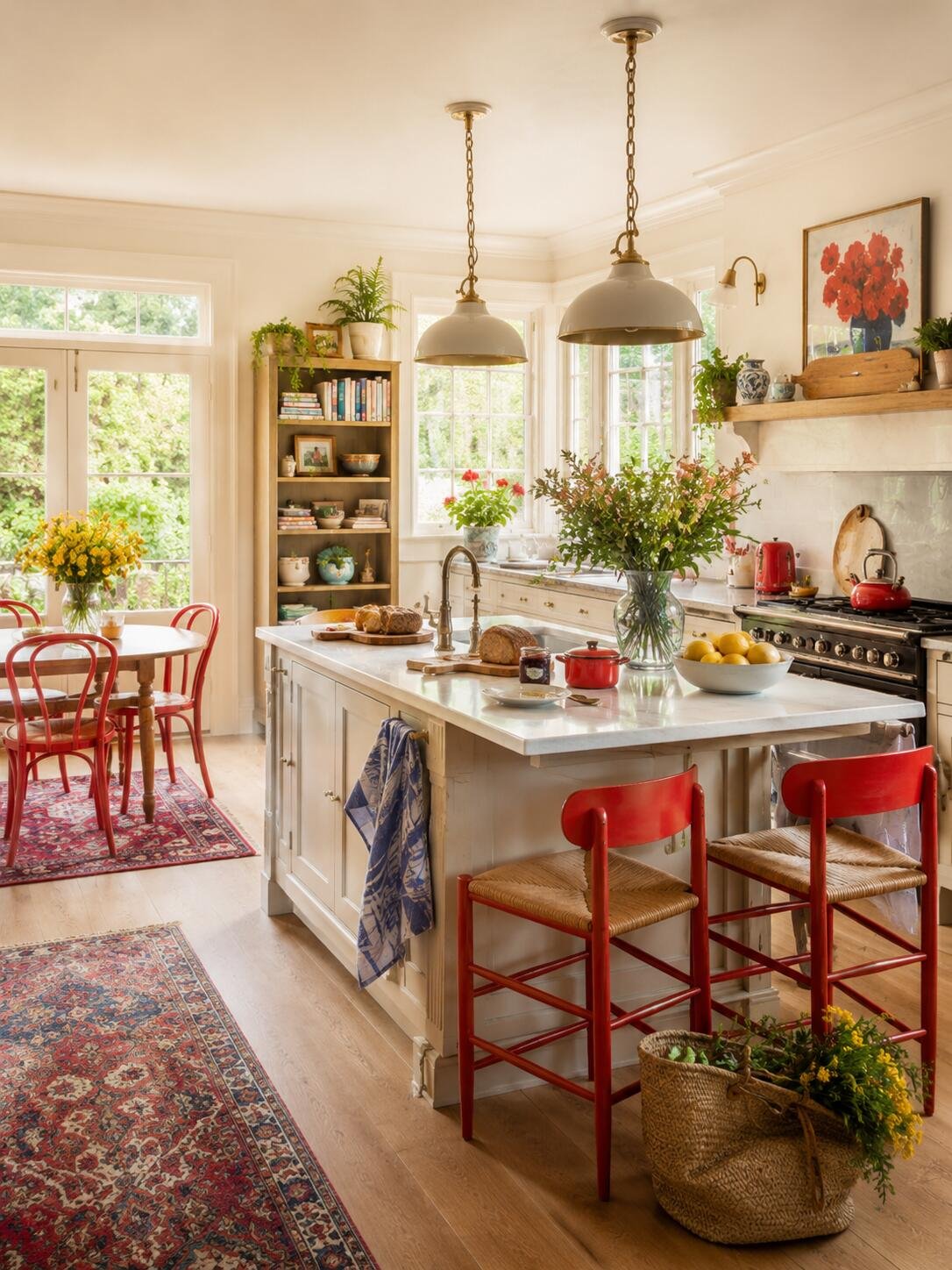
A cottage kitchen becomes memorable when it feels connected to daily life rather than designed for display. This space captures that balance beautifully with its generous island, bright natural light, painted cabinetry, and cheerful red accents that bring energy into a traditional setting. The layered rugs, open shelving, fresh flowers, and brass details create a kitchen that feels collected over time instead of perfectly coordinated. A simple cottage house design works best when practical features and decorative elements support each other, and this kitchen shows how comfort, function, and personality can exist in the same room. Many of these ideas are easy to adapt in both large and modest homes.
Take advantage of natural light
Large windows on multiple walls keep the room bright throughout the day and make the cream cabinetry feel even lighter. Window placement is one of the reasons the kitchen feels open despite having substantial cabinetry and furniture.
Keep window treatments minimal in cottage kitchens whenever privacy allows. Light fabrics or simple shades preserve brightness and maintain the connection to outdoor greenery.
Add open shelving for personality
The tall shelving unit introduces books, plants, pottery, and framed artwork into the kitchen, giving it the character of a lived-in home rather than a purely utilitarian workspace.
Mix practical storage with decorative pieces, and avoid filling every shelf completely. Leaving some open space helps the display feel curated instead of cluttered.
Connect the kitchen with the dining area
The red dining chairs and patterned rug repeat colors already present around the island, creating continuity between the connected spaces. Repeating a few accent colors is one of the easiest ways to make an open-plan layout feel intentional.
Even if your dining area is separate, using similar textiles, artwork, or painted furniture can create a stronger visual connection throughout the home.
A cottage kitchen designed for everyday living
This kitchen demonstrates how a simple cottage house design can feel practical, cheerful, and enduring. The balanced layout, colorful seating, natural materials, layered textiles, and abundant daylight create a space that supports cooking, gathering, and daily routines with equal ease. Rather than relying on trends, it focuses on comfort, craftsmanship, and personal touches that can evolve over time. That flexibility is what gives cottage kitchens their lasting appeal and makes them easy to adapt to many different homes.
Simple Cottage House Design Entryway Ideas for a Colorful First Impression
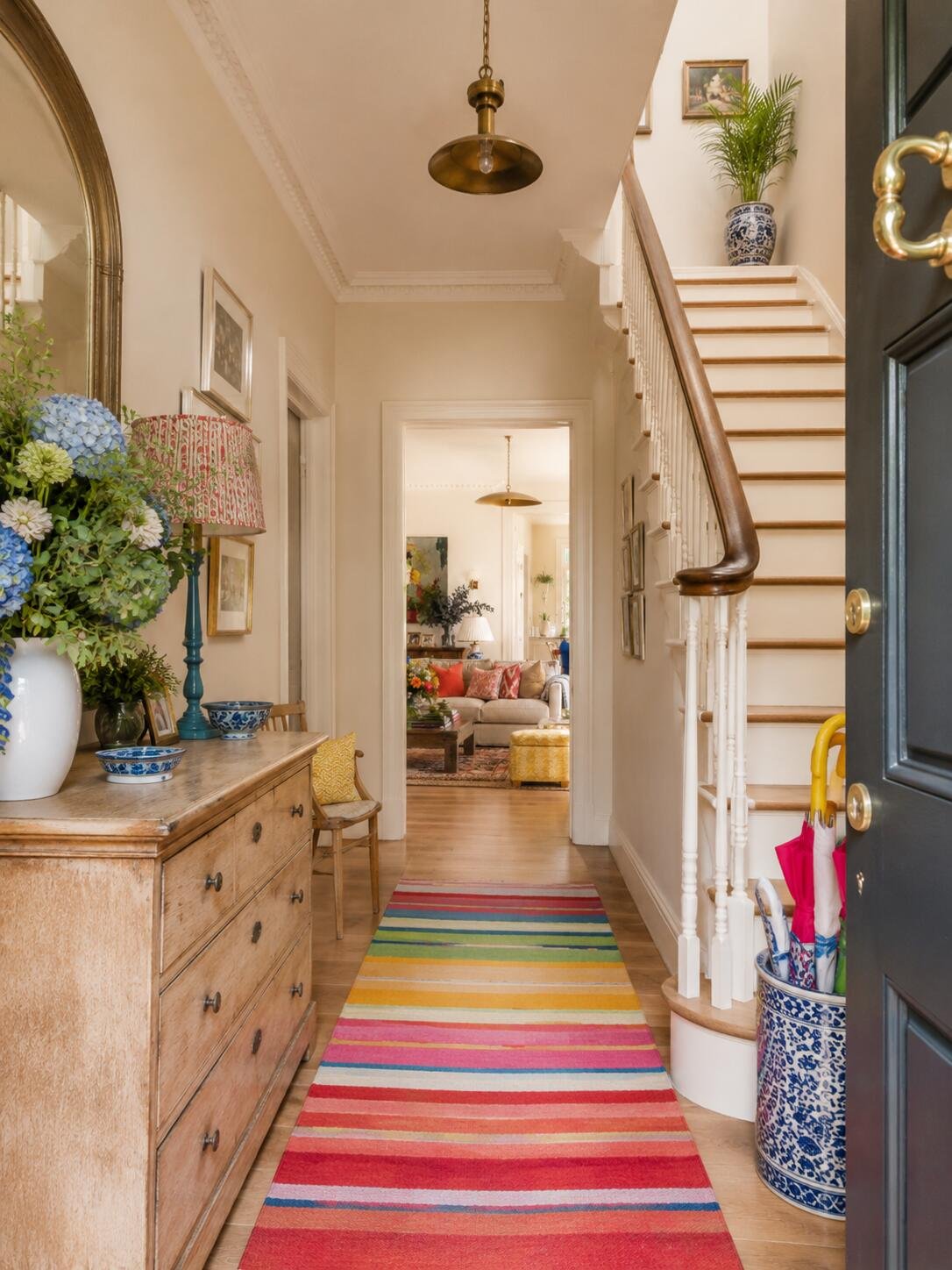
A hallway is often overlooked when decorating a home, yet it sets the tone for every room that follows. This entryway shows how a simple cottage house design can feel cheerful, organized, and welcoming from the moment the front door opens. The striped runner rug introduces vibrant color, while the natural wood dresser, blue-and-white ceramics, brass lighting, and fresh flowers create a layered cottage atmosphere that feels personal rather than overly styled. The staircase becomes part of the design instead of simply a functional feature. What makes this space especially successful is its balance between practical storage and decorative warmth, offering ideas that work equally well in narrow hallways, family homes, and older houses with traditional architectural details.
Keep sightlines open between rooms
One reason this hallway feels spacious is the clear view toward the living room. The furniture stays against the walls, allowing natural movement and uninterrupted sightlines through the house.
Avoid placing large benches or storage units in narrow hallways. Maintaining open circulation is often more important than adding extra furniture.
Mix traditional and collected decor
The blue-and-white ceramics, framed artwork, brass hardware, and natural wood furniture create a layered look that feels collected over time. Cottage interiors become more interesting when decorative pieces have different textures, finishes, and histories.
Instead of buying matching sets, combine vintage finds, family pieces, handmade ceramics, and simple contemporary accessories for a more authentic result.
A cheerful cottage entryway with lasting appeal
This hallway demonstrates how a simple cottage house design can make even a transitional space feel memorable. The colorful runner, natural wood storage, layered lighting, greenery, and traditional architectural details create an entry that is practical enough for everyday life while remaining full of character. The strongest lesson is that a hallway does not need expensive renovations to make a beautiful first impression. Thoughtful color, useful furniture, and a few personal decorative touches can completely transform the entrance to a home.
Cottage House Design Reading Nook Ideas for a Cozy Home
A reading nook can completely change the atmosphere of a home, especially when it combines comfort, storage, and natural light in a compact space. This room shows how a simple cottage house design can create a quiet retreat without requiring a large footprint. Built-in bookshelves frame the seating area, colorful textiles add personality, and the oversized artwork gives the room a strong visual anchor. The layered rug, brass lighting, and soft neutral sofa create a setting that feels relaxed and practical at the same time. What makes this design particularly successful is its thoughtful balance between everyday function and decorative charm, offering ideas that can be adapted to living rooms, guest rooms, or unused corners of a home.
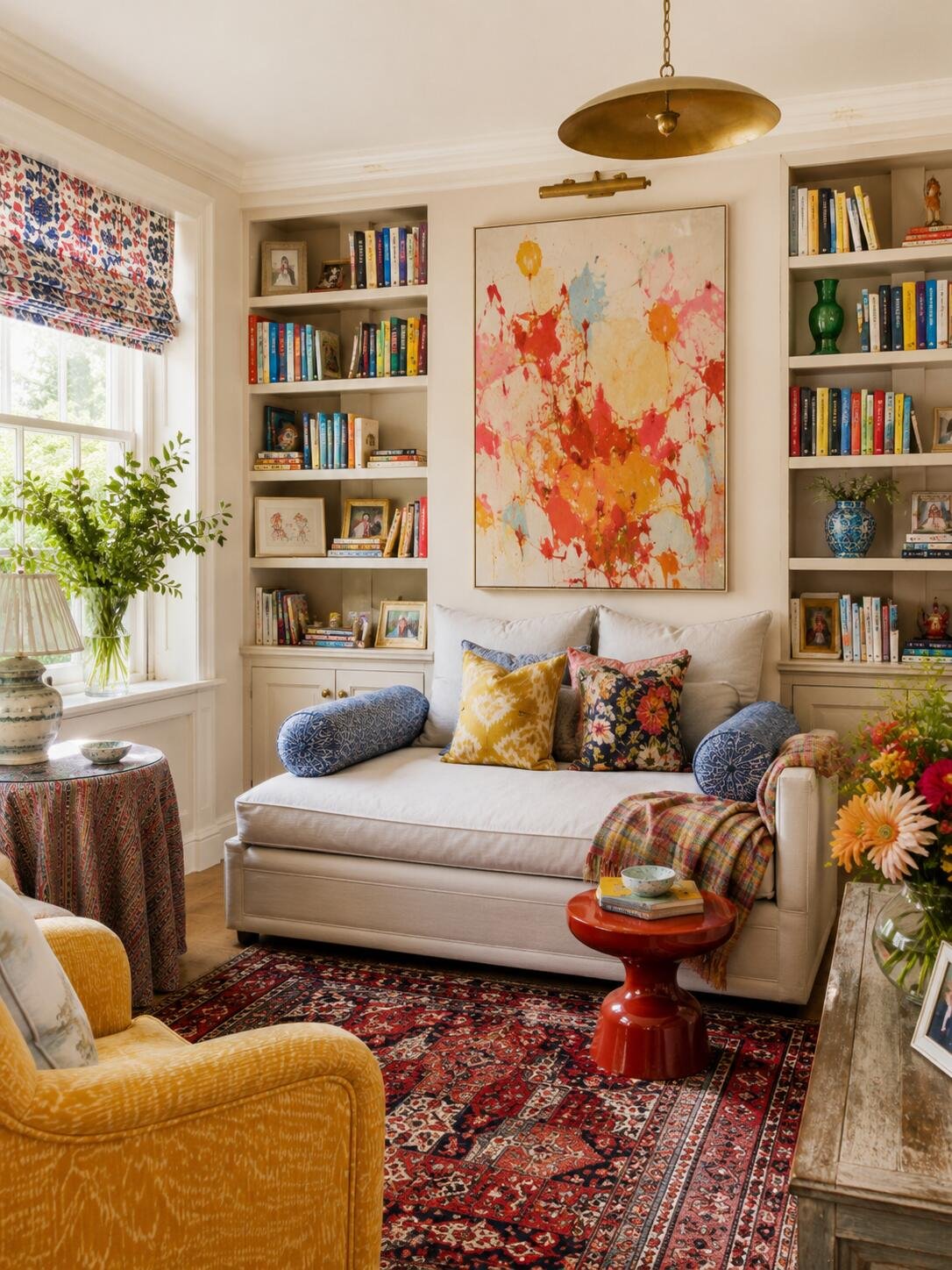
Style shelves with books and personal objects
The bookshelves feel lived-in because they mix books, framed photos, ceramics, and decorative vases. A useful styling approach is to alternate vertical and horizontal book stacks while leaving some shelves partially open.
Negative space is important. A shelf that is not completely full often looks more curated and easier to maintain.
Add texture through rugs and throws
The traditional patterned rug grounds the seating area and introduces warmth through rich color and texture. Layering textiles is one of the most effective ways to make a reading nook feel comfortable and visually complete.
A woven throw, patterned pillows, and a textured rug can create depth even when the furniture palette remains relatively simple.
Keep the room adaptable for guests
The sofa appears deep enough to function as occasional guest seating or even a daybed. Multifunctional furniture is particularly valuable in cottage homes where rooms often serve more than one purpose.
If space is limited, choose seating with generous cushions and pair it with nearby shelving for books, blankets, and storage baskets.
A cottage reading nook with everyday comfort
This room demonstrates how a simple cottage house design can transform a small corner into a meaningful retreat. The built-in shelves, layered textiles, natural light, and colorful accents create a space that encourages reading, relaxing, and quiet conversation. Rather than relying on expensive renovations, the design succeeds through thoughtful furniture placement, practical storage, and personal decorative details. That combination gives the room lasting character and makes it easy to recreate in homes of many different sizes.
Cottage House Design Bedroom Ideas for a Relaxed Colorful Retreat
A bedroom becomes more memorable when it feels collected, personal, and comfortable rather than perfectly coordinated. This space captures that feeling beautifully through layered textiles, traditional rugs, colorful pillows, and natural light that softens every surface. The upholstered headboard, wood nightstands, floral accents, and brass lighting create a setting that feels refined without becoming formal. A simple cottage house design works especially well in bedrooms because it encourages comfort, practical furniture choices, and timeless materials that age gracefully. The room also shows how vibrant color can be introduced in a balanced way, allowing the space to remain restful while still expressing personality and warmth.
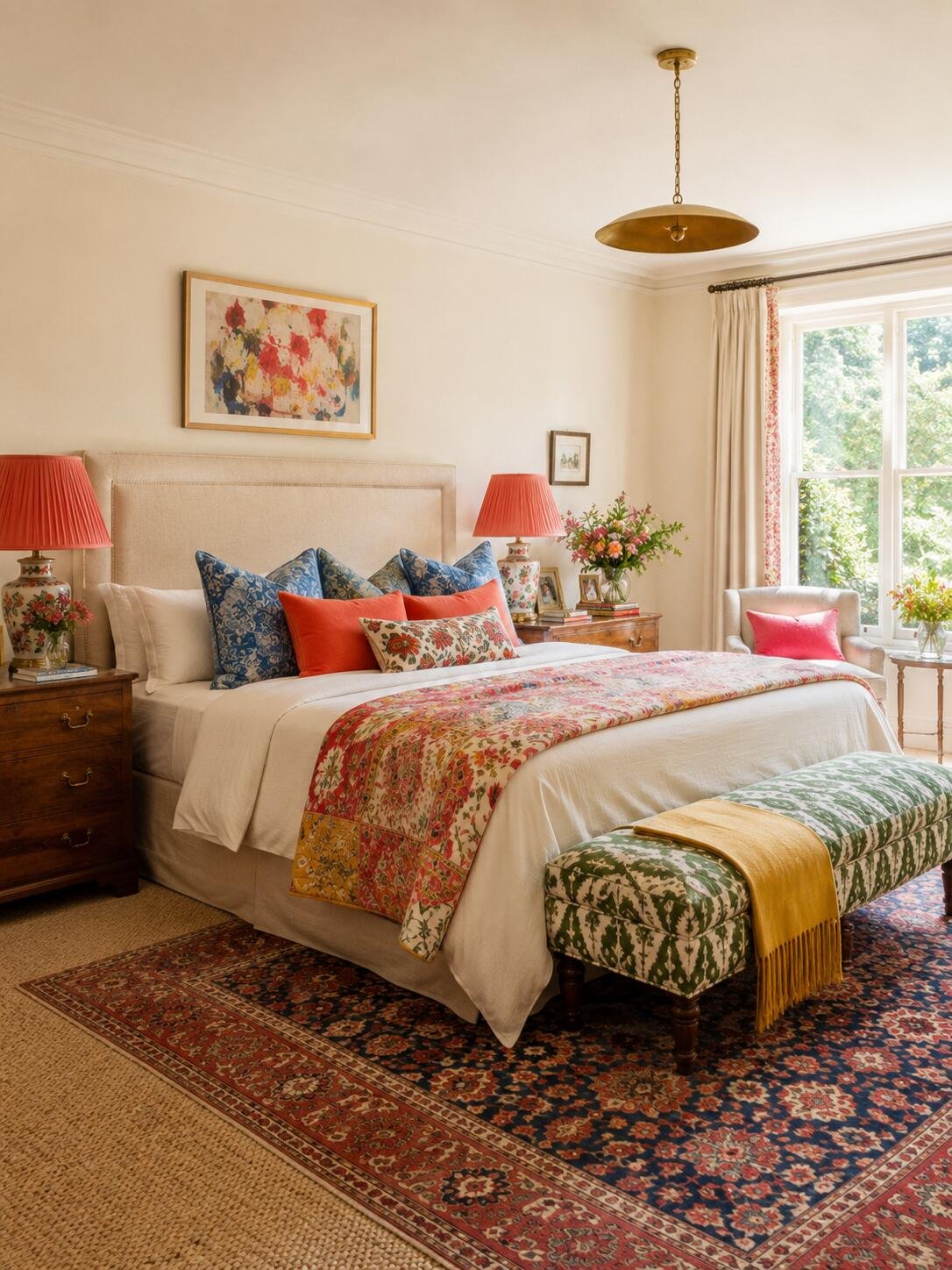
Balance wood furniture with soft fabrics
The wood nightstands add warmth and contrast against the upholstered bed and layered bedding. This combination of hard and soft materials is a hallmark of a successful simple cottage house design because it keeps the room from feeling either too rustic or too polished.
Natural wood, linen, cotton, and wool create a comfortable mix that remains appealing over time.
Keep decorative accessories meaningful
The artwork above the bed, framed photographs, books, and ceramics give the room personality without creating clutter. Cottage interiors often feel most authentic when accessories reflect personal interests rather than following a strict decorating theme.
Leave some surfaces partially clear so the room can continue to feel restful and easy to maintain.
A colorful cottage bedroom with lasting comfort
This bedroom demonstrates how a simple cottage house design can feel both cheerful and deeply relaxing. The layered rugs, patterned textiles, natural wood furniture, fresh flowers, and soft lighting create a retreat that supports everyday comfort while maintaining timeless character. The most valuable lesson is that color and pattern do not need to be overwhelming when they are anchored by neutral walls, quality materials, and thoughtful furniture placement. That balance is what gives cottage bedrooms their enduring appeal.
Simple Cottage House Design Home Office Ideas for a Beautiful Workspace
A home office feels most successful when it supports productivity without sacrificing comfort or personality. This room captures that balance through built-in bookshelves, natural wood furniture, floral textiles, and carefully placed decorative accents that make the workspace feel connected to the rest of the home. The combination of cream cabinetry, colorful books, patterned rugs, and blue-and-white ceramics creates a setting that feels welcoming and practical rather than purely functional. A simple cottage house design is especially effective for a home office because it encourages long-lasting materials, thoughtful storage, and a calm atmosphere that helps you focus. The room also demonstrates how traditional details and personal collections can create a workspace that feels inspiring every day.
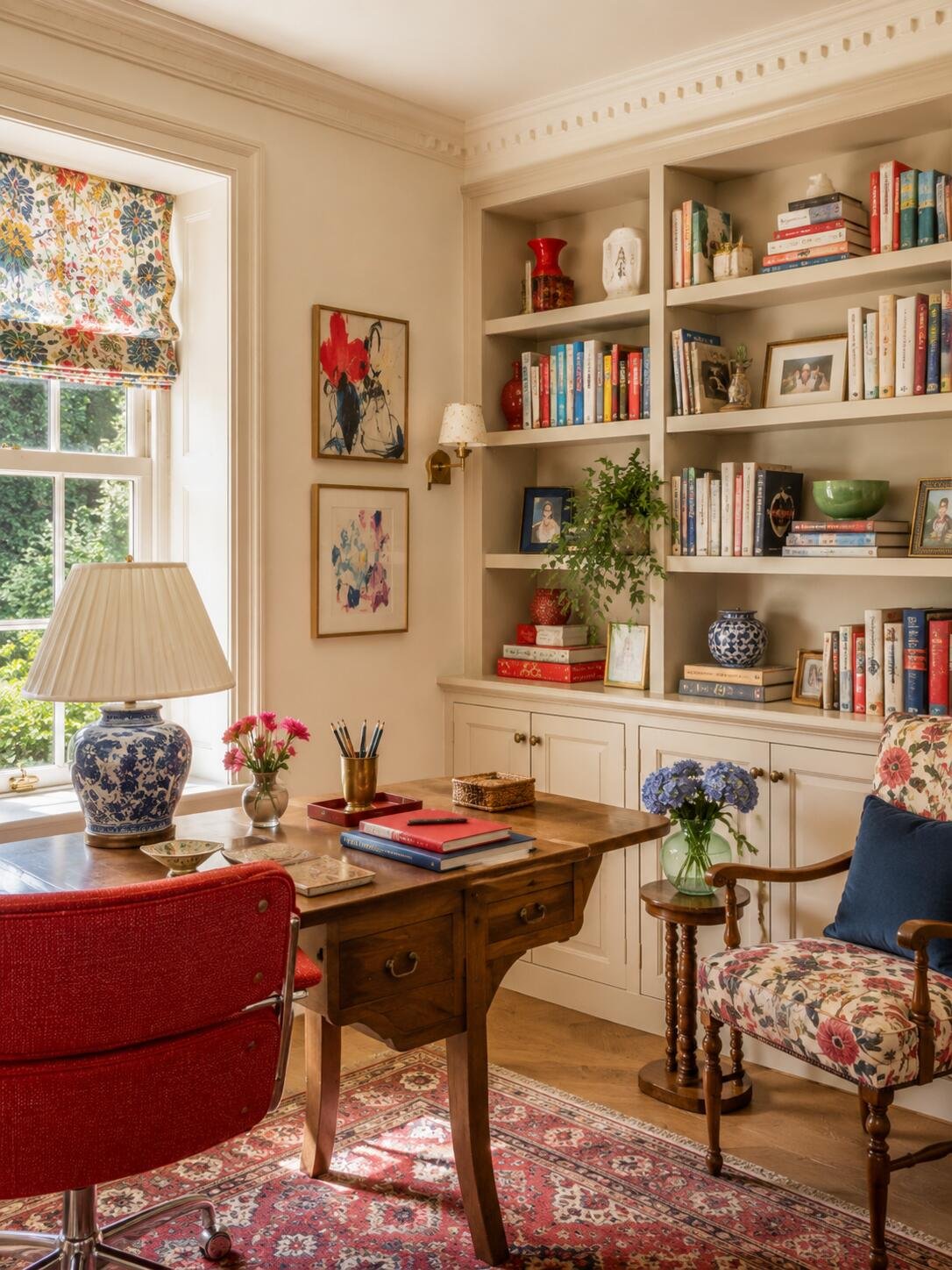
Design around built-in shelving
The built-in bookshelves are the foundation of the room. They provide generous storage while framing the workspace with architectural character. Instead of relying on freestanding furniture, integrated shelving keeps the room organized and visually cohesive.
For a similar approach, combine open shelves for books and decorative objects with closed cabinets below for office supplies, files, and technology accessories that you want to keep out of sight.
Choose a desk that anchors the room
The solid wood desk gives the office a sense of permanence and warmth. Its size allows space for writing, reading, and computer work without overwhelming the room.
A useful guideline is to leave at least 36 inches behind the desk chair for comfortable movement. If the room is smaller, choose a desk with drawers so storage remains integrated into the workspace.
Balance work and comfort
One of the strongest features of this room is the upholstered floral chair positioned beside the desk. It creates a secondary seating area for reading, phone calls, or quiet breaks, making the office feel more relaxed and flexible.
Adding a comfortable chair can make a home office feel less like a workstation and more like a library or study.
Let natural light guide the layout
The desk sits close to a large window, allowing daylight to illuminate the work surface. Natural light reduces eye strain and makes the room feel brighter throughout the day.
Position your desk perpendicular to the window when possible. This provides good light while minimizing glare on computer screens.
Layer traditional patterns with neutral cabinetry
The floral Roman shade, patterned rug, and upholstered chair introduce color and texture while the cream built-ins keep the room visually balanced. This combination is a hallmark of a simple cottage house design, where decorative elements feel lively but not overwhelming.
Repeating similar colors across textiles and accessories helps different patterns work together naturally.
Style shelves with books and personal collections
The shelving feels interesting because it mixes books with ceramics, framed photographs, artwork, and greenery. Varying the height and spacing of objects creates a collected appearance that feels authentic rather than staged.
Leave some shelves partially empty so the display remains easy to maintain and visually balanced.
Simple Cottage House Design Kids Room Ideas for Shared Spaces
A shared children’s bedroom feels most successful when it combines smart space planning with a playful atmosphere that can grow with the family. This room demonstrates how a simple cottage house design can create a practical and beautiful space by combining built-in bunk beds, generous storage, natural textures, and colorful accents. The large window, woven rug, striped ottomans, and warm wood details make the room feel cheerful without becoming overwhelming. Every element serves a purpose, from the window seat with storage to the built-in shelving that keeps books and toys organized. The result is a bedroom that encourages sleep, play, reading, and creativity while remaining easy for parents to maintain.
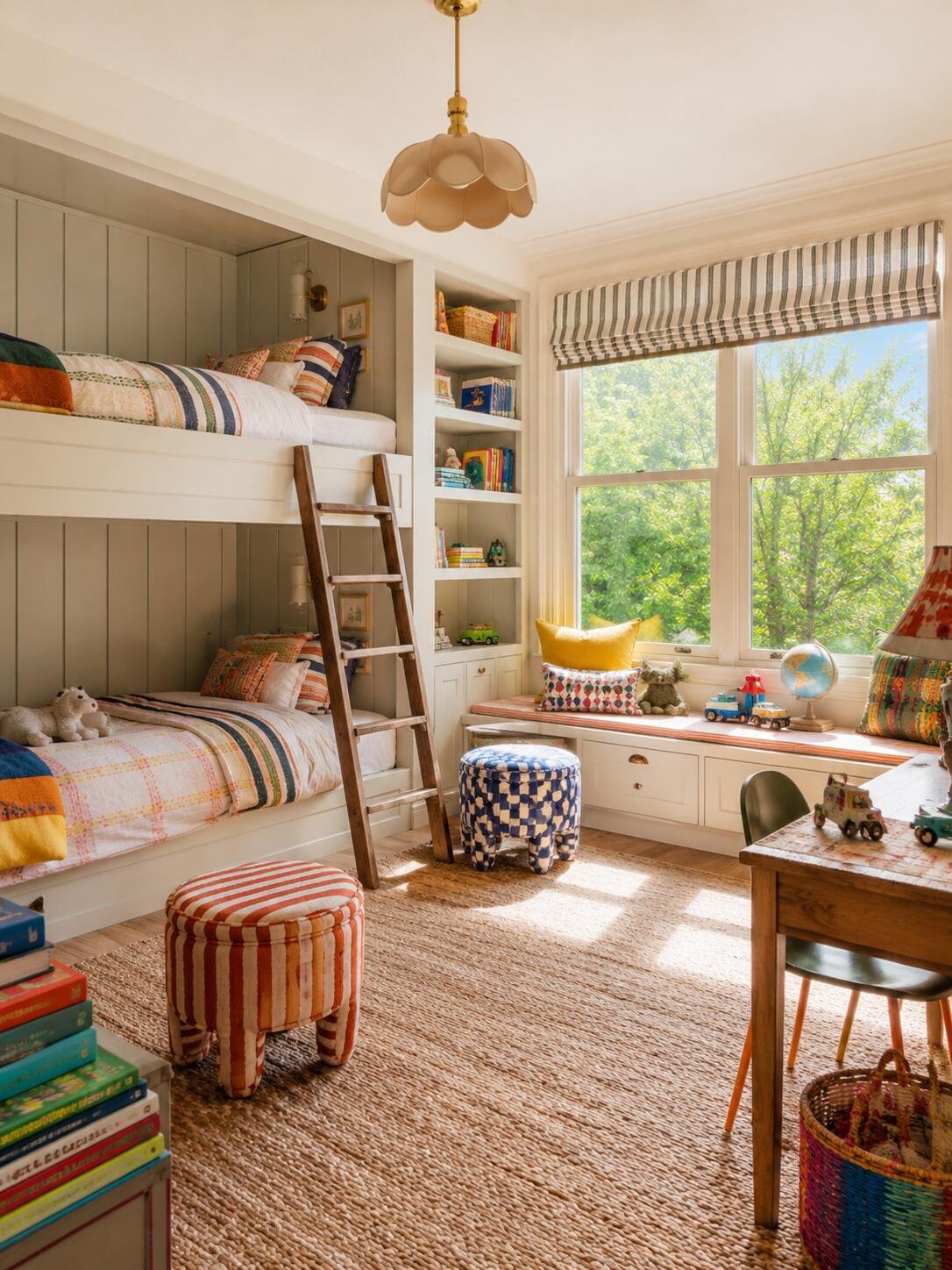
Maximize floor space with built-in bunk beds
The built-in bunk beds are the most effective feature in this room because they free up valuable floor space for play and study. Unlike freestanding bunks, built-in designs create a more integrated look and often provide additional storage opportunities.
For a similar layout, leave enough clearance around the ladder and maintain at least 30 inches of open floor space near the beds. This improves safety and makes the room feel less crowded.
Create a window seat that doubles as storage
The window bench provides seating, hidden storage, and a cozy reading area in one compact feature. Multifunctional furniture is especially valuable in shared bedrooms where every square foot matters.
Use drawers beneath the bench for toys, blankets, seasonal clothing, or books. A cushion and a few colorful pillows can easily transform the area into a favorite reading corner.
Keep books within easy reach
The built-in shelving beside the window encourages children to access books independently while keeping the room organized. Open shelves also allow favorite books and toys to become part of the decoration.
Arrange books by height or color, and avoid overfilling every shelf. Leaving some open space makes it easier for children to maintain the organization themselves.
Introduce color through movable decor
One of the strongest features of this room is the use of colorful textiles and accessories instead of bold permanent finishes. The striped ottomans, patterned bedding, and decorative pillows add personality while allowing the neutral walls and cabinetry to keep the room balanced.
This is a practical strategy because textiles can be updated as children grow and their interests change.
Choose durable natural materials
The woven jute rug, wood ladder, and wooden desk add texture while standing up well to everyday family life. Natural materials often hide wear better than highly polished surfaces and give the room a relaxed cottage character.
For children’s spaces, choose washable fabrics and durable finishes that can handle frequent use.
Simple Cottage House Design Bathroom Ideas with Floral Charm
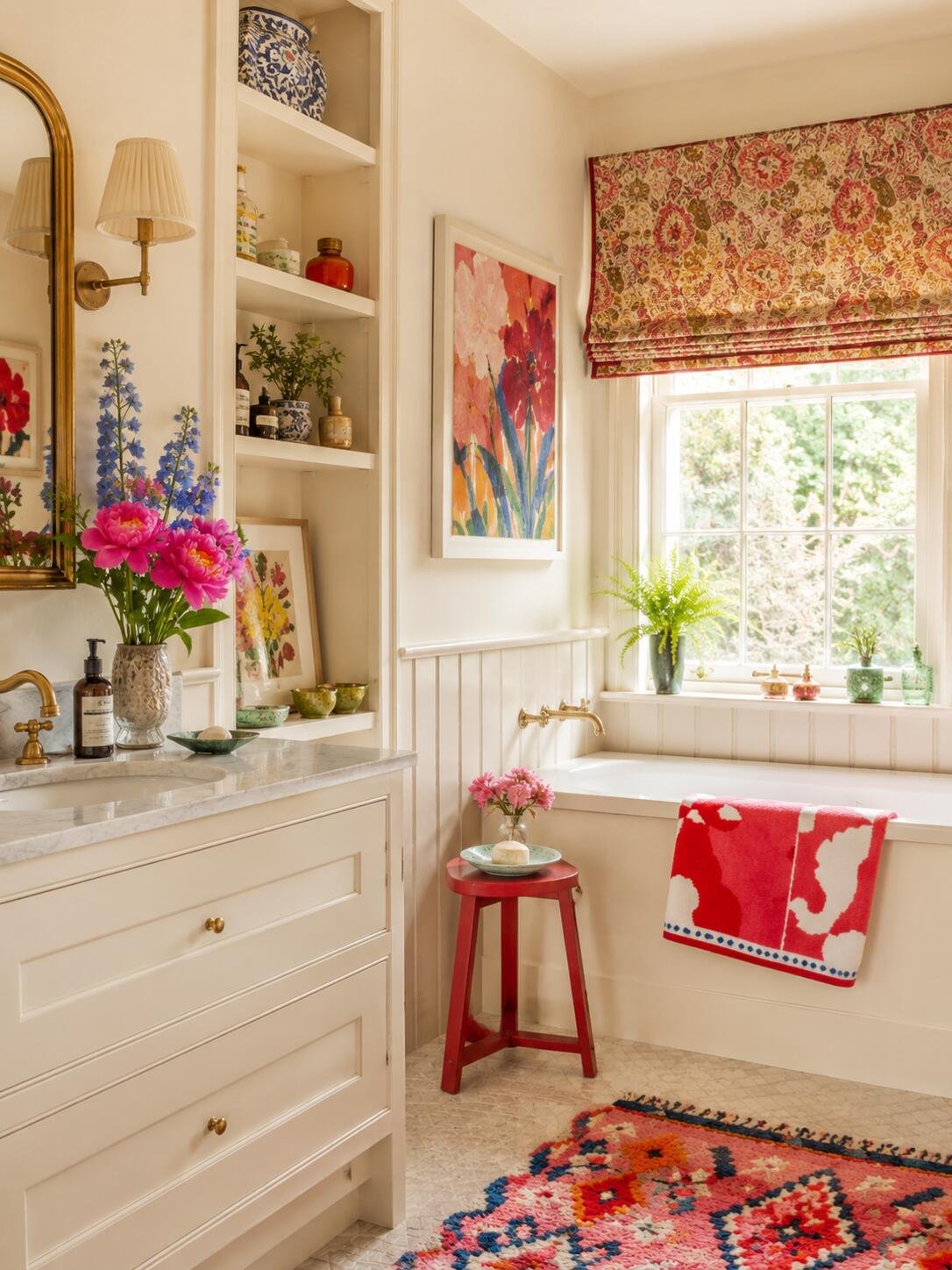
A bathroom can feel both practical and beautifully personal when it combines traditional details with fresh color and natural light. This space captures that balance through cream cabinetry, brass fixtures, floral artwork, patterned textiles, and built-in shelving that adds character without clutter. The window beside the bathtub fills the room with daylight, while the Roman shade and richly patterned rug introduce warmth and visual interest. A simple cottage house design is especially effective in bathrooms because it relies on timeless materials, thoughtful storage, and decorative elements that can be updated seasonally. The result is a room that feels welcoming, comfortable, and easy to enjoy every day rather than overly polished or purely functional.
Add color through textiles and accessories
One of the strongest features of this room is the use of vibrant textiles. The patterned Roman shade, colorful bath rug, and bold towel introduce personality while the cream walls and cabinetry keep the room balanced.
This is an easy decorating strategy because textiles can be changed seasonally or whenever you want a fresh look without replacing permanent fixtures.
Pair brass fixtures with soft neutral cabinetry
The brass faucet, wall sconce, and bath filler add warmth against the painted cabinetry and white surfaces. Mixing warm metal finishes with soft neutral colors is a hallmark of a simple cottage house design because it creates depth without feeling overly ornate.
Brass hardware also tends to age gracefully, making it a practical long-term choice.
Frame the vanity with decorative lighting
The wall sconce beside the mirror provides flattering light for daily routines while adding a traditional cottage detail. Wall-mounted lighting is often more effective than relying only on overhead fixtures because it reduces harsh shadows around the face.
Choose warm white bulbs and position sconces at approximately eye level when possible.
Make artwork part of the bathroom design
The floral artwork above the bathtub adds personality and connects the bathroom to the colorful palette used throughout the space. Art in a bathroom can make the room feel more like a living area and less like a purely functional zone.
Use moisture-resistant framing and avoid placing valuable pieces where they will receive excessive humidity.
Balance patterns with simple architectural details
The room includes floral, geometric, and botanical patterns, yet it remains harmonious because the walls, cabinetry, and wainscoting are relatively simple. Limiting bold patterns to a few key areas helps maintain visual balance.
A useful rule is to combine one large-scale pattern with one smaller-scale pattern and a solid neutral background.
Bring in flowers and greenery for freshness
Fresh flowers near the vanity and greenery by the window soften the hard surfaces and add seasonal beauty. Plants that tolerate humidity, such as ferns, can thrive naturally in many bathrooms.
Even a small arrangement can make the room feel noticeably more welcoming.
Keep decorative accents useful and uncluttered
The small stool beside the tub, neatly arranged toiletries, and carefully chosen accessories all serve practical purposes while contributing to the design. Cottage bathrooms feel most successful when decorative items are beautiful but also functional.
Avoid filling every shelf or countertop. Leaving some open space makes the room easier to clean and visually calmer.
A colorful cottage bathroom with everyday comfort
This bathroom demonstrates how a simple cottage house design can transform a functional space into a relaxing retreat. The built-in storage, brass fixtures, natural light, floral textiles, and layered decorative details create a room that feels cheerful, practical, and timeless. The most valuable lesson is that a cottage-inspired bathroom does not require excessive decoration. Thoughtful storage, quality materials, and a few colorful accents can create a space that feels personal, refreshing, and easy to enjoy throughout the year.
Conclusion
A simple cottage house design offers the perfect balance of beauty, comfort, and practicality. Warm colors, natural materials, vintage-inspired furniture, layered textiles, and personal decorative touches create a home that feels welcoming in every season. This timeless style works beautifully in both small and large spaces because it focuses on comfort, functionality, and authentic character. Whether you are decorating a single room or renovating an entire home, cottage design encourages a relaxed and meaningful approach to interior decorating. By using these ideas, you can create a simple cottage house design that feels cozy, elegant, and uniquely your own.
FAQ
What is a simple cottage house design?
A simple cottage house design is a cozy home style that emphasizes comfort, natural materials, soft colors, and practical living. It often includes wooden furniture, vintage-inspired decor, floral textiles, woven baskets, and layered textures. The goal is to create a warm and welcoming atmosphere that feels relaxed and timeless rather than formal or highly modern.
Which colors work best in a cottage home?
The best cottage colors are warm neutrals such as cream, ivory, beige, and soft white. Accent colors like sage green, dusty blue, terracotta, mustard yellow, and muted floral tones add charm and personality. These colors create a gentle and harmonious environment that feels comfortable throughout the year.
Can a cottage style work in a small house?
Yes. A simple cottage house design is ideal for small homes because it focuses on efficient layouts, multifunctional furniture, built-in storage, and light colors that make rooms feel larger. Open shelving, window seating, and carefully selected furniture help maximize space while maintaining a cozy atmosphere.