
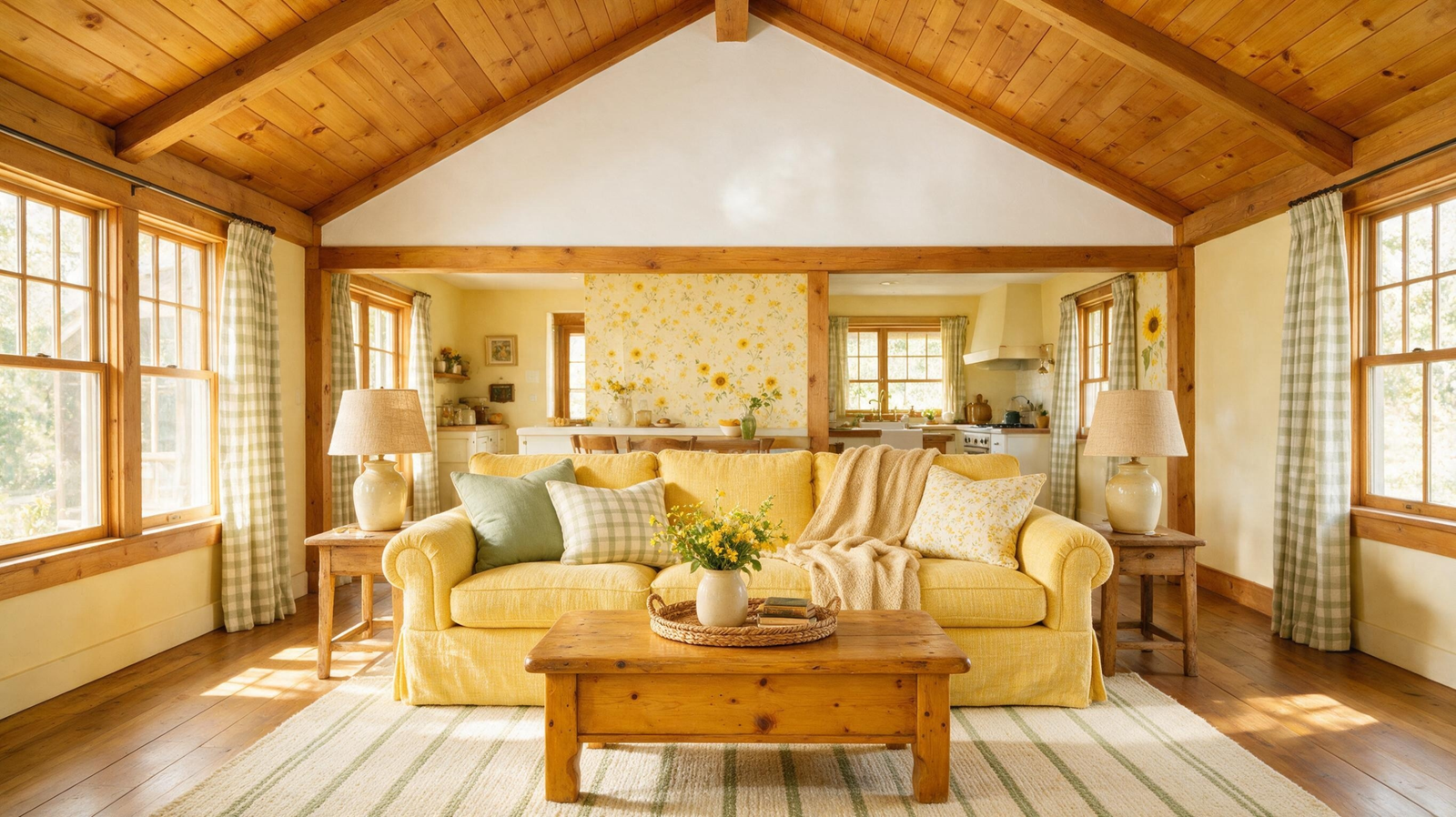
Modern small cottage design blends timeless warmth with fresh practicality, making compact spaces feel bright, airy, and deeply welcoming. Soft buttery yellow, calm sage green, and natural wood come together with thoughtful patterns and smart layouts to create homes that feel both nostalgic and wonderfully livable. In this guide, we’ll walk you through color palettes, furniture choices, pattern mixing, storage solutions, and lighting tips so you can bring this charming style to life in your own space — no matter its size.
What Is Modern Small Cottage Design?
Modern small cottage design blends traditional cottage warmth with streamlined, contemporary functionality—crafted specifically for smaller footprints. It keeps beloved cottage details like vaulted ceilings, exposed wood beams, and floral or subtle patterned wallpaper, but strips away excess clutter and heavy ornamentation. The result: open, airy, and highly livable spaces that feel spacious despite their size.
Key Colors & Materials
- Palette: Buttery warm yellow (cabinetry, accent walls), soft sage green (trim, textiles), warm neutrals, and creamy white. Yellow lifts light and mood—perfect for compact rooms—while green grounds the space with natural calm.
- Materials: Natural light-toned wood (flooring, beams, furniture), painted cabinetry, light linen/cotton fabrics, stone or wood countertops. Materials are durable, natural, and textural without feeling heavy.
Furniture & Layout Principles
- Choose slim, scaled pieces—armchairs, dining sets, sofas sized to fit, not overwhelm.
- Keep layouts open and unobstructed; use multi-purpose islands and built-in storage to save space.
- Maintain visual flow: consistent colors and simple lines across kitchen, living, dining, and bedrooms make the whole home feel connected and larger.
Room-by-Room Style
- Kitchen: Bright yellow cabinetry, open shelving, light wood counters, soft green accents. Compact but fully functional, with vintage charm and modern convenience.
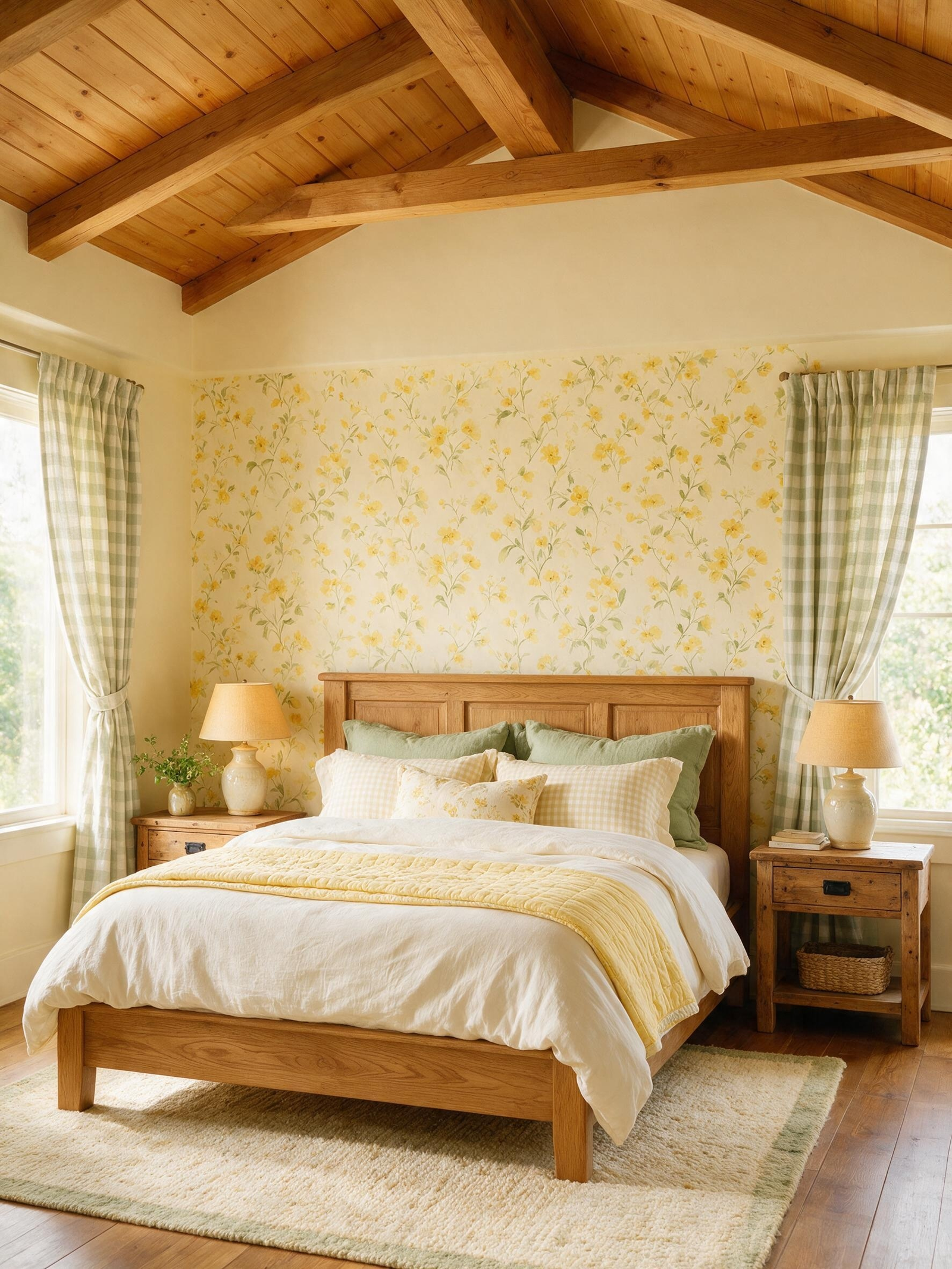
- Bedroom: Warm wood bed, soft yellow wallpaper, ample natural light, simple linens—calm and restful without crowding.
- Living & Dining: Cozy seating, natural wood tables, large windows with light curtains, vaulted ceilings that add spaciousness and character.
Cozy living room with yellow sofa
Modern small cottage design brings timeless warmth and fresh practicality to compact spaces, making it one of today’s most beloved interior styles. It strikes a perfect balance between classic cottage charm and contemporary comfort, ideal for anyone craving a home that feels both nostalgic and new. This style wraps you in a welcoming, peaceful atmosphere—sunlit, airy, and effortlessly relaxing.
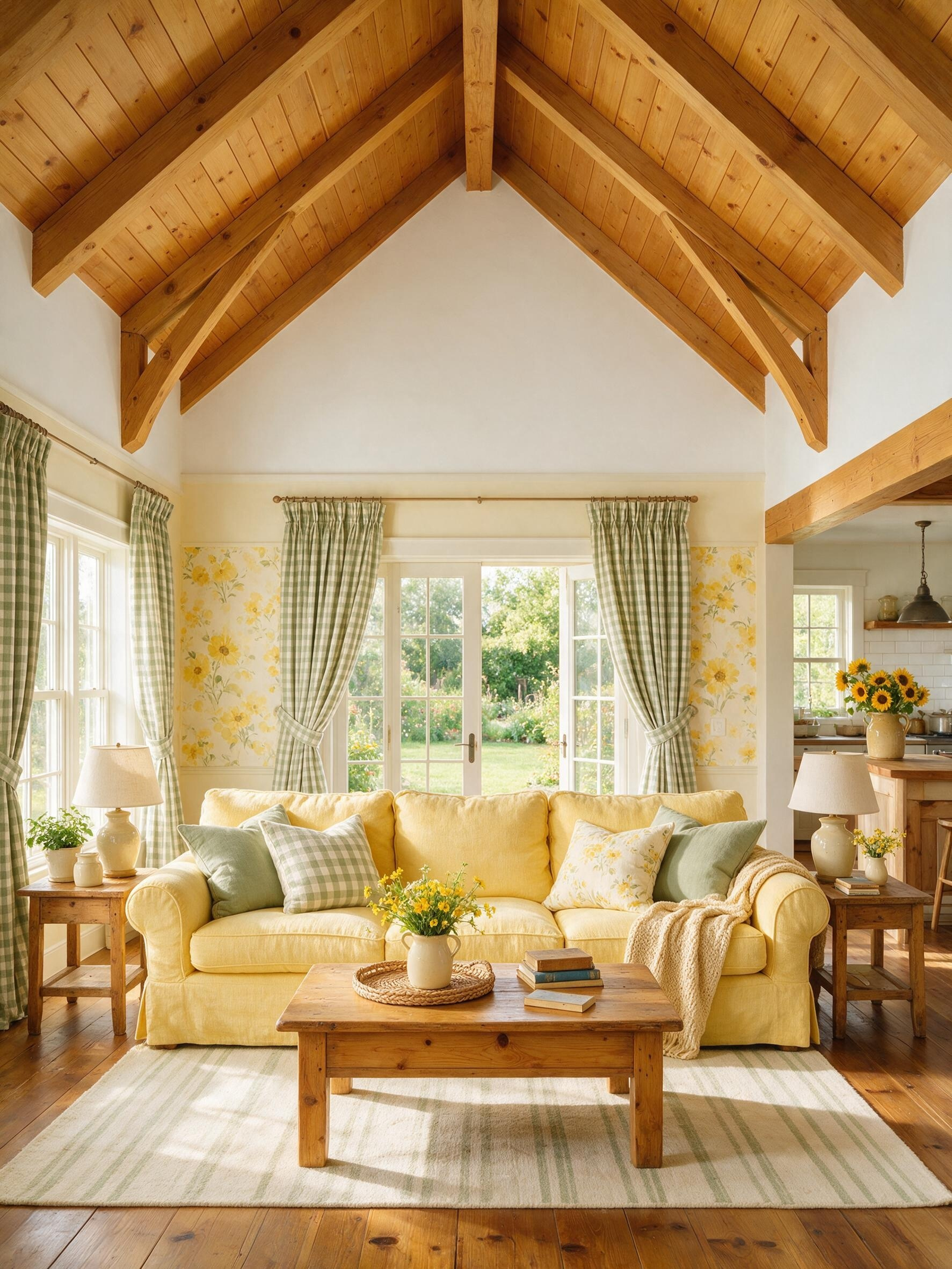
One of the strongest features of this room is how it balances bold personality with gentle, livable restraint—core to thoughtful modern small cottage design. Warm pine beams stretch across vaulted ceilings, adding architectural depth without overwhelming the space; their honeyed tones bridge the gap between bright white upper walls and soft buttery lower hues. This visual connection makes the high ceiling feel grounded and the room cohesive rather than disjointed.
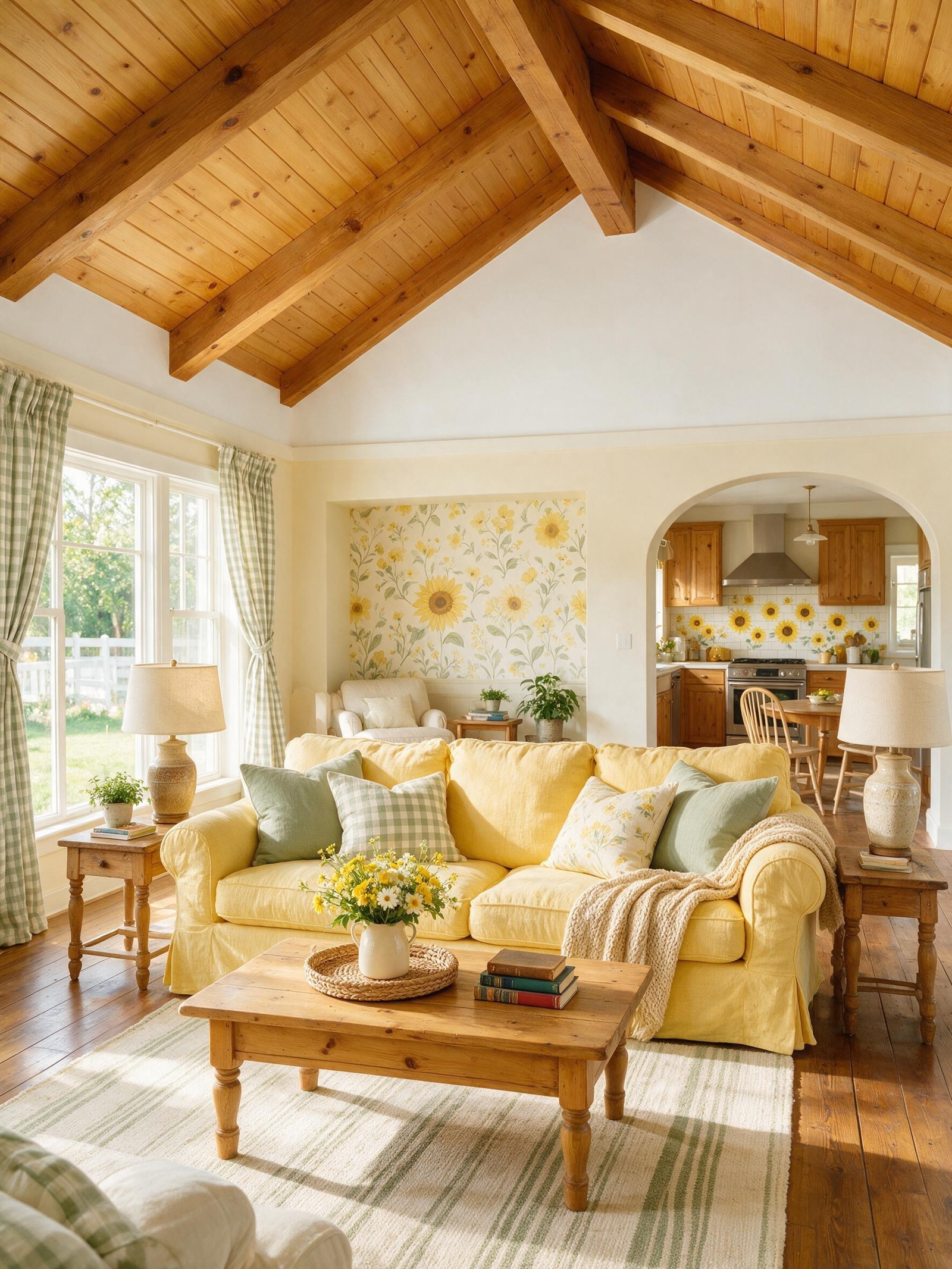
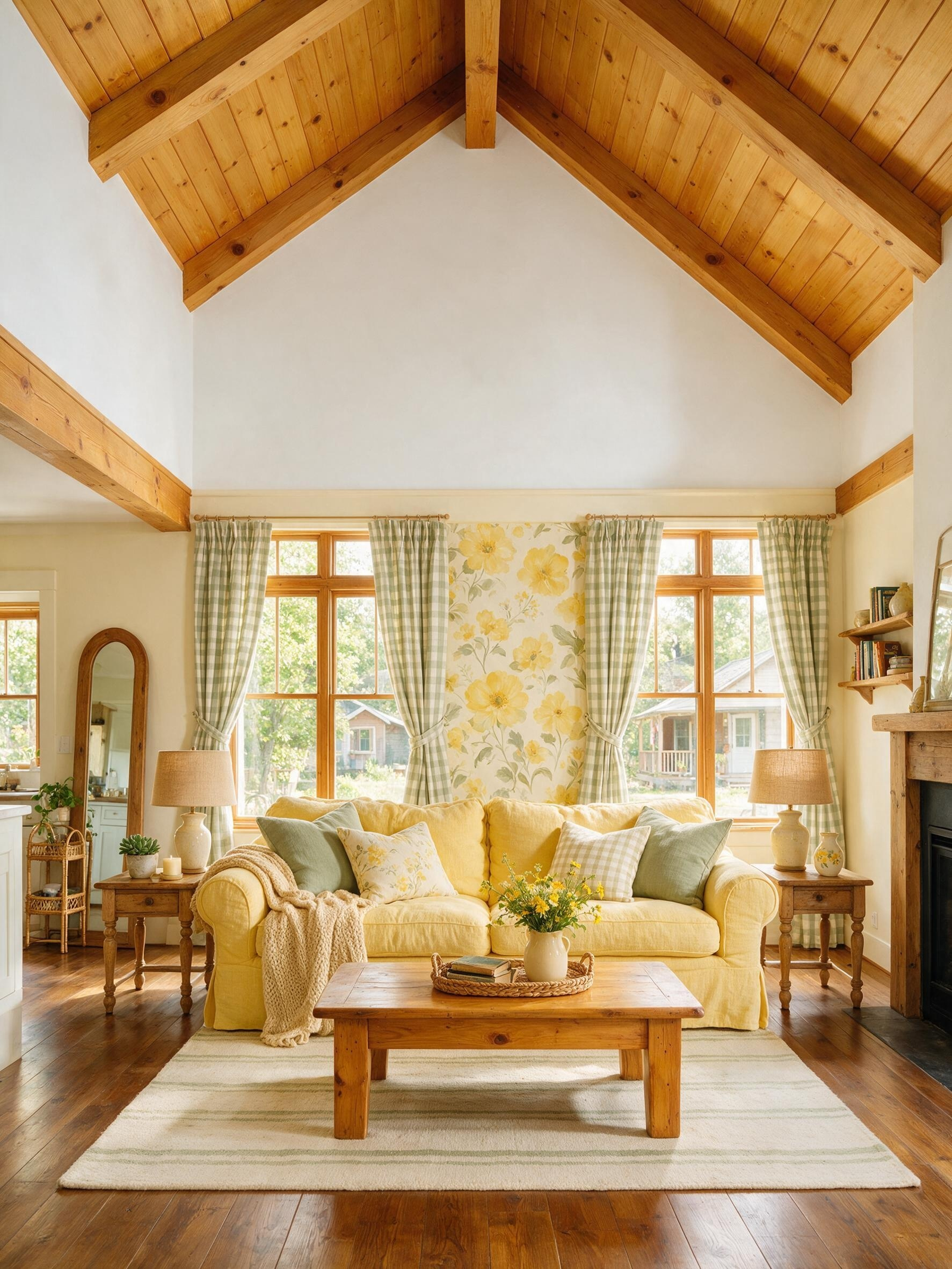
A pale yellow sofa anchors the layout, sized generously but not bulky enough to crowd the floor plan. Flanking side tables keep surfaces functional without blocking movement, and a central coffee table sits low enough to preserve open sightlines—small choices that make a compact footprint feel airy and uncluttered. The palette leans into harmony: soft sage gingham curtains, checkered cushions, and striped rug echo one another in different scales, so patterns feel intentional rather than chaotic.
Modern small cottage design kitchen
Warm wood finishes immediately soften the room and set a tone that feels both cheerful and grounded—hallmarks of thoughtful modern small cottage design. Exposed beams and planked ceilings draw the eye upward, making a kitchen with ample cabinetry feel open and airy instead of enclosed. This vertical emphasis is a smart trick you can replicate: keep upper walls or sloped ceilings light white or cream to balance heavy wood overhead, and let structural details become part of the decor rather than hiding them.
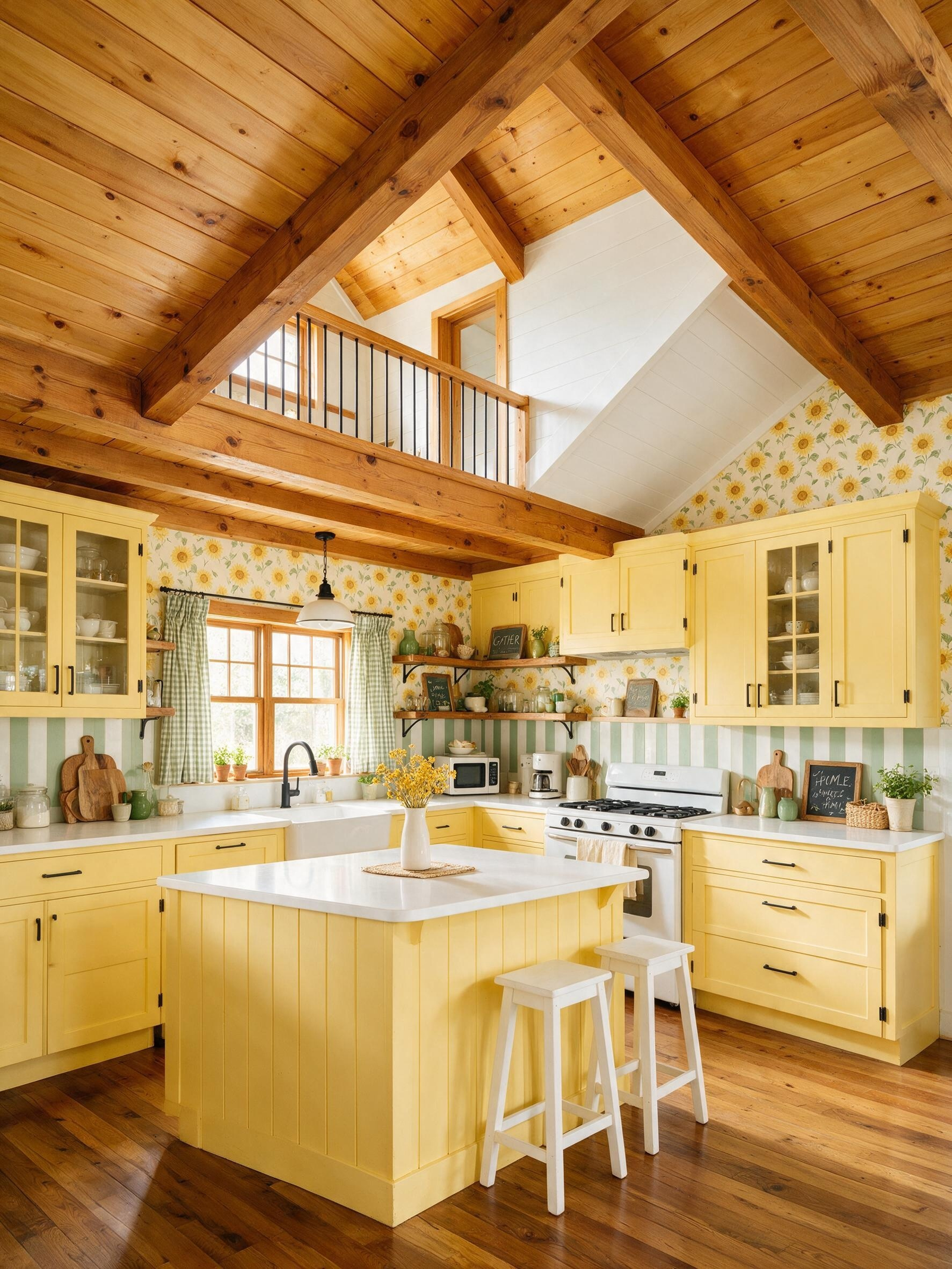
Buttery yellow cabinetry wraps the island and perimeter, unified but lifted by bright white countertops and soft green stripe wainscoting below. This color split—patterned wallpaper above, solid stripes below—adds visual interest without overwhelming the eye; you can copy this by limiting busy patterns to one wall or a mid-height band, keeping lower sections calm and easy to maintain. Open wooden shelves hold everyday essentials within reach, cutting down on cabinet clutter while adding useful display space; floating shelves are an affordable, renter-friendly alternative that achieves nearly the same effect.
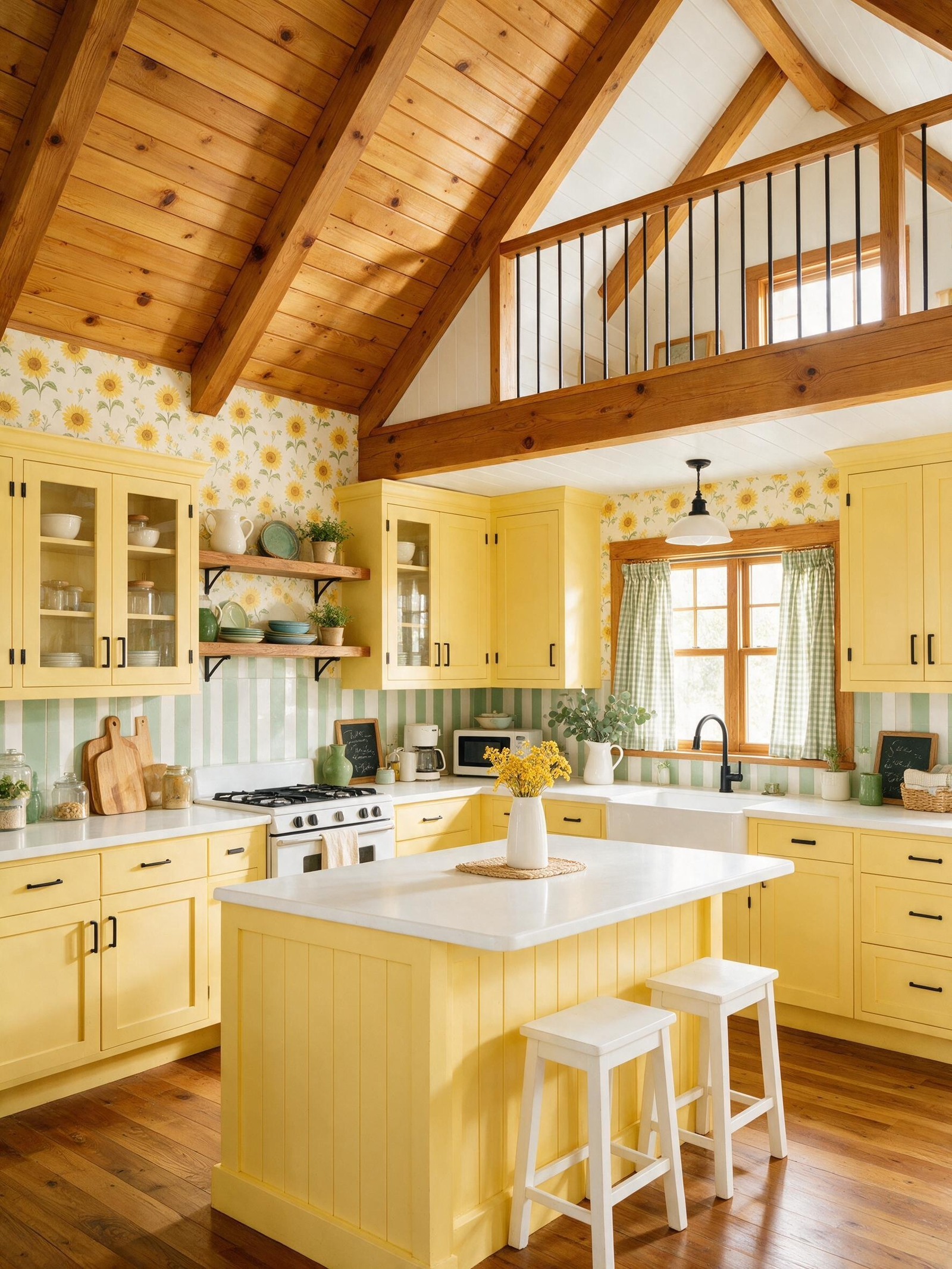
A practical layout is what makes this interior successful. The island sits centered, offering prep space and casual seating without blocking movement between sink, stove, and counter zones. Window proportions and curtain length are calibrated to let sunlight flood in while softening views—choose lightweight, gathered panels sized to frame rather than cover glass. What stays with you is the confidence to mix patterns, materials, and bold color; when anchored by consistent wood tones and balanced proportions, the result feels harmonious rather than busy. Explore More Cottage Kitchen
Open Cottage Shelving Systems and Display Storage
Natural materials give the interior a sense of calm that feels instantly welcoming—exactly the gentle spirit of modern small cottage design. Solid wood shelves stretch across the wall, thick and substantial yet mounted to keep floor space free; this open approach removes bulky upper cabinets and makes a narrow kitchen feel noticeably wider and more airy. The shelves are arranged in neat horizontal layers, so dishware, glass jars, and woven baskets become part of the decor rather than clutter—a technique anyone can apply: group items by type or hue, keep stacks uniform in height, and leave small gaps so the eye has room to rest.
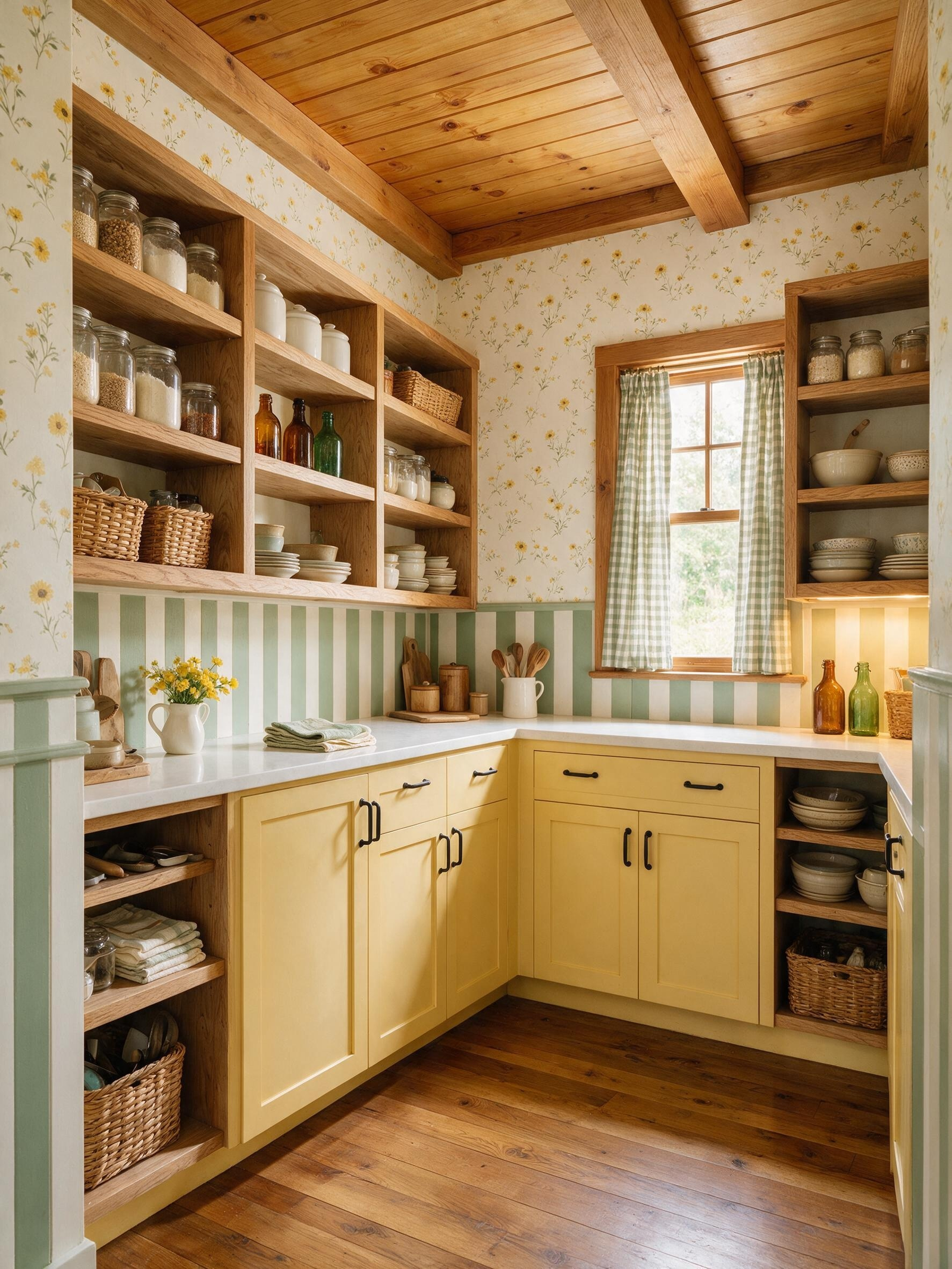
Below, soft green stripes ground the space, paired with pale yellow cabinetry and bright white countertops. This color split—floral wallpaper above, bold vertical stripes below—keeps the design lively without becoming overwhelming; when mixing patterns, stick to a shared palette and vary scale so one print feels dominant and the other supports it. A gathered gingham curtain conceals under-counter storage, offering a renter-friendly alternative to permanent cabinet doors that’s easy to install and remove.
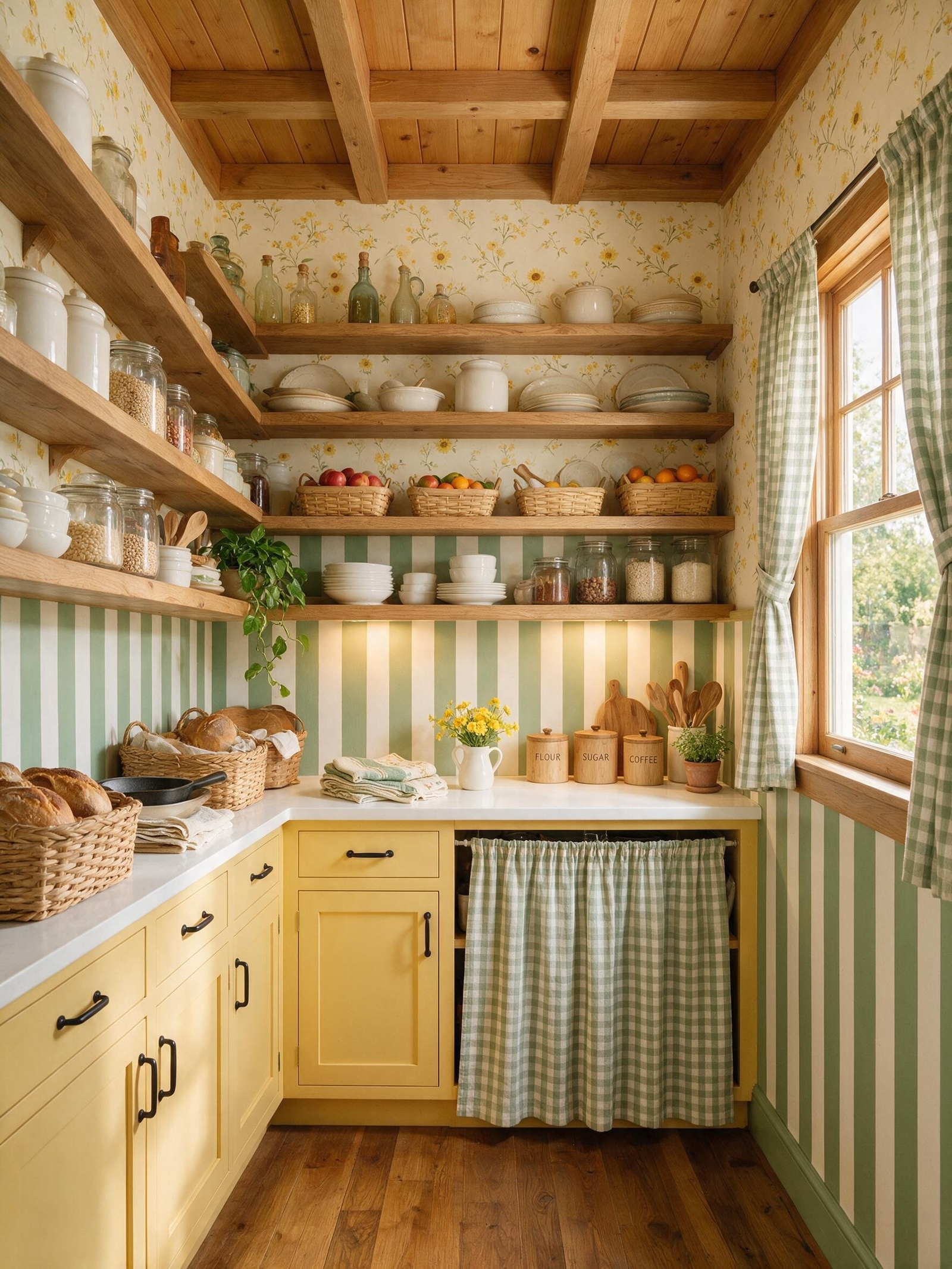
Under-shelf lighting casts a gentle glow on work surfaces, adding function and atmosphere without taking up valuable space; battery-powered or plug-in versions work beautifully where wiring is difficult. What emerges is a thoughtful lesson: when storage is both organized and openly styled, function and charm become one and the same.
Dining Furniture Proportions and Seating Layout
The combination of light and texture creates a dining space that feels both spacious and deeply welcoming—core to thoughtful modern small cottage design. Vaulted ceilings with exposed pine beams add height and visual interest overhead, while pale cream walls keep the room bright and serene. A linear arrangement of large windows draws ample natural light across the table, making the wood tones glow and colors feel true; hang curtains wide of the glass to preserve light flow while framing the view.
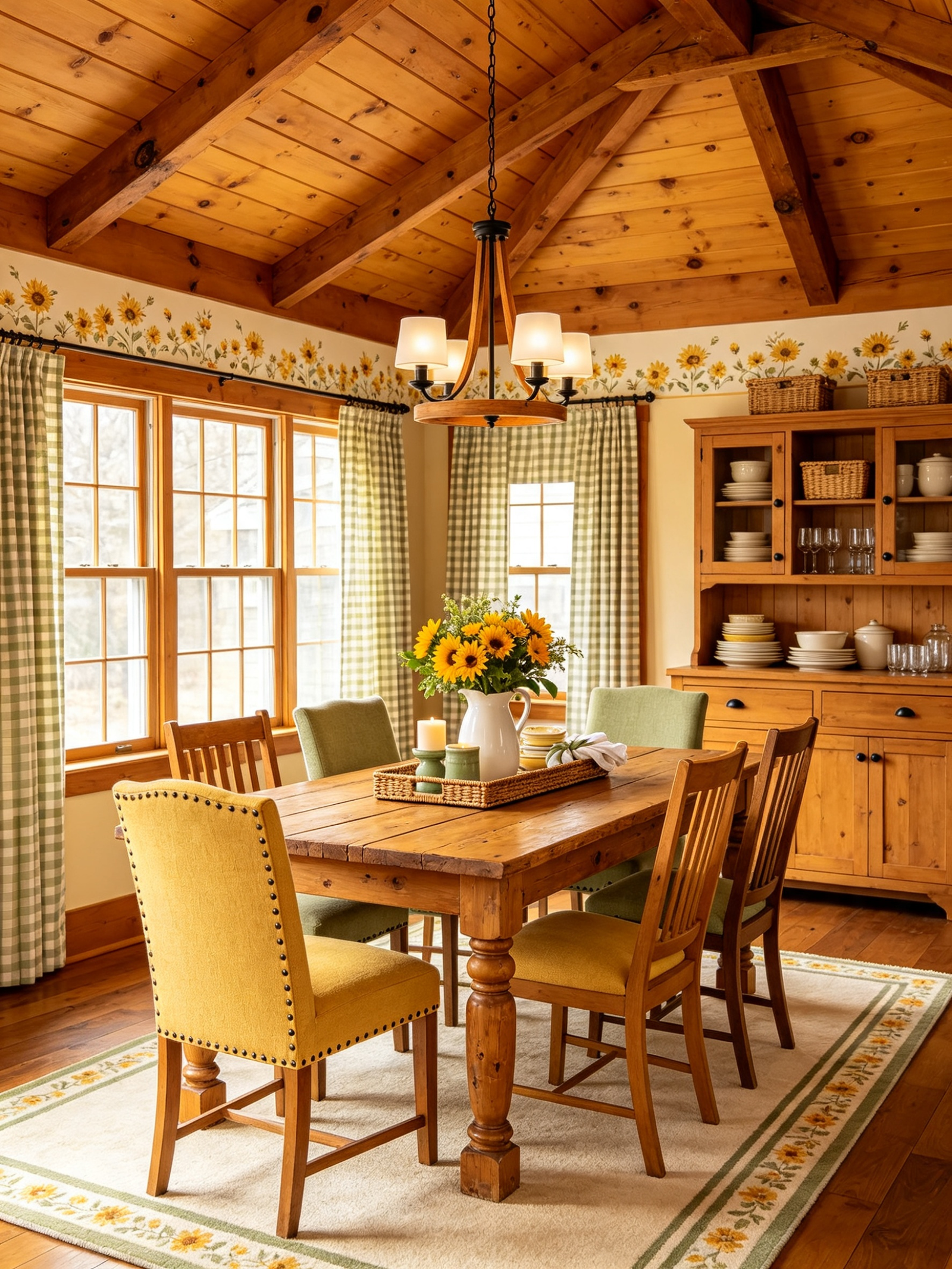
A substantial wooden table sits centered, its turned legs and planked top balancing rustic charm with refined proportion. Seating alternates between sage green and soft golden yellow upholstery, creating visual rhythm without chaos—repeating the two hues across cushions, curtains, rug, and wall border ensures every element feels connected. A patterned rug anchors the arrangement; choose one large enough to hold table and all chairs so the grouping feels unified, not floating.
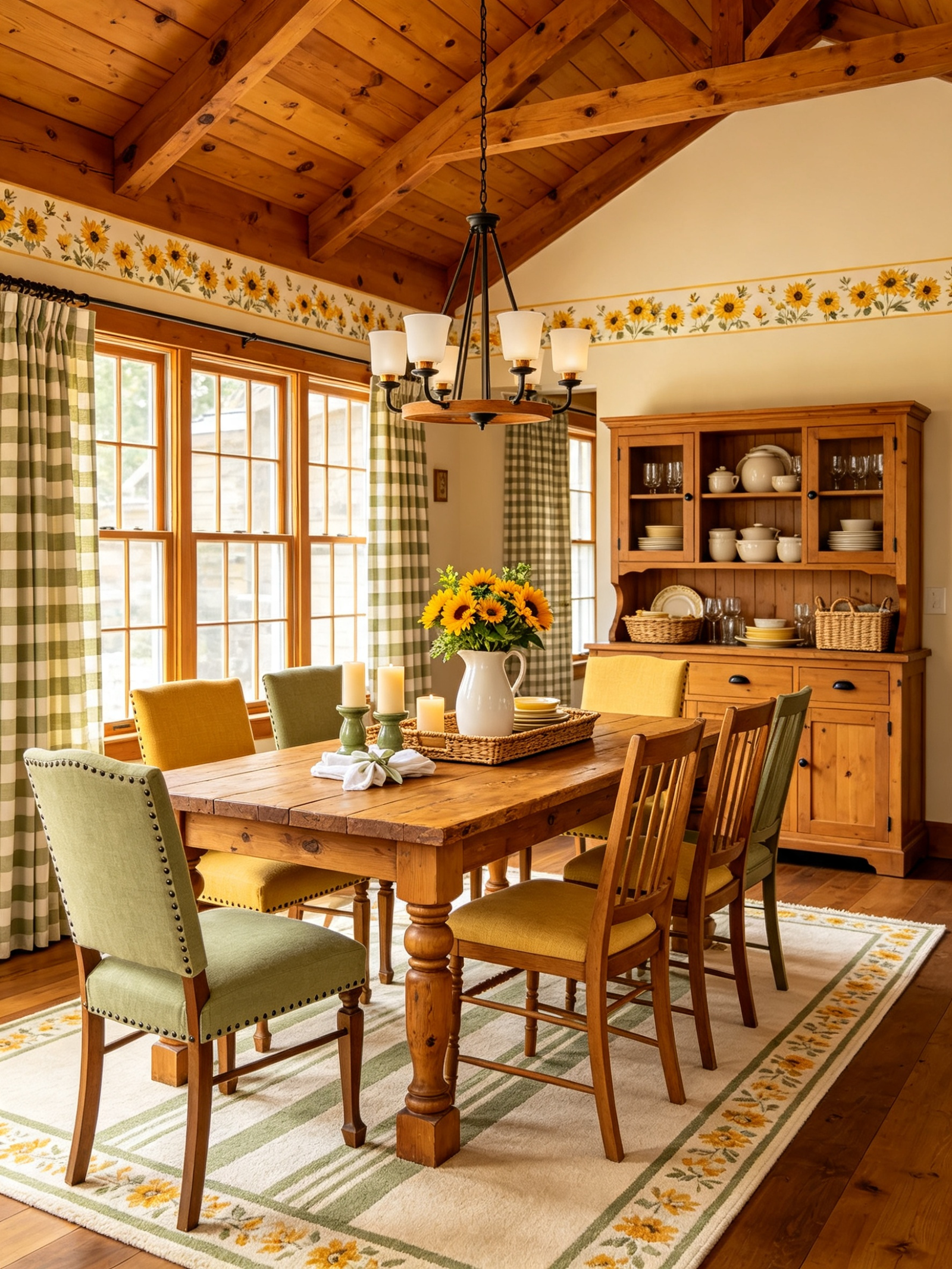
The tall wooden hutch beside windows offers visible storage and display, keeping everyday dishware accessible while adding architectural warmth. A simple black-and-wood chandelier hangs at the correct height—about 30–36 inches above the table—providing ambient glow and a clear focal point. What stands out most is restraint: patterns appear in curtains, rug, and wall border, but all share the same palette and flower motif, so the room feels harmonious rather than busy. You can apply this easily: pick two complementary colors, repeat them in every textile and accent, and let wood finishes tie everything together.
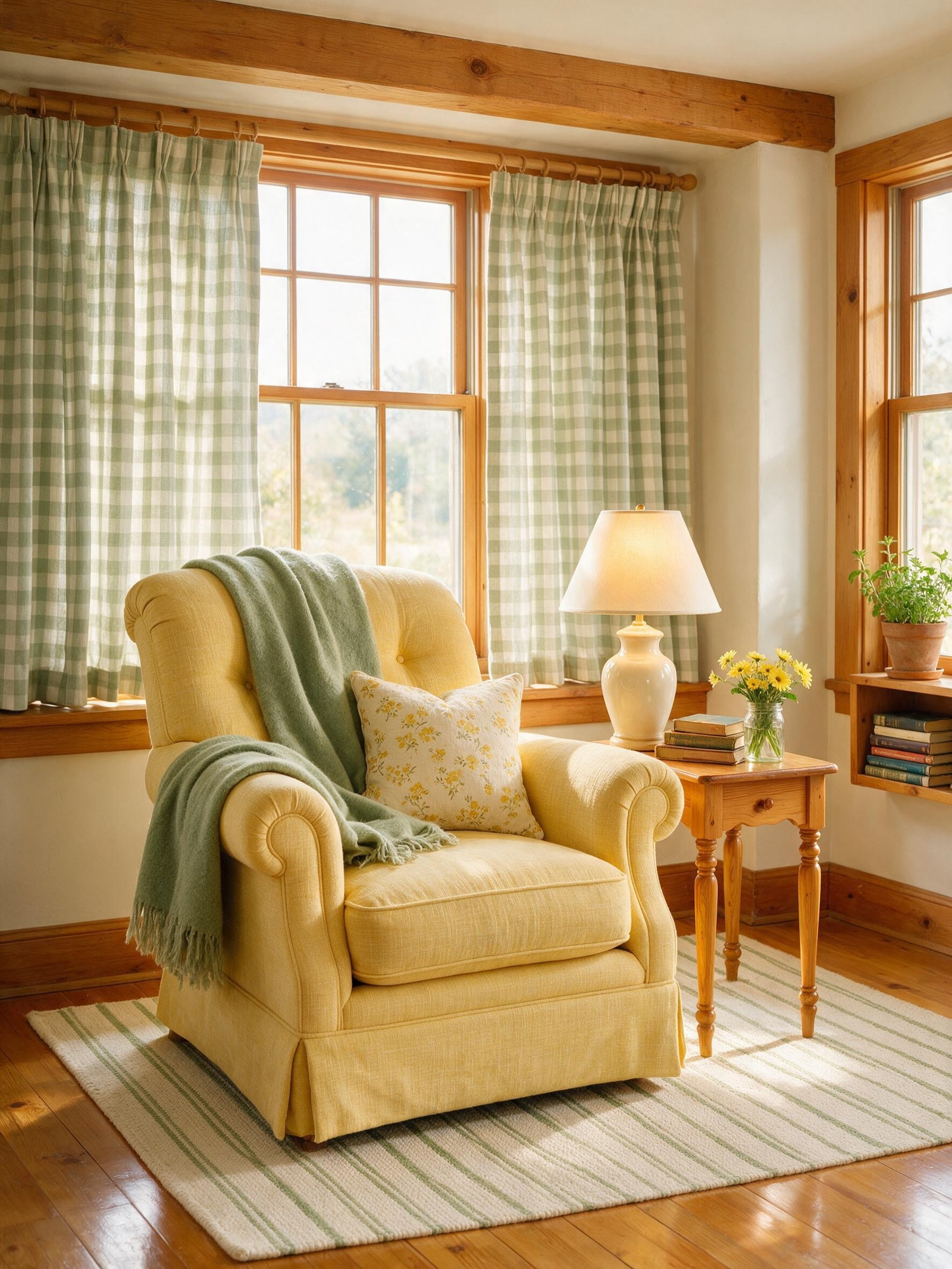
Modern small cottage design reading nook with yellow armchair
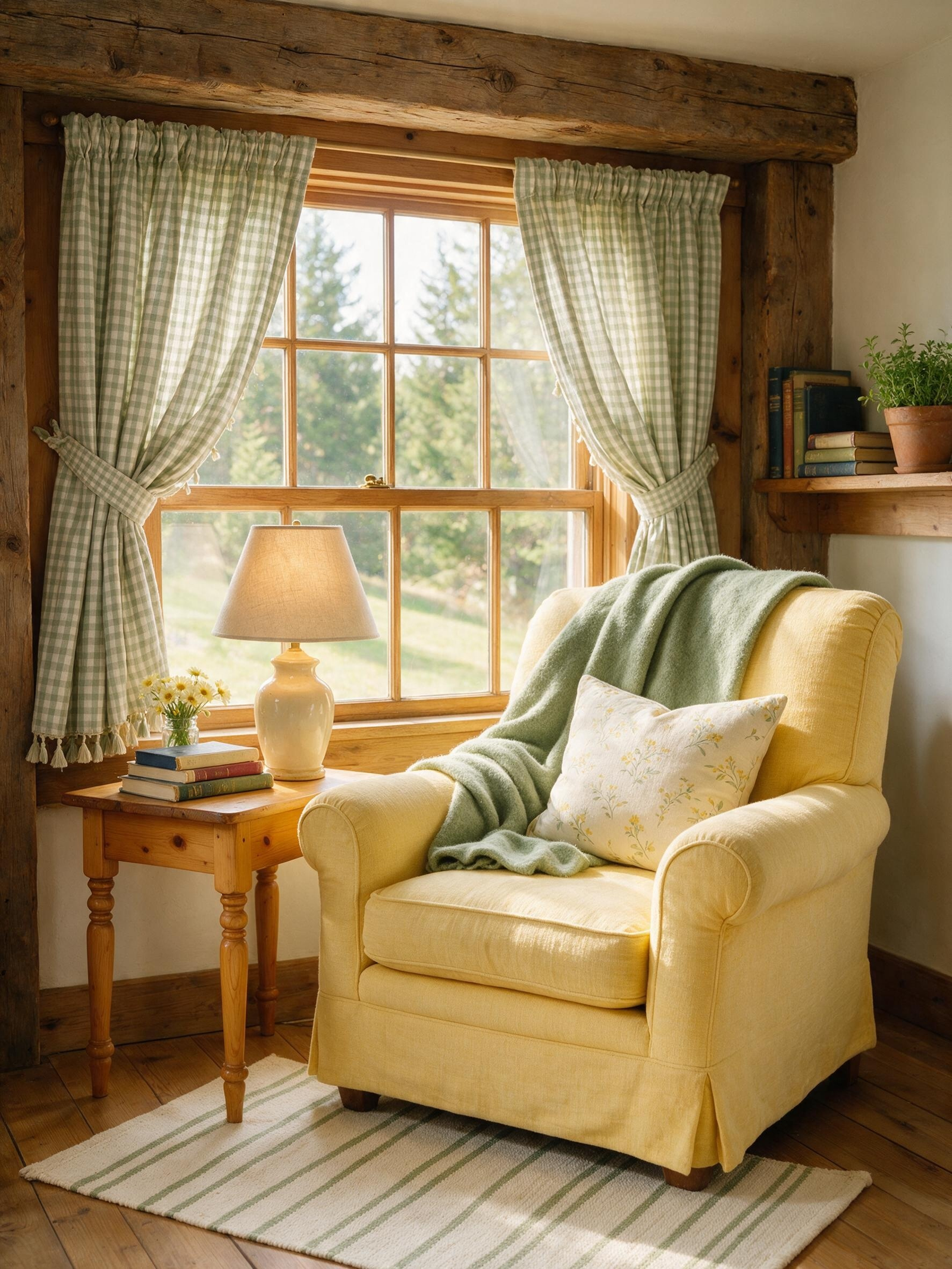
This room feels especially calming because every element shares a gentle, restrained palette—one of the most satisfying principles of modern small cottage design. Thick, weathered timber beams frame the window, adding structural warmth without visual clutter; leave prominent woodwork natural or lightly sealed so its texture adds depth rather than overwhelming the space. Soft buttery yellow upholstery wraps a generously proportioned armchair, its skirted base and curved arms relaxed yet refined—pick one standout piece in a soft hue and keep surrounding walls pale, so the furniture stands out without the room feeling busy.
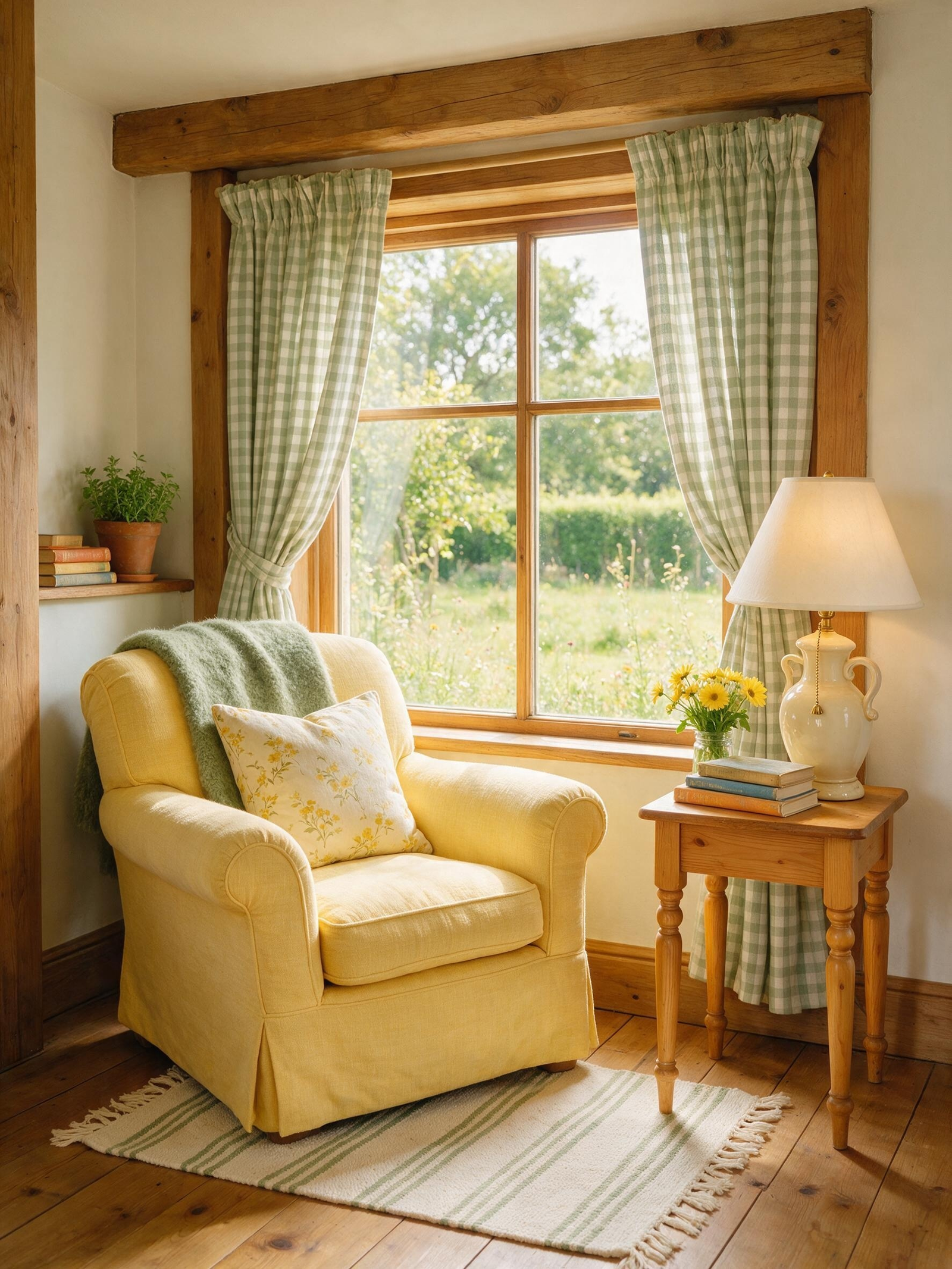
Gingham curtains frame the glass, gathered high and tied back to let maximum sunlight stream in; fabric with a subtle pattern adds charm while remaining easy to coordinate. A sage green throw draped loosely over the chair and a delicate floral cushion repeat the curtain color, creating harmony through textiles rather than bold paint. When mixing patterns, stick to two distinct scales—small check and soft floral work beautifully together because neither competes for attention.
Modern small cottage design bedroom
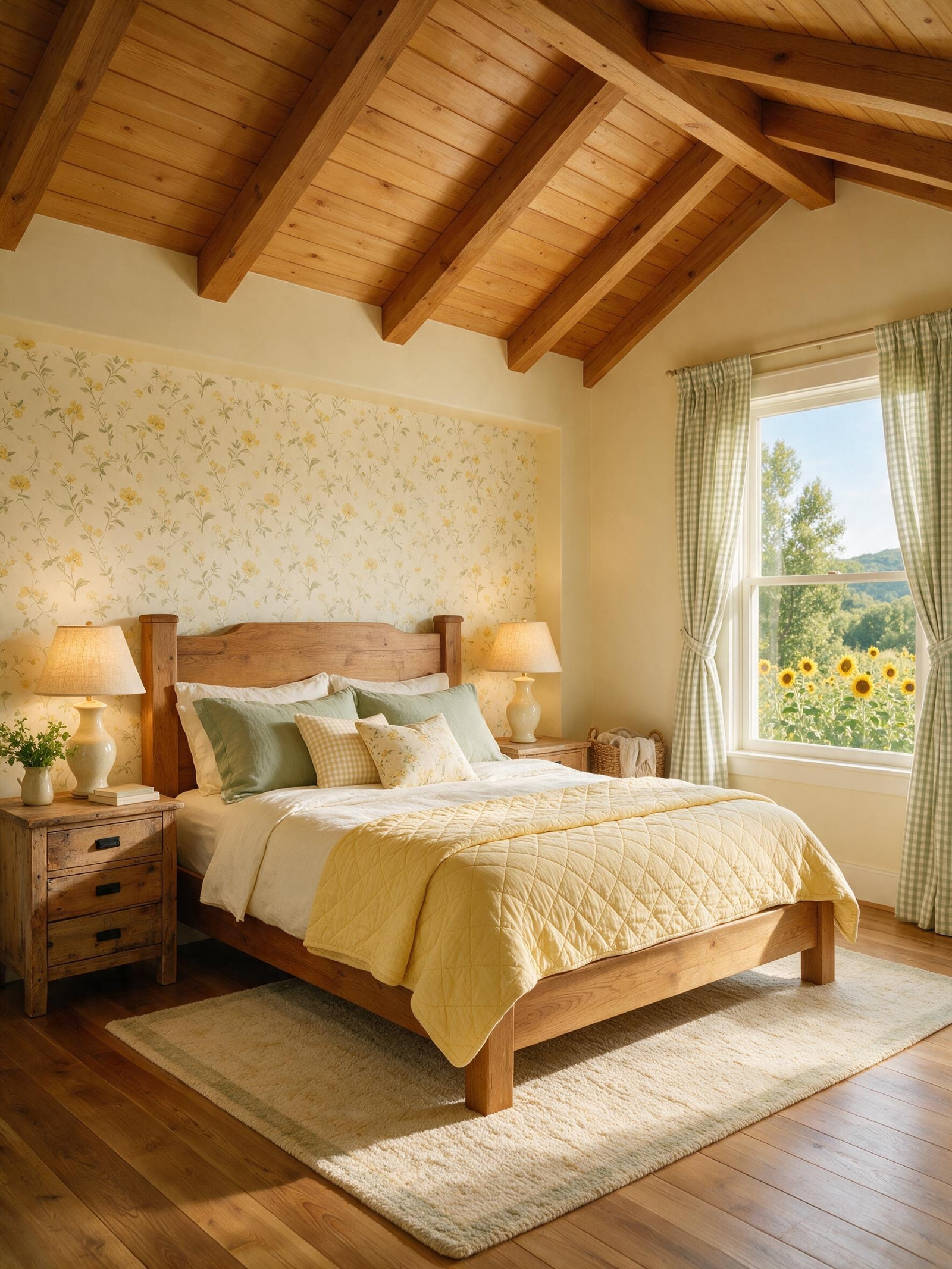
A balanced layout makes this space feel serene and thoughtfully composed—an ideal example of modern small cottage design at its best. Exposed beams stretch across a vaulted ceiling, adding structural character that draws the eye upward and makes a compact footprint feel generously airy. Below, one wall is dressed in soft floral wallpaper while remaining surfaces stay gently neutral; this selective use of pattern keeps the room calm and prevents visual fatigue, a smart approach anyone can adopt: reserve busy prints for just one focal plane, then let surrounding walls provide quiet relief.
Bright cottage bathroom
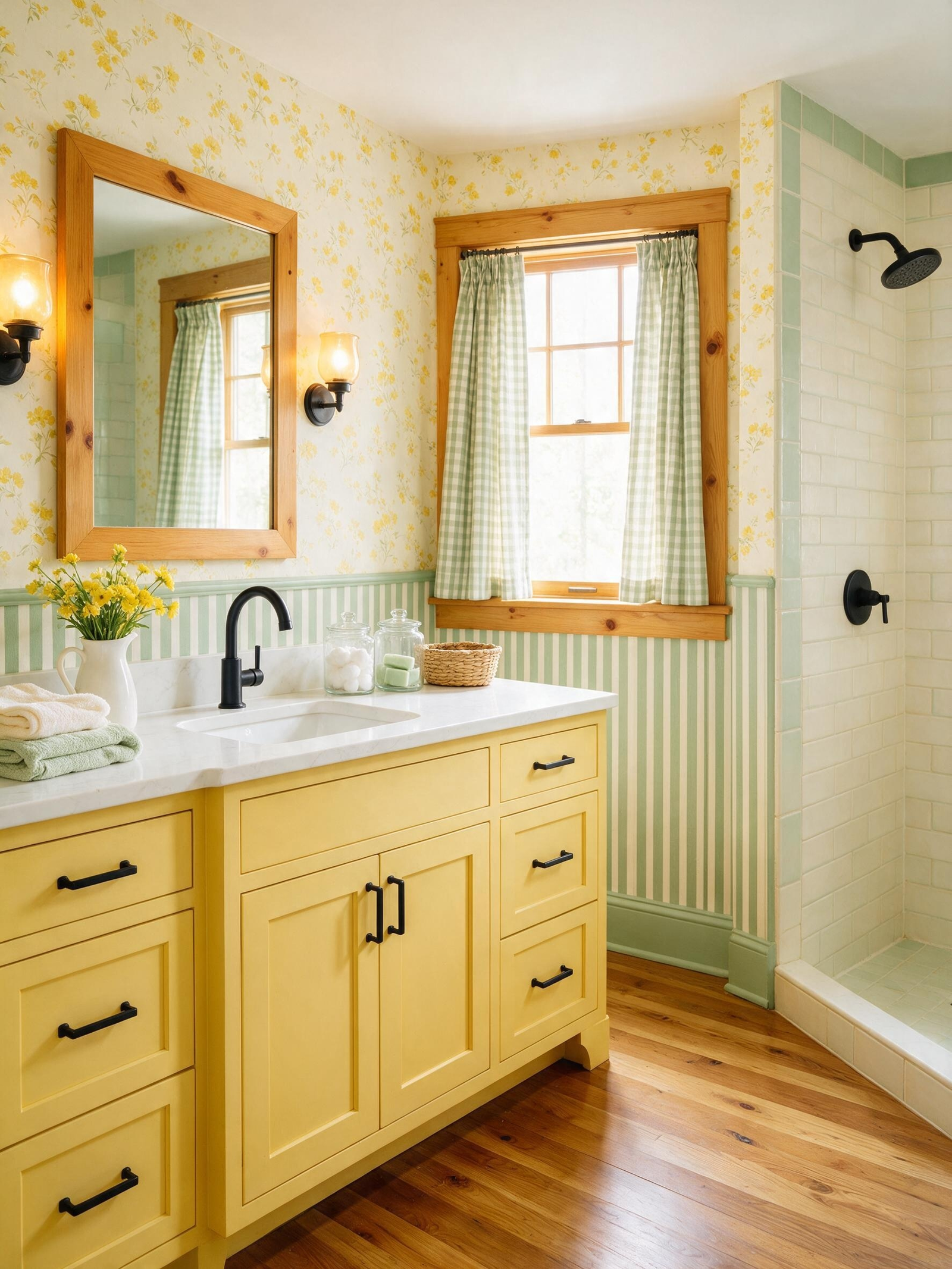
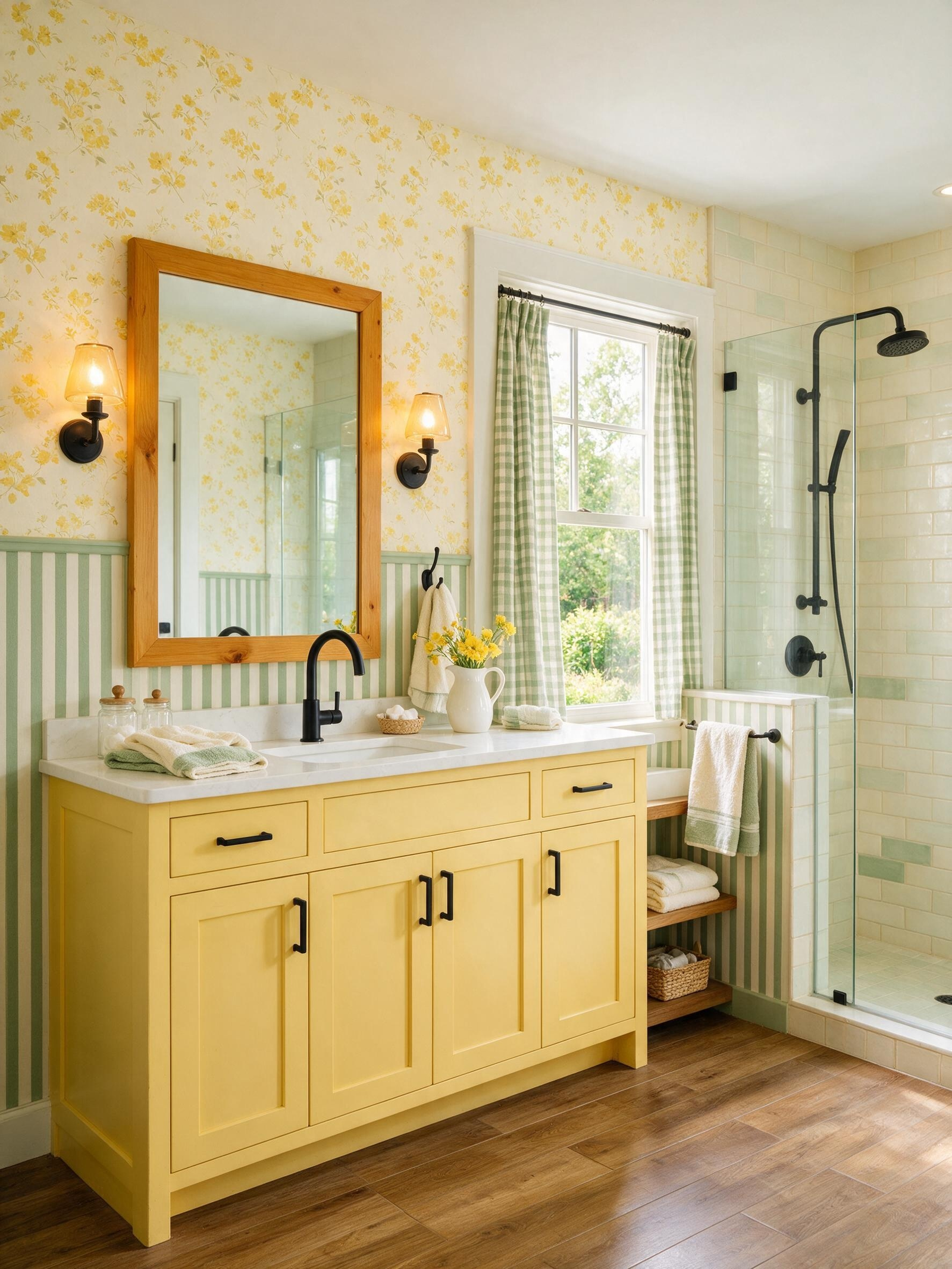
The combination of light and texture creates a bathroom that feels airy, cheerful, and exceptionally refined—showing how modern small cottage design thrives even in compact spaces. Floral wallpaper covers the upper wall while soft green vertical stripes wrap below as wainscoting; this horizontal division visually lifts the ceiling and keeps busy patterns from overwhelming the room. You can apply this technique anywhere: limit lively prints to the upper half, then use solid or striped lower panels that are easier to wipe clean—ideal for bathrooms, kitchens, and high-traffic areas.
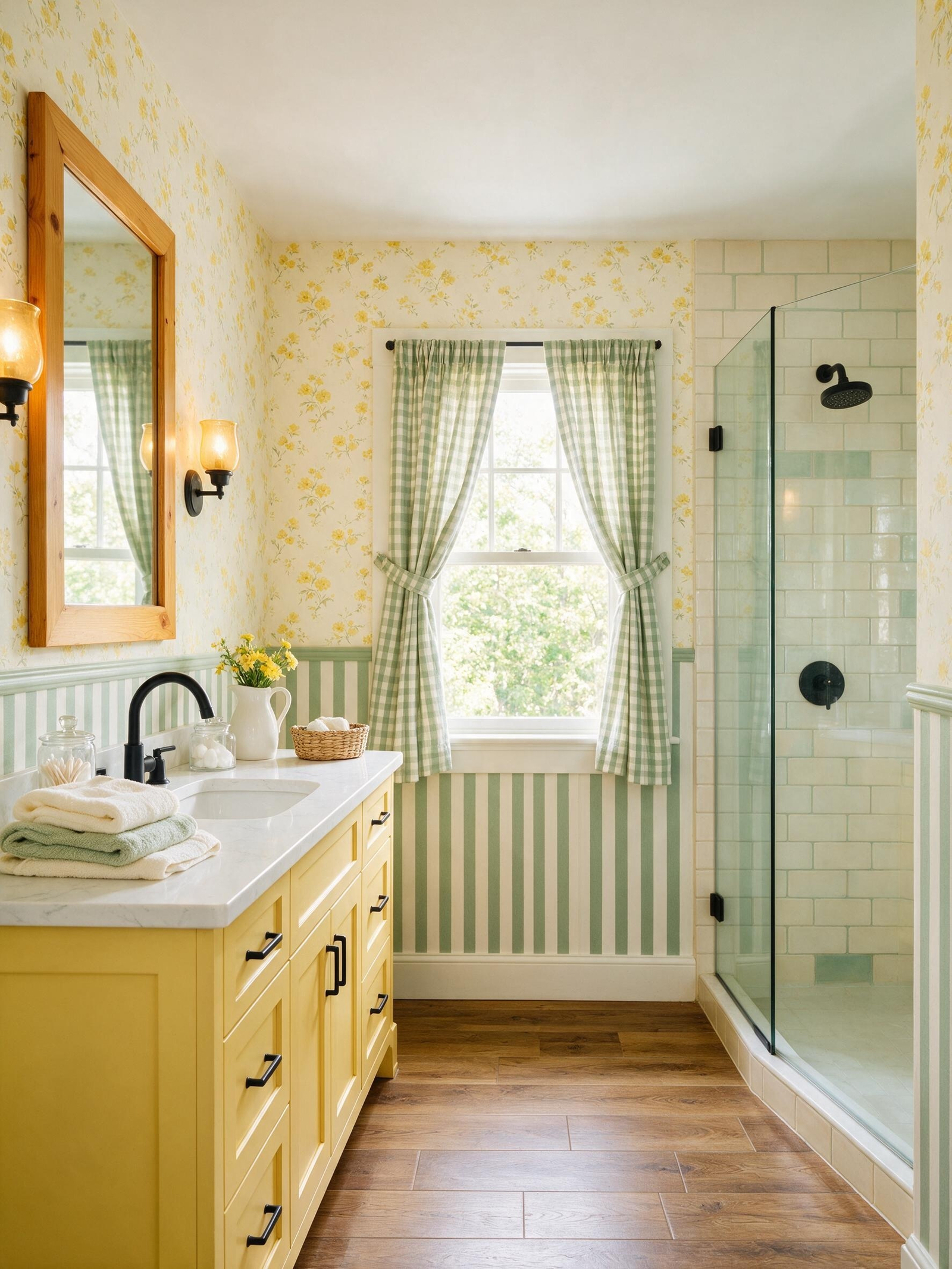
A buttery yellow vanity anchors the scheme, sized generously to hold essentials without crowding floor space. Its simple flat-panel doors and drawers are unified by matte black hardware—clean pulls and knobs that offer sharp contrast without appearing overly ornate. A solid wood-framed mirror sits centered above, flanked by matching sconces; position lights at roughly eye level on either side of the mirror so illumination is even and shadows around the face are reduced. This symmetrical placement feels balanced and works in bathrooms of nearly any dimension.
Conclusion
Modern small cottage design proves that limited space never means limited style. By pairing warm yellow and soft green tones, natural wood textures, and smart, space-conscious layouts, you get a home that feels bright, roomy, and deeply inviting. It offers the best of both worlds—timeless cottage comfort and modern practicality—making daily living feel calm, cheerful, and wonderfully welcoming.
The beauty of this style is how easy it is to adapt: start small with paint, textiles, or wood accents, then layer in furniture and storage that fits your life. Embrace these ideas, and you can bring the warmth and charm of modern small cottage design into every corner of your home.
FAQ
What makes modern small cottage design different from traditional cottage style?
Traditional cottage style leans heavily on dense patterns, dark woods, heavy fabrics, and ornate decor—often feeling cozy but visually busy. Modern small cottage design simplifies things: it keeps beloved elements like exposed beams, vaulted ceilings, and warm color palettes, but uses cleaner lines, lighter materials, and uncluttered layouts. This creates an airier, more spacious feel that works beautifully in compact homes, while still holding onto that timeless, welcoming cottage character.
How do I use yellow in a small cottage without making the room feel overwhelming?
Stick to soft, warm buttery yellow rather than bright or neon shades—this feels sunny and gentle, not intense. Use it as your main accent color: on cabinetry, an accent wall, or furniture, and keep walls, ceilings, and large furniture in creamy white or soft neutrals. Pair with natural wood and soft green to balance the warmth. In compact spaces, limit yellow to lower halves or key pieces so the room stays open and calm instead of feeling saturated.
Can modern small cottage design work in apartments or very tiny homes?
Absolutely—it’s ideal for smaller footprints. The style prioritizes open sightlines, multi-purpose furniture, and built-in storage that keeps surfaces clear and rooms feeling larger. Vaulted or visually high ceilings, light colors, and large windows amplify the sense of space. You don’t need rustic architecture to pull it off; wallpaper, wood-look flooring, painted cabinetry, and soft textiles can create the exact same charm and warmth in any compact living space.